Exterior renovation in Salinas
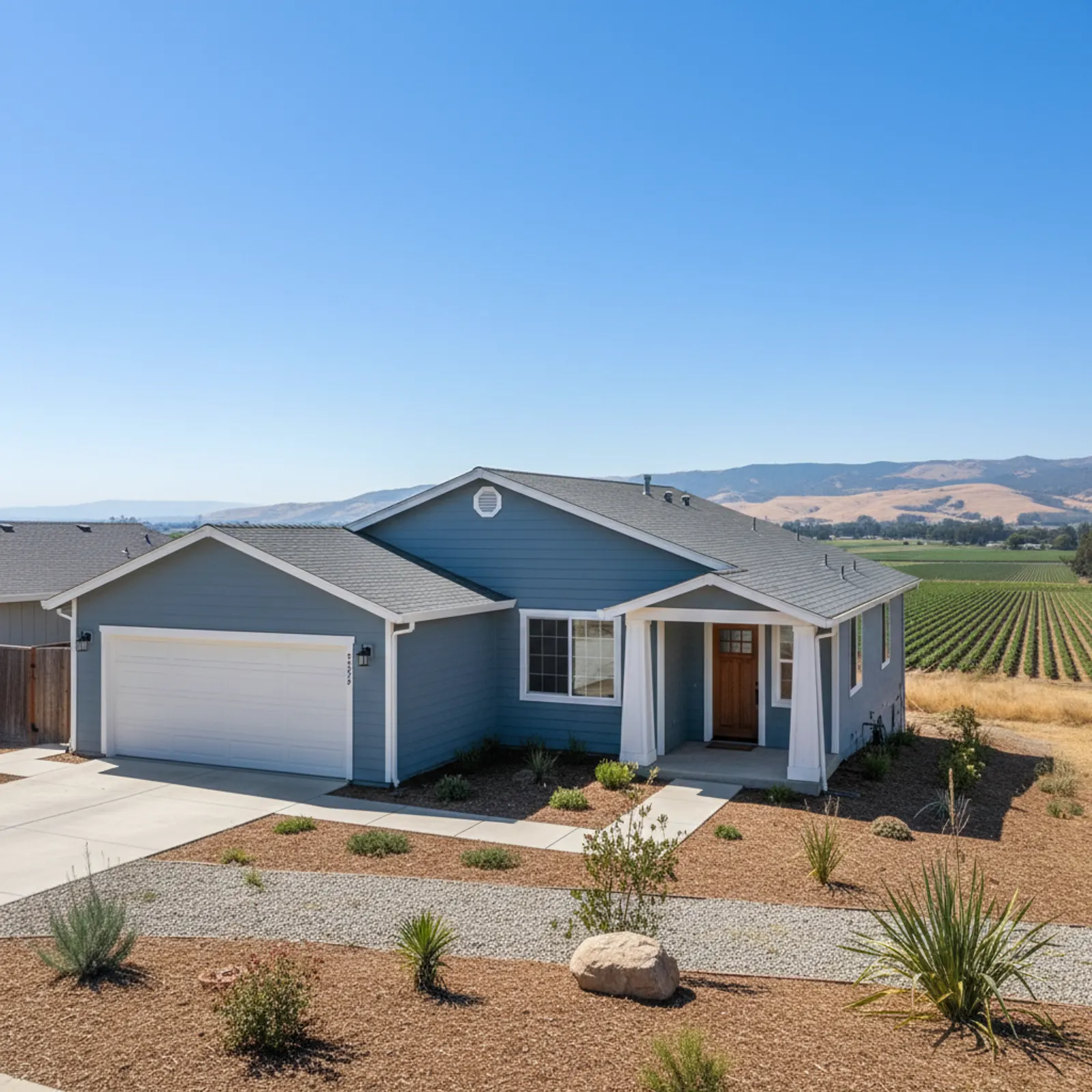
Salinas is the largest city in Monterey County and the agricultural heart of the Salinas Valley — a working city of established neighborhoods, postwar and later tracts, and newer subdivisions, set inland away from the coast. Its exterior environment is the opposite of the Monterey Peninsula's: hot, dry, dusty inland valley conditions rather than salt air.
Why Salinas siding wears the way it does
The controlling exterior problem in Salinas is sun, not salt — long, high-UV summers that chalk paint and degrade the original hardboard on most of its postwar and 1970s–1990s tracts, with the south- and west-facing walls failing years ahead of the rest. The valley also funnels strong afternoon wind off the bay gap, which drives rain into walls on exposed parcels. So we lead with fade-resistant James Hardie fiber cement and wind-aware fastening where the valley blows hardest, then weight the budget toward those sun-loaded street-facing elevations. The result is a wall built for heat durability and low upkeep, not coastal corrosion you'll never see here.
Considering an exterior project in Salinas?
Salinas housing and architecture
Salinas's stock blends older Oldtown and historic-district homes, extensive postwar and 1970s–1990s tract neighborhoods, and newer subdivisions on the city's edges. The tract homes modernize strongly with a clean lap-and-batten re-side; the historic core rewards period-sensitive profiles.
Salinas's inland-valley climate
Salinas runs hot and dry in summer with strong UV and agricultural dust, moderated somewhat by afternoon valley wind off the bay gap; winters are mild. Heat and UV durability — not salt — govern the specification, with wind-aware detailing where the valley funnels afternoon wind.
Recommended materials for Salinas
James Hardie fiber cement with a fade-resistant factory finish is the core recommendation — non-combustible, dimensionally stable in heat, and far more color-stable than the original hardboard on most Salinas homes. Wind-aware fastening where the valley wind is strongest.
What an exterior project costs in Salinas
Salinas pricing follows the standard drivers — size and stories, trim complexity, substrate and dry-rot condition once cladding is removed, window integration, and the weather-management scope. We provide a written, scoped estimate after an on-site assessment so bids can be compared on substance.
Working around Salinas neighborhoods and access
Salinas is laid out in distinct pockets, and each one changes how a re-side job actually runs. The Oldtown and Alisal cores have narrow lots, alley access, and homes built close to the property line, so staging scaffold and a dumpster takes planning and sometimes a curb permit from the city. The postwar tracts off East Romie and along North Main give you driveways and side yards with room to stack siding and run a chop saw without crowding a neighbor. Newer subdivisions on the south and east edges, near Harden Ranch and Williams Ranch, are often under an HOA that reviews exterior color and material before any work starts, so we build that approval window into the schedule rather than discovering it mid-project. Salinas also enforces standard building permits for residing over sheathing changes, and inspectors here are routine but particular about weather-resistive barrier lap and flashing. Knowing which pocket your home sits in lets us quote access and lead time honestly instead of guessing.
Re-siding and resale in the Salinas market
Salinas trades as a value market relative to the Monterey Peninsula, and that shapes how an exterior upgrade pays back. Most buyers here are families and first-time owners stepping in from higher-cost coastal towns, and they read a home's exterior as a proxy for how it was maintained. A faded, chalked-out stucco or warped hardboard front reads as deferred upkeep and gets discounted; clean lap siding with crisp trim and fresh, UV-stable color photographs well and moves a listing faster. The 1970s through 1990s tracts that make up much of the city respond especially well, because a full re-side erases the dated T1-11 and aluminum look that dates them most. Because Salinas sits inland, you are not paying the salt-air premium the Peninsula demands, so the spread between a basic patch-and-paint and a full re-side is narrower and easier to justify before a sale. We focus the budget on the street-facing elevations and durable detailing that survive valley heat, since that is what an appraiser and a walk-through buyer actually see.
Our process in Salinas
- Step 1
Consultation
We listen to your goals and assess your home on site — exposure, substrate, and architecture.
- Step 2
Design & Proposal
A clear written proposal with the right system specified for your climate and a transparent scope.
- Step 3
Expert Installation
Trained crews install to manufacturer best practices with careful weather-management detailing.
- Step 4
Walkthrough & Support
A final walkthrough, full cleanup, and a clear written record of the scope completed — work we stand behind.
Salinas rewards a heat- and UV-durable exterior built for inland-valley conditions, not the coast.
FAQ
Salinas — Common Questions
Fade-resistant James Hardie fiber cement — heat- and UV-durable and non-combustible, far longer-lasting than the original hardboard on most Salinas homes.
No — Salinas is inland in the Salinas Valley. The exterior priority here is heat, UV, and dust, not salt; the spec differs from the Monterey Peninsula.
Where the valley funnels strong afternoon wind off the bay gap, yes — we add wind-aware fastening and flashing on the more exposed parcels.
Original hardboard reaches end of life after decades, and inland UV accelerates it on sun-facing elevations. Fade-resistant fiber cement resolves the cause.
Low for the valley city; wooded eastern and Carmel Valley fringes carry more consideration. We specify per address.
Yes — period-appropriate profiles and trim where the home calls for it, in durable non-combustible fiber cement.
When feasible, yes — it ensures correct flashing integration and avoids duplicated trim work.
A correctly installed fiber cement system commonly performs 30+ years in Salinas's hot inland-valley climate.
Helpful Exterior Guides