Fiber Cement Siding in Salinas
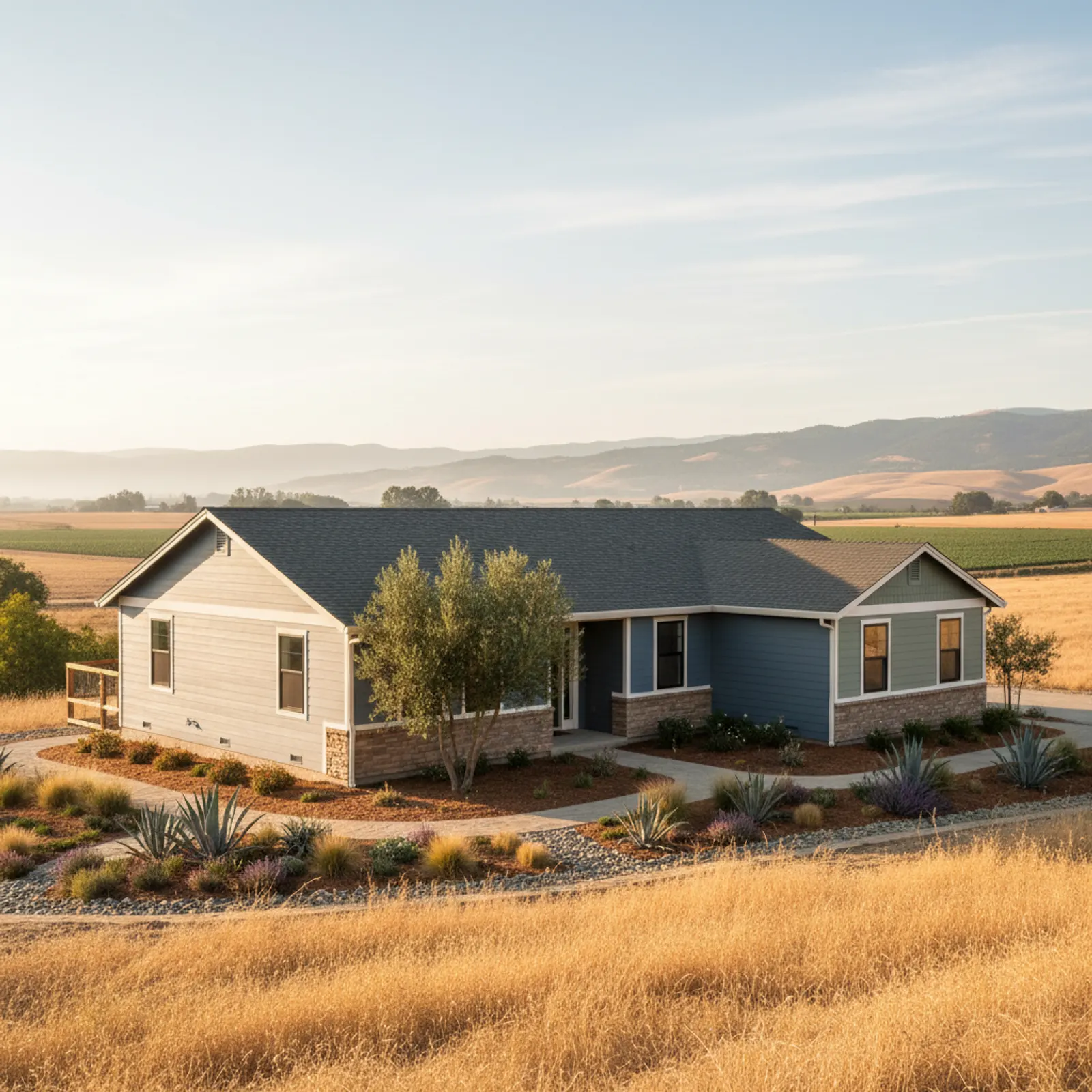
Fiber cement is the core Salinas recommendation for its heat and UV durability — not for corrosion resistance, since Salinas is inland and salt-free. It holds a factory finish through hot Salinas Valley summers and sheds wind-driven rain and grit far better than the original cladding on the city's tracts.
Older Salinas neighborhoods around Old Town and the Alisal corridor were built with hardboard and stucco-and-board combinations that the agricultural-valley climate has cycled into chalking and cupping. The east-and-south Salinas tracts share the same vintage problem. ColorPlus factory finishes hold against the punishing summer UV in a way field paint on these homes simply doesn't.
Heat-and-wind detailing, not coastal corrosion
Unlike a peninsula city, Salinas fiber cement work centers on fade-resistant finishes, conservative color on sun-facing elevations, and wind-aware fastening and flashing — the inland-valley failure modes, not salt-driven corrosion.
Fiber cement vs. engineered wood in Salinas
Salinas's low fire exposure makes engineered wood viable, so the choice is finish life and upkeep under inland UV. Fiber cement's color and shape stability is the deciding edge for most Salinas homes.
Dust, thermal cycling, and the Salinas Valley fade line
The thing that defines fiber cement work in Salinas is not the ocean but the daily swing between hot, dusty afternoons and cool valley nights. That repeated expansion and contraction is what loosens caulk joints, opens butt-seams, and lets agricultural grit work its way behind older hardboard panels across the east-side and south Salinas tracts. We spec fiber cement here for dimensional stability under that thermal cycling: tighter board-to-board reveals, flexible high-movement sealant at every joint and penetration, and end-gapping that accounts for a board's worth of summer growth. Color choice matters too, because the same UV that bakes lawns brown along the valley floor will gray out a field-painted south or west elevation within a few seasons. Factory-baked finishes resist that valley fade far longer than a brush coat applied over the home's original cladding. Where dust collection is heaviest, we also flash the bottom course and weep it properly so wind-driven grit and the occasional valley downpour drain out rather than pack in behind the siding.
Matching siding to Salinas's mix of postwar Alisal homes and new subdivisions
Salinas is really several housing eras at once, and fiber cement gets detailed differently across each of them. In the older neighborhoods near the city center, where shallow eaves and mixed cladding leave little margin for error, a re-clad usually means rebuilding worn trim profiles, adding proper kickout and head flashing, and choosing a lap exposure that reads true to a postwar bungalow rather than overwhelming its modest scale. The newer subdivisions on the city's edges, closer to the Marina and Seaside side of the county, tend to have taller two-story gable walls and existing manufactured cladding; here the work is about clean transitions at gable rakes, consistent corner treatment, and a profile that fits the tract's established streetscape so the house doesn't stand out awkwardly. Because Salinas spans incorporated city blocks and outlying agricultural-valley parcels, access and staging vary widely too, from tight in-town lots to open new-build sites. We size the approach and the fiber cement profile to the specific vintage and lot rather than applying one valley-wide template.
Why this matters in Salinas
- Specified for Salinas Valley conditions
- James Hardie fiber cement as the recommended system
- Correctly detailed weather-resistive barrier and flashing
- Installed by a crew with 20 years combined experience
Recommended systems for Salinas
- James Hardie fiber cement
- factory finishes
- durable trim packages
Fiber Cement Siding for Salinas homes
The full fiber cement siding approach — materials, weather-resistive detailing, and the manufacturer standards we install to — is covered on the main service page, then specified for Salinas's conditions on this one.
Our Salinas process
- Step 1
Consultation
We listen to your goals and assess your home on site — exposure, substrate, and architecture.
- Step 2
Design & Proposal
A clear written proposal with the right system specified for your climate and a transparent scope.
- Step 3
Expert Installation
Trained crews install to manufacturer best practices with careful weather-management detailing.
- Step 4
Walkthrough & Support
A final walkthrough, full cleanup, and a clear written record of the scope completed — work we stand behind.
FAQ
Fiber Cement Siding in Salinas — FAQ
Far less than field-painted or economy products; a factory finish is engineered for UV. Sun-facing elevations may eventually want a refresh while the substrate keeps performing.
No — Salinas is inland and salt-free. We specify heat- and wind-aware detailing, not the corrosion-resistant fastening peninsula cities require.
Generally fiber cement for finish longevity under inland UV; engineered wood is acceptable given low fire exposure but needs more maintenance here.
Yes — dimensionally stable in heat with correct gaps and fastening, and wind-detailed flashing sheds the valley's wind-driven rain.
Keep Exploring
More for Salinas homeowners
More in Salinas
Other exterior services in Salinas
Nearby Service Areas
Fiber Cement Siding near Salinas
Helpful Exterior Guides