8 min read · Cost
Hardie versus vinyl is the most common siding decision California homeowners face, and the marketing oversimplifies in both directions. The honest answer depends on where the home sits, how long you'll own it, and the architecture. This deep comparison works through fire, UV life, cost over time, maintenance, and looks criterion by criterion, then says plainly which material wins for whom in California's climate zones.
Fire performance — not close in California
Fire is the criterion where the two materials aren't comparable. Hardie fiber cement is Class A and non-combustible; vinyl is combustible and softens or melts at relatively low temperatures, well below what a nearby structure fire or ember shower produces. On parcels in designated wildfire zones subject to the WUI code, vinyl simply isn't an acceptable cladding, while Hardie is. Even outside mandated zones, in any fire-exposed foothill or wine-country setting, non-combustible siding is the responsible choice. For homeowners in those areas, CAL FIRE's Ready for Wildfire home hardening guidance makes clear why cladding material is a frontline detail, and it's the single most decisive factor pushing California homes toward Hardie.
UV life and finish durability under California sun
California's UV load is harder on siding finishes than most of the country, and it widens the gap between the two materials. Hardie's factory ColorPlus finish typically holds 15 to 25 years before it needs attention, and the board itself is dimensionally stable through heat cycling. Vinyl's color is in the material, but its practical finish life runs shorter on hot exposures, and thermal expansion and contraction can cause warping, oil-canning, and panel distortion on south- and west-facing walls. On a Sacramento elevation, vinyl commonly shows visible degradation within 10 to 15 years while ColorPlus on the same wall holds 20-plus. The valley climate exaggerates vinyl's weaknesses rather than hiding them.
Cost — upfront versus thirty-year math
Vinyl is genuinely cheaper to install upfront in the valley, and that gap is real for a budget-constrained project. Hardie costs more per square foot installed. The picture changes over thirty years: vinyl on a hot California exposure often needs replacement somewhere in the 15-to-25-year window, while Hardie typically reaches 30-plus years with a single repaint cycle. So the lifetime comparison frequently closes or reverses — Hardie's higher entry price buys you one fewer full tear-off and re-side. The honest qualifier is that this math only works if you have the upfront capacity and plan to own long enough to capture it. Our siding cost in California guide lays out the drivers behind both numbers without overstating either.
Maintenance and impact resistance
Both materials are low-maintenance compared with wood, but they fail differently. Hardie is dimensionally stable and resists impact, so it doesn't dent or warp the way vinyl can from ladders, hail, string trimmers, or sports balls; its main upkeep is periodic repaint of field-painted areas and routine washing. Vinyl resists rot and never needs paint, but it cracks when brittle, warps under heat, and a damaged panel can be awkward to color-match years later. Hardie's upkeep is predictable and the board itself rarely needs replacement; vinyl's upkeep is low until something distorts or cracks, at which point repair is the issue. For keeping a Hardie exterior performing, our Hardie board maintenance guide covers the simple routine involved.
Architectural read and curb appeal
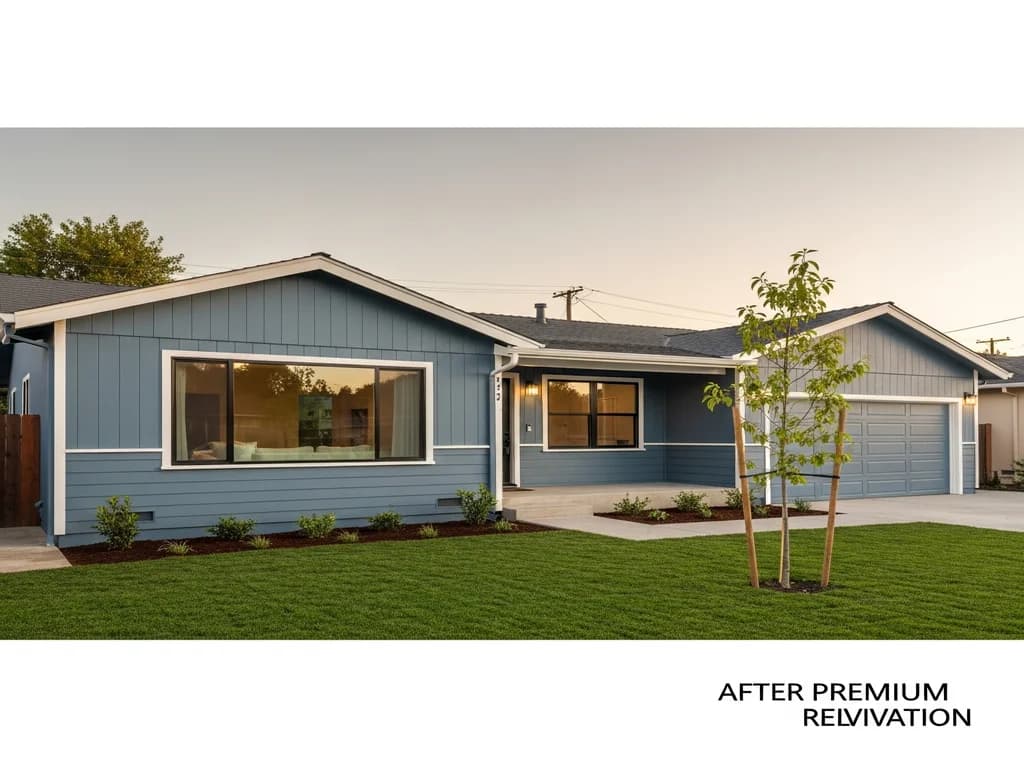
Looks are partly subjective, but the market reads these materials differently. On modern, modern farmhouse, contemporary, craftsman, and premium custom architecture, vinyl tends to read as budget, while Hardie's depth, thickness, and trim integration read as intentional and premium. On simple production tract homes where the goal is a clean refresh rather than a design statement, vinyl can look perfectly appropriate. The shorthand: Hardie reads correctly across the full architectural range, whereas vinyl works on basic tract elevations and undercuts the look on anything aspiring higher. If the home's style or your resale goals lean premium, that read matters as much as any spec sheet.
Climate zone reality — Tahoe and foothill
California isn't one climate, and the right answer shifts by zone. In Tahoe and the high country, freeze-thaw cycling makes vinyl brittle and crack-prone, so it rarely belongs there. In the foothills, WUI fire exposure makes vinyl the WUI code-incompatible on designated parcels and fire-inappropriate everywhere else in fire country. Vinyl's legitimate California niche is narrow: budget-driven refreshes on low-fire valley tract homes where short-term spend outweighs long-run value or finish life. Outside that niche — premium architecture, hot valley exposures, foothill fire zones, and Tahoe cold — the case for vinyl thins out quickly, which is why it sees far fewer appropriate uses here than in milder, lower-fire parts of the country.
Resale impact and the honest recommendation
Resale data favors fiber cement: remodeling cost-versus-value studies consistently show a fiber cement re-side recouping a higher share of cost than a vinyl re-side, with a gap that's meaningful in most markets and larger in premium ones. Combine that with fire performance, UV life, and architectural read, and on the majority of California homes Hardie is the right answer. Vinyl earns its place on budget-constrained valley tract refreshes and little else here. We'll spec vinyl when it genuinely fits the situation, and we won't sell it as a 'budget Hardie alternative,' because that framing misleads buyers about what they're getting. Before hiring anyone for either material, verify the contractor's license through the CSLB, and explore our James Hardie and broader fiber cement siding work to see how each is installed.
James Hardie vs. vinyl at a glance
| Attribute | James Hardie | Vinyl |
|---|---|---|
| Fire classification | Class A non-combustible | Combustible |
| WUI-code acceptability | Acceptable | Not acceptable |
| Sacramento UV life | 20-25+ years | 10-15 years |
| Tahoe freeze tolerance | Excellent | Brittle, cracks |
| Cost per sq ft (CA installed) | $12-$22 | $6-$13 |
| 30-year total cost | $30K-$60K with 1 repaint | $20K-$50K + replacement at 15-20 |
| Resale value recoup | Higher percentage | Lower percentage |
| Architectural read | Reads correctly across range | Budget on premium, OK on tract |
Key takeaways
- Fire is decisive: Hardie is Class A non-combustible, vinyl is combustible and the WUI code-incompatible
- California UV shortens vinyl's finish life; ColorPlus holds far longer on hot exposures
- Vinyl is cheaper upfront but Hardie's 30-year math often closes or reverses the gap
- Vinyl reads budget on premium architecture; Hardie reads correctly across the range
- Tahoe freeze and foothill fire make vinyl rarely appropriate
- Vinyl's honest California niche is budget valley tract refreshes
FAQ
Quick Answers
Roughly, yes, on upfront installed cost in the valley. Over 30 years the gap often closes or reverses, because vinyl on hot or cold California exposures frequently needs replacement while Hardie reaches 30-plus years with one repaint.
Selectively, where it's genuinely the right answer — typically a budget-driven valley tract refresh. We don't push vinyl as a budget substitute when Hardie is the correct call for the home.
Read the terms carefully. Those warranties are typically pro-rated with restrictive conditions, and the practical service life on hot California exposures rarely matches the headline number.
Yes, in a narrow niche: budget-constrained refreshes on low-fire valley tract homes where short-term spend matters more than finish life or resale. Outside that, the case for vinyl thins out fast.
Hardie, clearly. Tahoe freeze-thaw cycling makes vinyl brittle and crack-prone, while fiber cement stays dimensionally stable through cold and heat, so vinyl rarely belongs in the high country.
Sources
Authoritative references
- James Hardie — official product & installation resources
- Contractors State License Board (CSLB) — verify a California contractor
- Zonda — 2025 Cost vs. Value Report (exterior remodel ROI)
External links to government, code, and manufacturer sources. Sierra Siding is not affiliated with these organizations; references are provided for verification.