
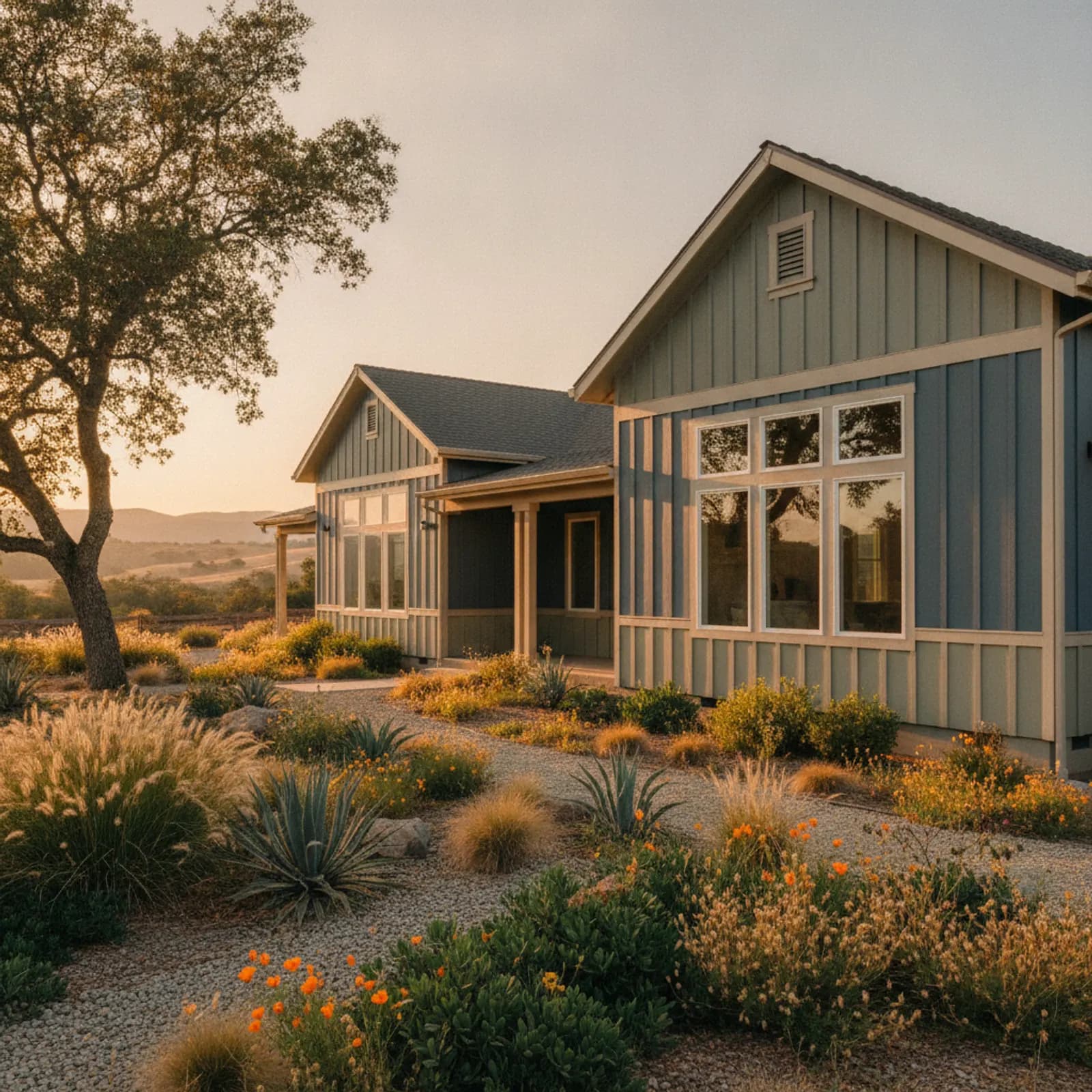
Exterior Contractor in Durham
Hiring an exterior contractor in Durham means looking at the whole property, not a single wall. A rural-residential or acreage home south of Chico is an envelope — cladding, windows, water-resistive barrier, trim, and the interfaces between them — exposed to relentless open-field valley sun and the dust, wind, and irrigation that come with farm ground. When those elements are bid out trade-by-trade, the gaps between them are where the problems start.
An integrator scopes a Durham exterior as one assembly and often as one property: the main house plus the shop, barn, or outbuildings that share its weather. That coordination is exactly what the cheap single-trade bids leave on the table.
What an integrated Durham exterior includes
On a Durham ranch home or farmhouse an integrated scope strips failed cladding, corrects or replaces the water-resistive barrier behind it, integrates window replacement so flashing ties cleanly into the new wall, and re-clads in a heat-durable fiber cement or engineered lap program with factory finishes built for open valley sun. Trim, flashing at porches and attached structures, and base detailing against dust and irrigation splash are part of the same plan. Because the parcel usually carries outbuildings, the scope can extend to a shop or storage structure so the whole property is detailed as one coordinated job.
Where the split-trade exterior fails on a rural parcel
The classic failure on a Durham property is a siding crew and a window crew who never coordinate. New windows go in without the WRB being corrected behind them, kickout and head flashing get skipped at the cladding-to-window joint, and the seam where a new wall meets an old porch or an attached shed gets caulked over instead of properly flashed. Out here that matters because open-field exposure and irrigation overspray punish every unsealed interface. An integrator owns those handoffs — the wall, the openings, and the connections to attached structures — so no one trade can leave the next one's gap unaddressed.
Tying the house to its outbuildings
Whole-property integration is the part of a Durham exterior job that single-trade bids almost never touch. Most parcels here are a cluster of structures — house, shop, pump house, equipment shed, sometimes an older barn — that all weather under the same open sun and all age at once. An exterior contractor working the property as a system can standardize cladding profile, trim, and color across the cluster so it reads as one intentional place rather than a nice house beside fading sheds, and can sequence the work so a single mobilization covers more than just the main residence. Each structure still gets detailed for what it does: a climate-controlled shop is treated more like the house, while an open equipment building gets a simpler, durable, low-maintenance program. Pulling those decisions together up front avoids the cost and disruption of bringing crews back for a second round later, and it keeps trim and flashing consistent where attached structures meet the home. On a working agricultural property that coordination is the difference between a coherent exterior and a patchwork.
Heat, dust, and the interfaces a Durham envelope lives or dies on
Durham's open valley setting means the exterior fails at its joints, not in the middle of a wall. Sustained sun bakes south and west elevations and drives the daily expansion that opens butt joints and loosens fasteners; wind off harvested fields packs dust into any gap; and irrigation cycles keep the base of the wall wet far more often than a town home ever sees. An integrated exterior contractor designs for those interfaces deliberately — gapping and fastening that absorb heat movement, sealed and flashed connections at windows and attached structures, and grade and splash clearance at the bottom of the wall. Just as important, on the valley floor the spec is honestly heat- and exposure-driven rather than fire-driven; Durham is not a high wildfire-exposure area, so we do not load a valley parcel with foothill hardening it does not need. The work goes where the real stress is.
Why this matters in Durham
- Specified for Sacramento Valley conditions
- James Hardie fiber cement as the recommended system
- Correctly detailed weather-resistive barrier and flashing
- Installed by a crew with 20 years combined experience
Recommended systems for Durham
- James Hardie fiber cement
- engineered wood
- factory finishes
Exterior Contractor for Durham homes
The full exterior contractor approach — materials, weather-resistive detailing, and the manufacturer standards we install to — is covered on the main service page, then specified for Durham's conditions on this one.
Our Durham process
- Step 1
Consultation
We listen to your goals and assess your home on site — exposure, substrate, and architecture.
- Step 2
Design & Proposal
A clear written proposal with the right system specified for your climate and a transparent scope.
- Step 3
Expert Installation
Trained crews install to manufacturer best practices with careful weather-management detailing.
- Step 4
Walkthrough & Support
A final walkthrough, full cleanup, and a clear written record of the scope completed — work we stand behind.
FAQ
Exterior Contractor in Durham — FAQ
An integrator owns the interfaces — the WRB behind new windows, the flashing at openings, and the seams where the wall meets porches and attached structures. On an open Durham parcel those joints take the hardest sun, dust, and irrigation load, and split-trade bids are exactly where they get missed.
Yes. We can scope the house plus a shop, pump house, or storage building as one coordinated job, standardizing profile and color across the cluster while detailing each structure for its actual use, all in a single mobilization where possible.
If the home still has original builder windows, yes — heat-aged seals fail under the open valley sun, and replacing them while the cladding is off lets us integrate flashing into the new wall properly rather than retrofitting around finished siding later.
Generally no. Durham sits on the valley floor and is not a high wildfire-exposure area, so we scope the exterior around heat, UV, dust, and irrigation rather than loading a valley parcel with the Class A hardening appropriate to foothill-edge lots.
Most single-family Durham homes run roughly two to five weeks of active work depending on size, scope, and condition once cladding is off; adding outbuildings to the scope extends the timeline. We confirm it after the on-site assessment.
Keep Exploring
More for Durham homeowners
Nearby Service Areas
Exterior Contractor near Durham
Helpful Exterior Guides