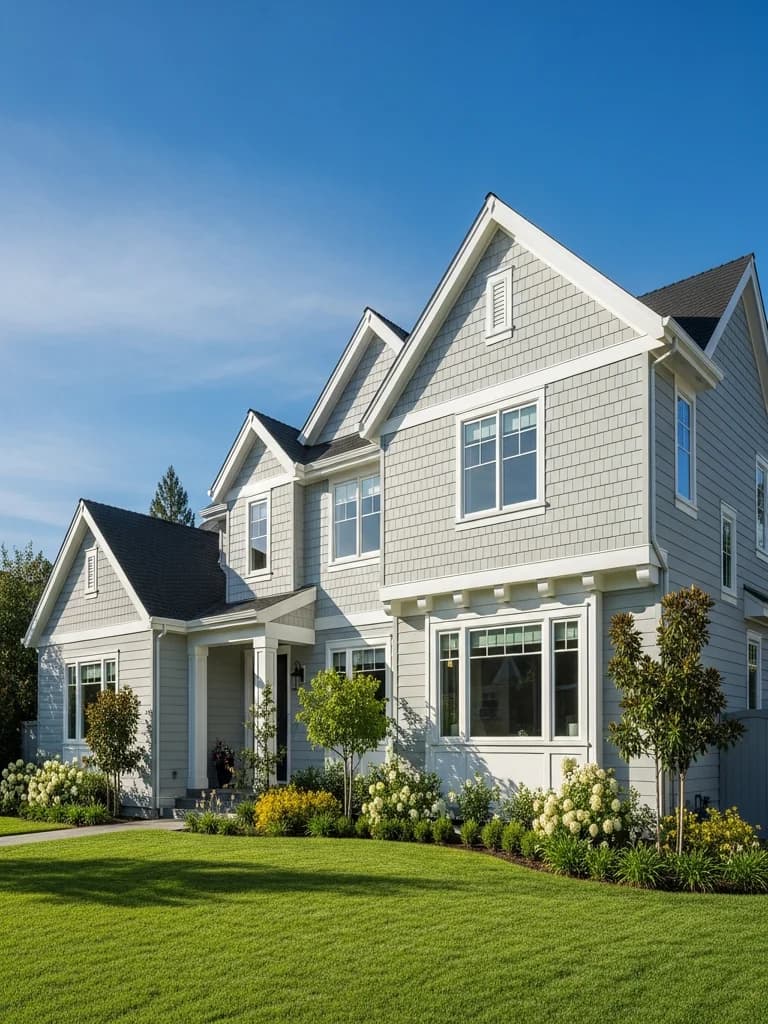
Siding in Milpitas
Milpitas sits at the very south end of San Francisco Bay, tucked below the East Bay hills where the baylands and Coyote Creek push marine humidity and a trace of salt air across town. That bay-edge moisture is the controlling stressor on a Milpitas re-side, far more than heat or fire, and it works on a housing stock that is overwhelmingly dense postwar tracts, 1970s-through-2000s subdivisions, and townhome rows now reaching the age where original cladding gives out.
A re-side here is rarely an emergency and almost always a deliberate upgrade in a high-value Silicon Valley market. The job is to pull tired hardboard, T1-11, or builder lap off a tract home or townhome and put back a system that shrugs off persistent bay damp while lifting the home's appearance to match what this market now expects.
Bay-edge damp is the spec driver, not sun
Homes nearest the baylands, the Coyote Creek corridor, and the low flats off Dixon Landing live in steady marine moisture and morning fog that keep walls wet longer than inland Santa Clara County. That is what rots the bottoms of old hardboard and swells T1-11 plywood seams in Milpitas. We scope the re-side around drainage and drying: a corrected weather-resistive barrier, a rain-screen gap where it earns its keep, and back-primed, sealed cut edges so the cladding handles damp instead of wicking it.
Tract and townhome stock is its own kind of job
Most of Milpitas is repeated subdivision and attached townhome housing, which changes the re-side. Side yards are narrow, units share walls or sit a few feet apart, and many tracts and townhome associations run architectural review on color and profile. We plan staging and scaffold placement around zero-lot-line spacing, sequence work wall by wall to keep the home dried-in, and confirm any HOA approval before ordering finish so a re-side does not have to be redone to satisfy a board.
Why original Milpitas cladding is failing now
The big postwar push and the 1970s-to-2000s subdivisions that fill out Milpitas were built fast with hardboard, plywood T1-11, and economy lap that were never meant to last fifty years in a damp bay-edge climate. By now the lower courses near grade and irrigation, the south and west walls, and the seams behind downspouts are the first to go soft. We see swollen edges, delaminating board faces, and brittle, sun-and-fog-cycled building paper underneath. Pulling the old cladding is what lets us find and fix the hidden rot around hose bibs and window sills before re-cladding, rather than skinning over a wall that is already compromised. On townhomes the shared-wall and party-line details add a wrinkle, since flashing has to tie cleanly into the neighbor's plane. Getting that substrate right is the difference between a re-side that lasts and one that traps moisture again.
Modernizing a transit-village city
Milpitas has shifted from a pure bedroom-tract town toward denser, design-conscious living around the BART station and the Great Mall, and that has raised the bar on how the older neighborhoods present. A re-side is the main lever a homeowner in an aging tract or townhome row has to close that gap. We use the project to widen reveals, switch to crisp horizontal lap or a panel-and-batten accent, and update the palette so a 1980s subdivision home reads current instead of dated. The architecture still leads the choices, but the goal in this market is a wall that looks intentional and modern, raising both daily enjoyment and resale standing in a place where buyers compare aggressively. We size board widths to the actual scale of the home so the result looks designed, not merely wrapped.
Why this matters in Milpitas
- Specified for South Bay / Silicon Valley conditions
- James Hardie as the recommended system
- Correctly detailed weather-resistive barrier and flashing
- Installed by a crew with 20 years combined experience
Recommended systems for Milpitas
- James Hardie
- fiber cement
- engineered wood
Fiber Cement Siding for Milpitas homes
The full fiber cement siding approach — materials, weather-resistive detailing, and the manufacturer standards we install to — is covered on the main service page, then specified for Milpitas's conditions on this one.
Our Milpitas process
- Step 1
Consultation
We listen to your goals and assess your home on site — exposure, substrate, and architecture.
- Step 2
Design & Proposal
A clear written proposal with the right system specified for your climate and a transparent scope.
- Step 3
Expert Installation
Trained crews install to manufacturer best practices with careful weather-management detailing.
- Step 4
Walkthrough & Support
A final walkthrough, full cleanup, and a clear written record of the scope completed — work we stand behind.
FAQ
Siding in Milpitas — FAQ
Milpitas sits at the bay's south edge, so persistent marine humidity and fog keep walls damp far longer than inland towns. That moisture, not heat, is what swells T1-11 seams and rots old hardboard here, especially near the baylands and Coyote Creek.
Yes. Attached and zero-lot-line townhomes are a large share of Milpitas stock, and we plan staging, party-wall flashing, and HOA color approval around them rather than treating them like a detached tract house.
In this competitive Silicon Valley market a precise, modern re-side is one of the strongest curb-appeal and resale moves you can make on an aging tract or townhome, on top of the moisture protection it provides.
We correct the weather-resistive barrier, add a rain-screen drainage gap where it helps, and seal every cut edge, so the wall can drain and dry through Milpitas's long damp stretches instead of trapping bay moisture.
Keep Exploring
More for Milpitas homeowners
More in Milpitas
Other exterior services in Milpitas
Back to
Santa Clara County & Milpitas
Helpful Exterior Guides