
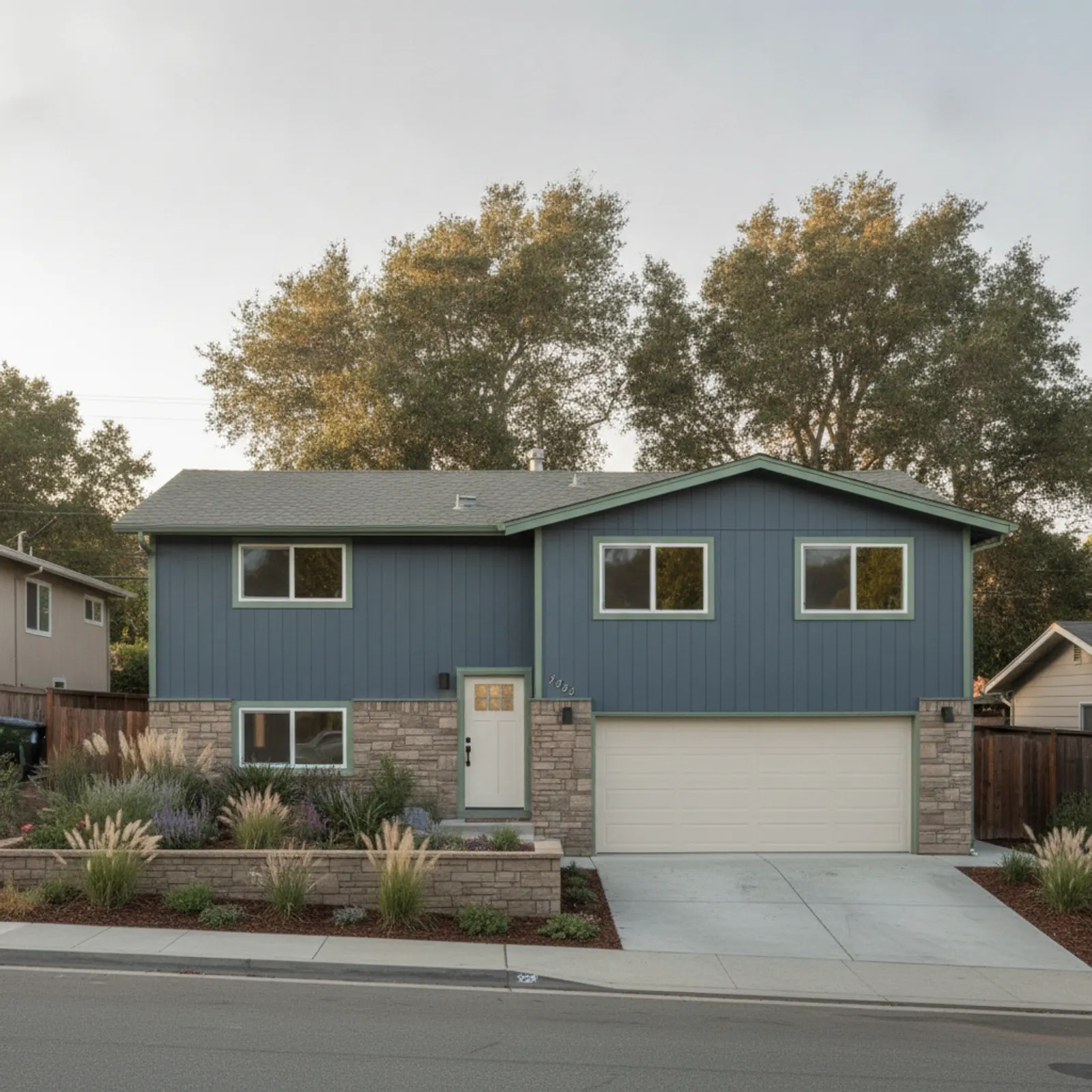
Exterior renovation in Milpitas
Milpitas anchors the northeast corner of Santa Clara County, wedged between the San Francisco Bay margins and the rising Diablo Range foothills around Calaveras Reservoir. It is a workaday Silicon Valley city built largely in the production booms of the 1960s through the 1980s, with later master-planned additions near Great Mall and the McCarthy Ranch corridor. That building history means whole neighborhoods reached the end of their original builder-grade cladding life at roughly the same time, which makes Milpitas a broad, steady re-side market rather than a boutique one.
Why Milpitas exteriors age the way they do
Two things drive siding failure in Milpitas, and they pull in different directions depending on where the home sits. Down on the bay-edge flats near Coyote Creek and the wetlands, fog drift and cool marine humidity keep north and east walls damp, so the failure mode is swelling, soft trim, and dry-rot at the base of walls. Up on the hillside streets above the valley floor, the same homes take more direct afternoon sun and wind. We read the lot's position on the slope before we scope, because a flats home and a hillside home in the same tract are not the same project.
Considering an exterior project in Milpitas?
Milpitas housing and architecture
Milpitas housing is dominated by single-family production tracts from the 1960s through the 1980s, the era of stucco-and-wood-trim and field-painted hardboard or T1-11 cladding that is now well past its service window. Newer master-planned communities and a heavy share of townhomes and attached housing fill in around the transit and Great Mall districts, and a band of larger hillside homes climbs the slopes toward the foothills. The tract homes respond well to a clean modern lap-and-batten re-side that updates dated elevations; the hillside homes carry more architectural ambition and reward proportioned trim. We design to the block, not to one template.
Built for Milpitas's bay-edge moisture
The controlling factor in Milpitas is bay-margin moisture. The city's low-lying western flats sit close to the wetlands and Coyote Creek, where marine fog rolls in and morning damp lingers on shaded walls long after the sun is up. That sustained wetting, not heat, is what rots the trim and swells the cheap substrates of the tract era. We specify fiber cement over a continuous, correctly lapped weather-resistive barrier with rigorous kick-out and ground-clearance detailing so wind-driven rain and fog condensation drain rather than soak. Inland heat is a real but secondary, manageable concern compared with keeping the wall assembly dry.
Recommended materials for Milpitas
James Hardie fiber cement is the core recommendation across Milpitas: it is dimensionally stable in damp marine air, does not feed rot the way the original hardboard did, and carries a factory finish that outlasts field paint in the fog belt. For the bay-edge flats, the moisture resistance is the whole argument. On lower-exposure hillside parcels where an owner wants deep wood character, engineered wood is a defensible choice when detailed and finished correctly. The non-negotiable in every Milpitas spec is the drainage plane behind the cladding, because the cladding material only performs as well as the wall it sheds water onto.
What an exterior project costs in Milpitas
Milpitas pricing turns on home size and stories, profile and trim complexity, and above all the condition of the substrate once the old cladding comes off — and on the damp flats that discovery skews worse, with more dry-rot at sills and wall bases than a dry inland city would show. Townhome and attached-housing work brings HOA coordination and shared-wall sequencing that add scope. Hillside lots add access and staging cost. We provide a written, scoped estimate after an on-site assessment so bids can be compared on substance, with the moisture-repair contingency kept visible rather than buried.
The bay-edge flats versus the hillside
Milpitas splits cleanly into two re-side worlds. The western flats below the valley floor, out toward the wetlands and the Great Mall and McCarthy Ranch corridors, are the moisture jobs: shaded, fog-touched, with the failures concentrated low on the wall. The hillside streets climbing toward the foothills are drier and sunnier, with more wind exposure and more architectural variety. We scope the flats for water management first and the hills for sun, wind, and detail. Treating them the same is the most common mistake we see on competitors' bids here.
Townhomes, HOAs, and attached housing
Milpitas carries an unusually large share of townhomes and attached communities, especially around the transit corridors. That changes a re-side from a single-owner decision into an association process: approved color and profile palettes, shared-wall and party-line detailing, and staging that does not block neighbors or common drives. We are comfortable working inside HOA architectural-review requirements and sequencing attached runs so the assembly stays watertight at every shared transition. Getting the documentation and approvals right up front is half the job on these properties.
Resale and the Silicon Valley buyer
Milpitas sells into a demanding, transit-and-tech-driven South Bay market where a tired field-painted exterior reads as deferred maintenance to buyers who know what that implies. A clean, modern fiber cement re-side with a current palette is one of the more legible value moves on a 1970s tract home here, because it signals the wall behind it has been addressed, not just repainted. We scope these with curb impact and durability in mind, not fine period restoration, which fits both the housing stock and the buyer pool.
City of Milpitas, city water, and Milpitas Fire
Working exteriors in Milpitas coordinates with a few local authorities. Building permits come through the City of Milpitas Building and Housing Services Department (Milpitas is a Santa Clara County city). Electric and gas are PG&E. Water is supplied by the City of Milpitas municipal utilities, sourcing wholesale from Valley Water (Santa Clara Valley Water District) with Hetch Hetchy Regional Water System supply as well. Fire response is the Milpitas Fire Department (city) alongside Santa Clara County Fire Department for adjacent unincorporated areas and CAL FIRE Santa Clara Unit (SCU) on wildland calls into the eastern foothill margins climbing toward Ed R. Levin County Park and the Diablo Range. The city's Planning Division reviews HOA-covenant exterior work on the numerous townhome and attached communities.
HZ10 and the Diablo-foothill FHSZ reality
Milpitas is in James Hardie's HZ10 climate zone; installing HZ5 is a documented warranty misapplication. On the fire side, the bay-flats bulk of Milpitas and the tract subdivisions sit in Low or Moderate FHSZ territory under California's 2025 LRA Fire Hazard Severity Zone map, while the eastern foothill parcels climbing toward Ed R. Levin County Park and the Calaveras Reservoir corridor carry Moderate to High designations. The 2020 SCU Lightning Complex (396,624 acres — California's second-largest recorded fire) burned in the Diablo range immediately east of Milpitas. On designated hillside parcels the 2025 California Wildland-Urban Interface Code governs the exterior wall. Chapter 7A moved into the standalone WUI Code on January 1, 2026.
Our process in Milpitas
- Step 1
Consultation
We listen to your goals and assess your home on site — exposure, substrate, and architecture.
- Step 2
Design & Proposal
A clear written proposal with the right system specified for your climate and a transparent scope.
- Step 3
Expert Installation
Trained crews install to manufacturer best practices with careful weather-management detailing.
- Step 4
Walkthrough & Support
A final walkthrough, full cleanup, and a clear written record of the scope completed — work we stand behind.
Milpitas rewards an exterior approach that reads the lot's place between the bay flats and the foothills and specifies the wall accordingly. We assess every Milpitas project on site so the system fits the home in front of us, and your written estimate governs the work. Reach out when you're ready for a straight read on what your exterior actually needs.
FAQ
Milpitas — Common Questions
Fiber cement, almost always. It resists the bay-edge moisture that rots the original hardboard and T1-11 on Milpitas's older tracts, and a factory finish outlasts field paint in the local fog belt.
Homes on the low western flats near the wetlands and Coyote Creek sit in lingering marine damp; shaded wall bases stay wet and the original cheap substrates swell and rot. Correct drainage detailing and fiber cement solve the cycle.
Yes. We work inside HOA architectural-review palettes, handle shared-wall and party-line detailing, and sequence attached runs so the assembly stays watertight at every transition.
Exposure is low for most of the city on the valley floor. Hillside parcels climbing toward the Diablo Range foothills carry more grassland-edge consideration, where non-combustible fiber cement is a sound choice.
When feasible, yes. Doing both ensures correct flashing integration against the bay-margin moisture, avoids duplicated trim work, and produces a better-performing exterior in one project.
No. Flats homes are scoped for moisture management first; hillside homes face more sun and wind. We read the lot's position on the slope before specifying the assembly.
In this transit-and-tech market a tired painted exterior reads as deferred maintenance. A clean modern fiber cement re-side signals the wall has been addressed and is one of the more legible value moves on an older tract home here.
A correctly installed fiber cement system over a sound drainage plane commonly performs 30+ years in Milpitas's climate, with factory finishes extending the cosmetic-refresh interval.
Helpful Exterior Guides