
9 min read · Buyer's Guide
Fresh exterior paint is one of the most reliable, lowest-cost ways to make a home show better before a sale — agents recommend it constantly, and for good reason. But 'increases home value' deserves an honest breakdown, because paint's resale effect is real yet harder to pin to a number than most people assume, and in some California situations painting is actually the wrong move versus re-siding. This guide covers what a fresh exterior coat can do for resale, why the value figures you'll see quoted are estimates rather than tracked data, and how to decide between painting and re-siding when your walls are due. Exterior painting is one of our core services, so we'll be straight about where it wins and where it doesn't.
Why fresh paint is such a strong resale signal
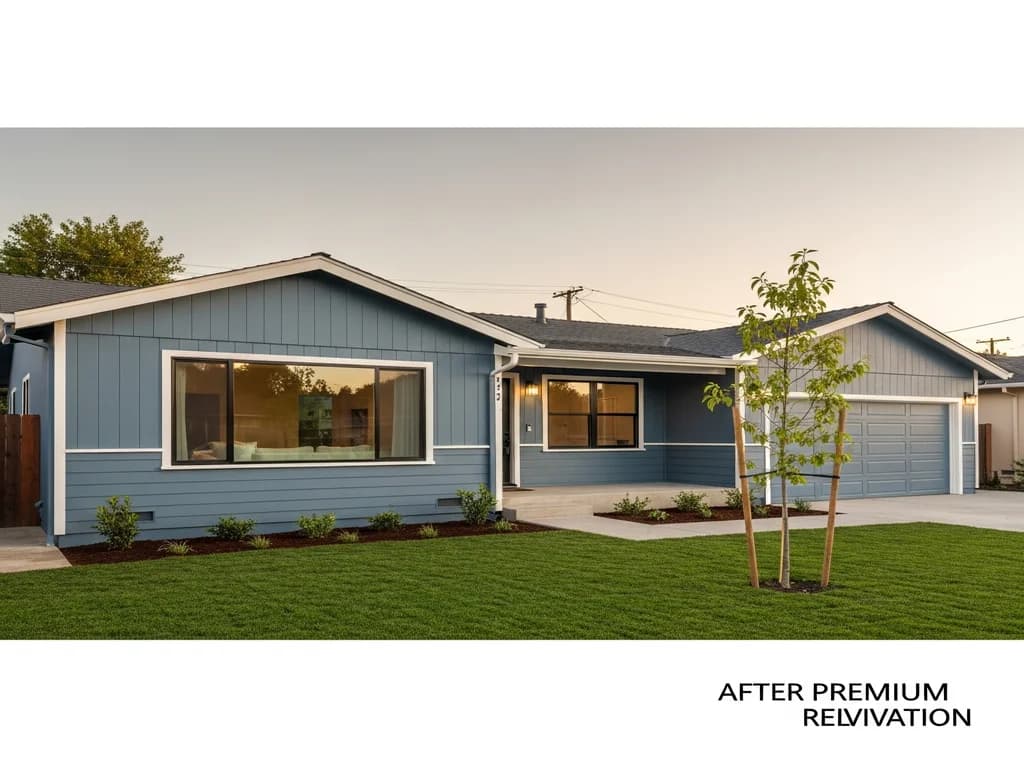
A clean, current exterior color does a lot of psychological work at almost no cost relative to other projects. It erases the visual cues of age — chalking, fading, peeling — that tell a buyer 'this home hasn't been kept up,' and it makes the whole façade read as maintained. That first-impression effect is measurable: a University of Texas at Arlington study, published in the Journal of Real Estate Finance and Economics, found curb appeal can account for up to 7% of a home's sale price (and as much as 14% in a cold market). Real-estate professionals reflect the same thing — Opendoor notes that a fresh exterior coat, roughly $3,000–$5,000 for a professional job on a typical home, is widely cited by agents as one of the best dollar-for-dollar improvements a seller can make. Paint doesn't add square footage or systems; it removes objections and lifts the impression, which is exactly what moves a sale.
About those 'paint adds X%' figures — they're estimates
You'll see claims that exterior paint adds anywhere from 2% to 5% (or more) to a home's value. Treat those as **estimates, not established fact.** Unlike siding, windows, or doors, exterior painting is **not** tracked in Zonda's Cost vs. Value Report, so there's no annual recouped-cost figure for it the way there is for a fiber-cement re-side (113.7%) or a window replacement (68.5%). The commonly cited percentage ranges come from agent surveys and market observation, and they vary widely with the home, the color, the local market, and the condition it's replacing. What's well-supported is the direction and the mechanism — fresh paint reliably improves curb appeal and buyer perception (the UTA and agent-survey evidence above). What's not precisely quantified is a universal 'paint = X% more value' rule. We'd rather tell you that honestly than repeat a number as if it were measured.
Paint or re-side? The California decision
Paint is the right resale move when your cladding is fundamentally sound — wood, fiber cement, or stucco in good shape — and just looks tired or dated. It's the cheap, fast refresh. It becomes the **wrong** move when you're using paint to mask a material problem: rotting wood, failing hardboard, or siding that's cracked, warped, or at the end of its life. Paint on failing siding is money spent to postpone a re-side, and a buyer's inspector will usually see through it. There's also a California-specific angle: in a wildfire-exposed area, painting old combustible siding does nothing for fire performance, whereas re-siding in noncombustible fiber cement (Class A per ASTM E84 — noncombustible, not 'fireproof') addresses a concern a growing number of buyers care about. The full material-vs-refresh tradeoff lives in our re-side vs. paint in California guide; use it when the walls themselves — not just the color — are the question.
Choosing a resale color — and getting the paint to last
If painting is the right call, color choice matters for resale: neutral, broadly appealing, era-appropriate colors sell better than bold personal statements, and a color that fits the neighborhood's vernacular reads as intentional rather than jarring. We're building a dedicated resale-color companion — best exterior colors for resale in California — for the full palette guidance; until then, the rule of thumb is to widen your buyer pool with restrained, current neutrals rather than narrow it. Two durability notes for our climate: intense Central Valley and foothill UV fades exterior paint faster than milder regions, so prep and quality product matter for a finish that still looks fresh at sale; and if you're on fiber cement, factory-applied color (like James Hardie ColorPlus) holds up longer than field paint. Whatever the color, a well-prepped, cleanly cut exterior coat is one of the highest-leverage, lowest-cost things you can do before listing in California.
Rough planning range for a professional exterior repaint (illustrative industry figures, not a Sierra Siding quote)
| Item | Typical range |
|---|---|
| Professional exterior repaint, typical single-family home | ~$3,000–$5,000+ |
This is a general industry estimate (via Opendoor) for planning only — not a Sierra Siding price, and not a value-added figure. Actual cost depends on home size, stories, prep, condition, and product. We scope and quote every project on site. Exterior paint is not tracked in the Cost vs. Value Report, so no standardized recoup percentage exists for it.
Key takeaways
- Fresh exterior paint is one of the cheapest, most reliable resale signals — it removes age cues and lifts curb appeal.
- Any 'paint adds 2–5%' figure is an ESTIMATE, not fact — paint isn't tracked in the Cost vs. Value Report like siding or windows.
- Well-supported: fresh paint improves buyer perception (UTA curb-appeal up to 7%; agents rank it a top dollar-for-dollar move).
- Paint the wrong walls and you're masking a problem — an inspector sees through it, and failing siding needs a re-side, not a coat.
- In wildfire areas, painting old combustible siding adds no fire value; noncombustible fiber cement does (Class A, not 'fireproof').
FAQ
Quick Answers
It reliably improves how a home shows, which supports its value — but the exact dollar impact is hard to pin down. A University of Texas at Arlington study found curb appeal can account for up to 7% of sale price, and agents consistently rank a fresh exterior coat (about $3,000–$5,000) among the best dollar-for-dollar pre-sale improvements (per Opendoor). It removes objections and lifts first impressions rather than adding square footage or systems.
Honestly, there's no tracked figure. Unlike siding or windows, exterior painting isn't measured in Zonda's Cost vs. Value Report, so claims that it 'adds 2–5%' are estimates from agent surveys and market observation, not established data. What's well-supported is the mechanism — fresh paint improves curb appeal and buyer perception — not a precise universal percentage. We'd rather say that than repeat a number as if it were measured.
Paint if the cladding is fundamentally sound and just looks tired — it's the cheap, fast refresh. Re-side if you'd be painting to mask a problem: rot, failing hardboard, or cracked and warped siding. Paint over failing siding usually just postpones the re-side, and an inspector will catch it. In wildfire areas there's an added factor — noncombustible fiber cement addresses fire concerns that paint can't. Our re-side vs. paint guide walks through the tradeoff.
Neutral, broadly appealing, era-appropriate colors that fit the neighborhood tend to sell better than bold personal statements — the goal is to widen your buyer pool, not narrow it. We're building a dedicated best-exterior-colors-for-resale guide for full palette guidance. Note that intense valley and foothill UV fades exterior paint faster here, so quality prep and product matter for a finish that still looks fresh at sale.
Not for fire performance. Painting old combustible siding refreshes the look but does nothing for how the wall behaves in a wildfire. If fire resilience is part of your resale story in a Wildland-Urban Interface area, re-siding in noncombustible fiber cement (Class A per ASTM E84 — noncombustible, not 'fireproof') is the upgrade that matters, and it's increasingly something California buyers ask about.
Sources
Authoritative references
- Opendoor — which home improvements increase value most (agent-survey framing on paint)
- University of Texas at Arlington — 'The cost of curb appeal? Study says 7%' (Journal of Real Estate Finance and Economics)
- Zonda — 2025 Cost vs. Value Report (exterior remodel ROI, national averages)
External links to government, code, and manufacturer sources. Sierra Siding is not affiliated with these organizations; references are provided for verification.