
10 min read · Buyer's Guide
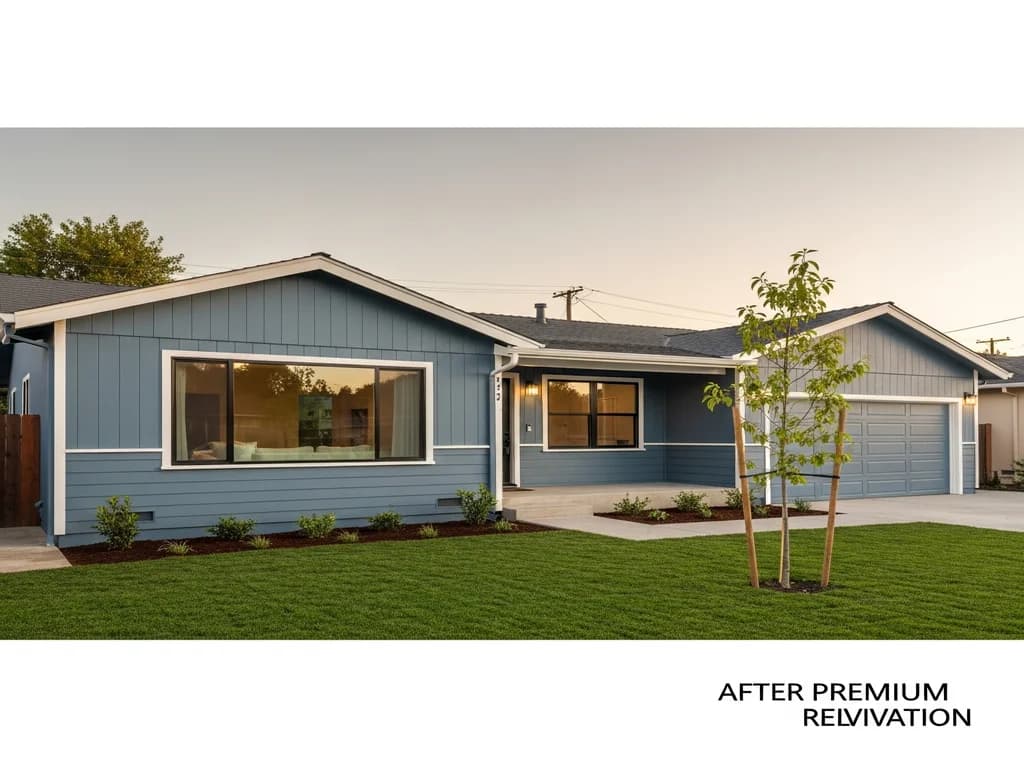
'Does new siding add value?' is really two questions wearing one coat. The first is about resale — will a buyer or an appraiser pay more for the house because of it — and the second is about the years you live there before any sale. This guide answers both honestly and shows the mechanics behind the number rather than repeating a marketing figure. The short version: siding is one of the better-recouping exterior projects in the national data, but 'recoup' is a resale-value ratio, not free money, and the real driver of appraised value is condition and effective age, not the brand of board. We'll walk the third-party numbers with their source attached, explain how an appraiser actually sees a re-side, and separate the sell-soon case from the stay-put case — because in California the right answer genuinely depends on which one you're in. For the timing side of a pre-listing re-side, we cross-link the siding ROI before selling guide; this page is about the value mechanics underneath it.
What the resale data actually says (and what 'recoup' means)
The most-cited third-party dataset is Zonda's annual 2025 Cost vs. Value report, which compares what a remodel costs against how much it adds to resale value in the year it studies. In the 2025 report, fiber-cement siding replacement recouped an estimated 113.7% of its cost (roughly a $21,485 job adding about $24,420 in resale value), and vinyl siding replacement recouped 96.5% — both among the strongest exterior projects, with fiber cement the top-ranked siding. It matters to read that figure correctly: 'recoup' is the share of project cost reflected in the home's resale value in the report's markets, and those are U.S. averages, not California figures or a Sierra Siding quote. A number above 100% does not mean a re-side hands you cash back; it means the project's resale contribution, on average, tracked at or above its cost — a genuinely favorable ratio, and unusual among remodels. Treat it as evidence that exterior replacements recover their money well, not as a promise your specific home will appraise a set dollar amount higher.
How an appraiser actually values your exterior
A re-side doesn't change value through a line item labeled 'new siding' — it changes it through condition and effective age. An appraiser rates the exterior's condition and estimates the home's 'effective age' (how old it functions, versus its actual year built) partly from the state of the cladding, trim, and paint. Tired, cracked, or dry-rotting siding pushes effective age up and condition rating down, which drags value and can scare a lender's appraisal on a buyer's loan. A sound, well-detailed exterior does the reverse: it lowers effective age and supports the top of the condition range for comparable homes. The practical consequence is that the value of a re-side is largest when it moves the home across a condition threshold — from 'deferred maintenance a buyer will discount' to 'move-in, nothing to fix.' A brand-new premium re-side on a house that already showed well adds less appraised value than the same job on a house whose failing siding was actively costing it comps. That's why the honest answer is conditional on where your exterior starts.
Fiber cement, vinyl, and stone — the value ranking in context
Across the 2025 Zonda categories, exterior replacements dominate the top of the recoup list, and the ranking is instructive. Manufactured stone veneer led all exterior remodels at 207.9% (a small-dollar accent project with an outsized ratio), fiber-cement siding followed the siding pack at 113.7%, and vinyl trailed at 96.5%. The lesson isn't 'always pick the highest ratio' — a stone-veneer accent and a whole-home re-side solve different problems — but that noncombustible, low-maintenance materials tend to carry value well because a buyer reads them as durable and done. In California specifically, fiber cement carries a second value lever the national number doesn't capture: it's noncombustible and code-appropriate in wildfire zones, which in foothill, wine-country, and Tahoe markets is increasingly a condition of the sale itself (covered in our fire-hardening value guide). The comparison table below maps each project to its Zonda recoup figure so you can see the ranking at a glance.
Curb appeal is part of the siding value — and it's measurable
A re-side's value isn't only structural; a large share of it is the first impression it creates. Independent research has put a number on that: a University of Texas at Arlington study found homes with strong curb appeal command roughly a 7% sale-price premium over comparable neighbors. Cladding, trim, and finish are the biggest single elements of that first impression, which is why a re-side that also modernizes color and profile can move value on two tracks at once — condition and appeal. We treat that as a companion lever rather than a substitute: a fresh exterior repaint captures much of the appeal gain for a fraction of a re-side's cost when the siding underneath is still sound, while a full re-side is warranted when the material itself is failing. The dedicated boost curb appeal in California guide breaks down the highest-impact levers; here the point is simply that appeal is a real, studied component of the value question, not a soft one.
Staying vs. selling — the honest split
The value math forks on your timeline. If you're selling within a year or two, the resale-recoup and curb-appeal numbers above are the relevant frame, and the decision is how far to take the work to clear buyer objections and support the appraisal — the siding ROI before selling guide is built for exactly that call. If you're staying, resale recoup is the wrong yardstick; the value is 'use value' — years of a maintenance-light, weather-tight, better-looking home, plus avoided repaint and repair cost across a fiber-cement exterior's long life, and in fire country the insurability and peace of mind a hardened envelope buys. Both are legitimate forms of value; they're just measured differently. The mistake we steer clients away from is spending to a resale spec on a house they'll hold for fifteen years, or under-building a pre-sale re-side that leaves the exact objection a buyer's inspector will flag. Tell us which case you're in and we scope to it.
What actually protects the value — the assembly, not the brand
Whatever material you choose, the value only holds if the work behind the cladding is right. A re-side's contribution to condition and appraised value evaporates if a skipped weather-resistive barrier or flashing detail lets moisture in — the boards look new while the wall quietly fails, and the next inspection surfaces it at the worst possible moment. This is the throughline of every honest cost and value conversation on this site: most of the money, and all of the durability, lives in the assembly, not the paint color. When you compare bids, normalize them on the barrier, flashing, clearances, and warranty rather than the headline total, and see our full exterior remodel cost guide and siding cost in California for how those choices flow into budget. When you want a read on your specific home — what condition it's starting from and what a re-side would actually move — request a free on-site estimate and we'll scope it honestly to your timeline and your parcel.
How exterior projects recoup their cost at resale — Zonda 2025 Cost vs. Value (U.S. averages, not a Sierra Siding quote)
| Exterior project | Cost recouped at resale | What it signals |
|---|---|---|
| Manufactured stone veneer | 207.9% | Highest-recouping exterior remodel in the 2025 report |
| Garage door replacement | 267.7% | Small-dollar swap, highest ratio overall |
| Fiber-cement siding replacement | 113.7% | Top-ranked siding; recoups above its cost |
| Vinyl siding replacement | 96.5% | Strong, but below fiber cement |
| Wood deck addition | 94.9% | Solid mid-pack exterior project |
Key takeaways
- Fiber-cement siding recouped an estimated 113.7% and vinyl 96.5% in Zonda's 2025 Cost vs. Value — U.S. averages, not California figures or a quote.
- 'Recoup' is a resale-value ratio, not cash back; above 100% means the project's resale contribution tracked at or above its cost on average.
- Appraisers value a re-side through condition and effective age, not a 'new siding' line item — the gain is largest when it clears a condition threshold.
- Curb appeal is a measured part of the value: a UT Arlington study found ~7% higher sale prices for homes with strong curb appeal.
- Staying vs. selling changes the yardstick — resale recoup for sellers, use-value and (in fire country) insurability for those who stay.
FAQ
Quick Answers
Generally yes, and it's one of the better-recouping exterior projects: Zonda's 2025 Cost vs. Value report put fiber-cement siding replacement at 113.7% cost recouped and vinyl at 96.5% (U.S. averages, not California-specific or a quote). But the gain comes through improved condition and lower effective age at appraisal, and it's largest when the old siding was failing enough to cost the home comparables. On a house that already showed well, a re-side adds less appraised value.
Not as cash. 'Recoup' is the share of the project's cost reflected in resale value in the report's markets — a favorable ratio, and unusual among remodels, but it isn't money handed back to you. A figure above 100% means the resale contribution, on average, tracked at or above the cost. Your specific home's appraisal depends on its condition, comparables, and market, not the national percentage.
Fiber cement leads the siding pack in the national recoup data and carries an extra California lever: it's noncombustible and appropriate in wildfire zones, which increasingly affects both insurability and buyer confidence in foothill, wine-country, and Tahoe markets. Manufactured stone veneer posts a higher ratio in the report, but it's an accent project, not a whole-home cladding — the two solve different problems.
Often, but measure it differently. If you're staying, resale recoup is the wrong yardstick — the value is years of a weather-tight, maintenance-light, better-looking home, avoided repaint and repair cost over a fiber-cement exterior's long life, and in fire country the insurability of a hardened envelope. Spending to a pure resale spec on a house you'll hold for fifteen years is the common mistake.
It can, indirectly. Appraisers factor the exterior's condition and effective age, so replacing failing, dry-rotting, or dated siding supports a stronger condition rating and can help the appraisal that a buyer's lender orders. The effect is real but bounded — it moves the home within the range its comparables support, and it depends far more on the quality of the assembly behind the boards than on the brand name.
Sources
Authoritative references
- Zonda — 2025 Cost vs. Value Report (national exterior-remodel cost recouped)
- University of Texas at Arlington — 'First impressions pay: curb appeal adds 7%' (Dr. Sriram Villupuram, 2025)
- National Association of REALTORS® — 2023 Remodeling Impact Report: Outdoor Features
External links to government, code, and manufacturer sources. Sierra Siding is not affiliated with these organizations; references are provided for verification.