
9 min read · Design
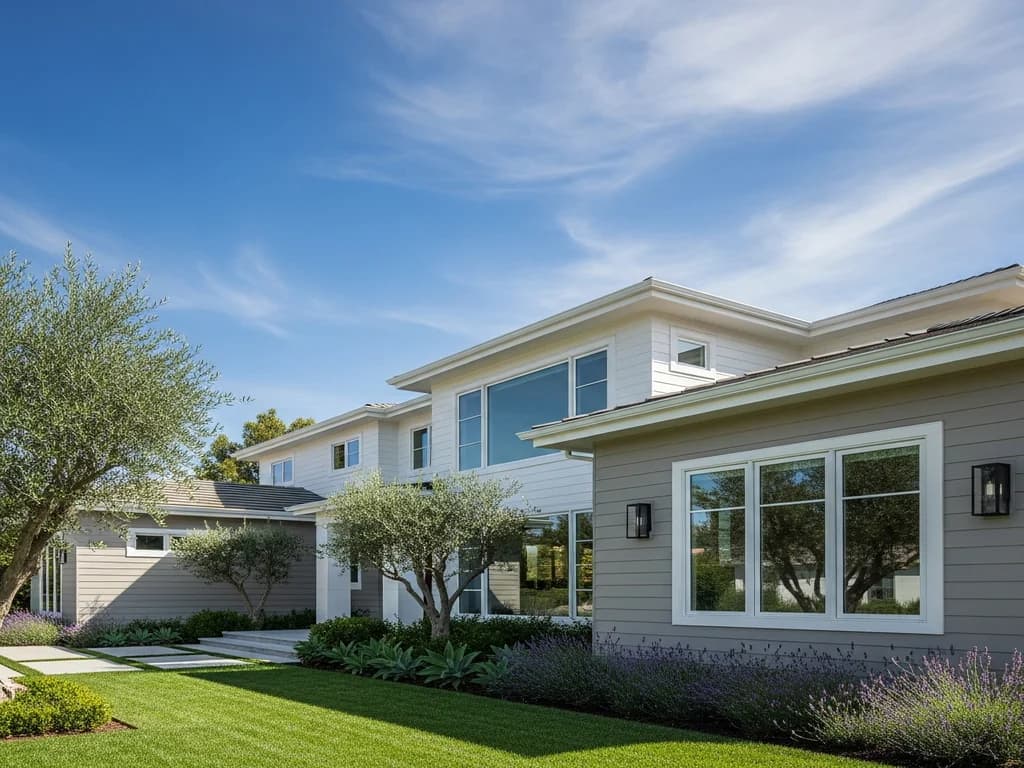
Curb appeal sounds soft, but the research treats it as a hard number. A University of Texas at Arlington study found that homes with strong curb appeal sell for roughly 7% more than comparable neighbors, and the National Association of REALTORS® reports that 97% of its members consider curb appeal important to attracting a buyer. That makes the front face of your house one of the highest-leverage places to spend on the exterior — and most of the levers that move it are the ones a siding-and-exterior contractor controls: the cladding itself, the trim, the paint, and the eave lines. This guide is about impact, not decoration: which exterior changes actually shift a California home's first impression, in what order, and how to get the appeal gain without overspending. We'll stay honest about what paint can do versus what only new cladding can, and we'll keep it California-specific — because color, glare, and fire context all read differently here than in a national blog.
Curb appeal, by the numbers — why it's worth spending on
Start with why this earns a budget line at all. The UT Arlington study, led by Dr. Sriram Villupuram and published in the Journal of Real Estate Finance and Economics, found homes with well-kept exteriors, tidy landscaping, and inviting entries commanded about a 7% premium over similar homes — and that the premium widened during downturns, when buyers favored standout homes over neglected ones. The NAR 2023 Remodeling Impact Report adds the practitioner view: 97% of REALTORS® say curb appeal matters to attracting a buyer, and 92% have advised sellers to improve it before listing. The takeaway isn't that a prettier house is nice-to-have; it's that first impressions are priced. Villupuram's own framing is that a cared-for exterior signals a cared-for interior, which lowers a buyer's perceived risk — and that signal is doing real work on the offer. Everything below is about capturing it efficiently.
The highest-impact lever: the cladding itself
Nothing changes a home's face as completely as its siding, because it's simply the largest visible surface. Replacing tired, chalky, or mismatched cladding with a clean, consistent fiber-cement profile resets the entire first impression in a way no single accent can — and it fixes appeal and condition at the same time, which is why it's the anchor move when the existing siding is genuinely worn. The design choices within it matter: profile (lap, panel, or shingle), the crispness of the reveal, and a factory color that holds against California UV rather than fading to the tired look you're replacing. When the siding is still sound, you usually don't need to replace it to gain appeal — that's what the paint and trim levers below are for. But when it's failing, a re-side is the one change that moves both appeal and appraised condition together, which is the most efficient version of this spend. Our best Hardie colors for California and exterior color palettes by home style guides help translate the material into a look.
Paint and color — the biggest gain per dollar
When the cladding is sound, a fresh exterior repaint is the highest appeal-per-dollar move available, and color choice is where most of the leverage sits. A cohesive, current palette — body, trim, and door working together — can make an unchanged house read as renovated. In California the color decision carries a climate wrinkle worth respecting: intense valley sun fades dark and saturated colors faster and runs hotter, so a color that looks great on a swatch can chalk early on a west-facing wall, which is the opposite of curb appeal two summers on. We steer clients toward saturation and finishes that hold up locally rather than trend colors that won't — see our color saturation for California exteriors and dark-color exterior guide. Paint is also the honest first step: if the appeal problem is dated color rather than failing material, repainting captures most of the gain at a fraction of a re-side's cost, and we'll say so rather than sell you cladding you don't need.
Trim, entry, and the details that read as 'cared for'
After the big surfaces, appeal is won in the details a buyer reads subconsciously. Crisp body-and-trim color contrast defines a home's lines and instantly reads as intentional; a refreshed or reframed entry — the front porch and door — is the focal point every listing photo leads with, and Villupuram's study specifically flags the entryway as one of the three curb-appeal drivers. Coordinated details finish the effect: gutters and downspouts that match rather than fight the palette (our gutter color coordination guide), and a roof-cladding-trim combination that agrees with itself (exterior color coordination). None of these is expensive on its own; together they're the difference between a house that looks maintained and one that looks like it's been let go — which is exactly the signal the research says buyers are pricing.
Don't skip the eaves — soffit and fascia frame the whole house
One lever homeowners routinely overlook is the eave line. Sagging, peeling, or dry-rotting soffit and fascia drag down the whole exterior even when the walls look fine, because they frame the roofline your eye follows across the house. Clean, straight, freshly finished eaves do the opposite — they make the roof and walls read as one crisp, maintained system. In California there's a second reason to get this right beyond appeal: enclosed, noncombustible eaves are part of wildfire home hardening, so on a fire-exposed parcel the eave upgrade that improves curb appeal also improves the home's ignition resistance and insurance standing (more in our fire-hardening value guide). It's a small budget item that punches above its cost on both fronts — appearance and, where it applies, resilience.
Sequencing it — appeal without overspending
The efficient order follows the money-per-impact curve. First, diagnose honestly: is the appeal problem dated color and worn finish (a paint-and-trim job), or genuinely failing material (a re-side)? Spending re-side money to fix a paint problem is the most common waste, and spending paint money on cladding that's rotting behind it is the most common false economy. Second, capture the biggest surface first — repaint or re-side the body — then let trim, entry, gutters, and eaves finish the effect. Third, keep the choices California-durable so the appeal survives the sun. This appeal spend also feeds the value question directly: a stronger first impression supports both the resale premium the research describes and the condition rating an appraiser assigns — see our does new siding increase home value guide for that mechanics side, and full exterior remodel cost for budgeting the larger version. When you want a walk-through of which levers your specific house actually needs, request a free on-site estimate.
Curb-appeal levers by impact and cost (qualitative)
| Lever | Sierra Siding service | Relative impact | When it's the right move |
|---|---|---|---|
| Re-side the body | Fiber-cement / Hardie siding | Highest — resets the whole face | When cladding is worn, cracked, or failing |
| Repaint body, trim & door | Exterior painting | High per dollar | When siding is sound but color is dated |
| Body-trim color contrast | Painting / color design | Medium-high | To define lines and read 'intentional' |
| Refresh the entry / porch | Siding & trim | High visual focal point | The element every listing photo leads with |
| Renew soffit & fascia | Soffit & fascia | Quiet but framing | Sagging/peeling eaves; fire-exposed parcels |
Key takeaways
- Curb appeal is measurable: a UT Arlington study (Dr. Villupuram, JREFE) found homes with strong curb appeal sold for ~7% more than comparable neighbors.
- 97% of REALTORS® say curb appeal matters to attracting a buyer, and 92% advise improving it before listing (NAR 2023 Remodeling Impact Report).
- The cladding is the highest-impact lever because it's the largest visible surface; a re-side fixes appeal and condition together when the material is failing.
- When siding is sound, paint and coordinated trim capture most of the appeal gain per dollar — with California-durable color that resists UV fade.
- Soffit, fascia, and the entry are overlooked levers; enclosed noncombustible eaves also add wildfire resilience on fire-exposed parcels.
FAQ
Quick Answers
Yes, and it's been measured. A University of Texas at Arlington study (Dr. Sriram Villupuram, published in the Journal of Real Estate Finance and Economics) found homes with strong curb appeal sold for roughly 7% more than comparable neighbors, and the premium grew during downturns. The National Association of REALTORS® reports 97% of its members consider curb appeal important to attracting a buyer. A cared-for exterior signals a cared-for interior, which lowers a buyer's perceived risk.
The cladding, because it's the largest visible surface. If your siding is worn or failing, a re-side resets the entire first impression and improves appraised condition at the same time. If the siding is sound and the problem is dated color, a fresh exterior repaint with a cohesive, current palette captures most of the appeal gain for a fraction of the cost. Diagnosing which case you're in is the key first step.
It depends on the siding's condition. If the material is sound, paint is the best appeal-per-dollar move — new color on the body, trim, and door can make an unchanged house read as renovated. If the cladding is cracked, chalky, or rotting, paint only masks it briefly; a re-side is the change that fixes appeal and condition together. We'll tell you honestly which one your house needs rather than selling cladding you don't.
They behave differently here. Intense valley sun fades dark and saturated colors faster and runs hotter on the wall, so a trendy dark color can chalk early on a west-facing elevation — the opposite of curb appeal two summers later. Choosing saturation and finishes proven to hold up in California conditions keeps the appeal you paid for. Our color-saturation and dark-color guides cover how to pick a look that lasts locally.
More than people expect. The eave line frames the roof your eye follows across the house, so sagging, peeling, or dry-rotting soffit and fascia drag down the whole exterior even when the walls look fine. Renewing them makes the roof and walls read as one crisp system. On fire-exposed California parcels there's a bonus: enclosed, noncombustible eaves are also part of wildfire home hardening.
Sources
Authoritative references
- University of Texas at Arlington — 'First impressions pay: curb appeal adds 7%' (Dr. Sriram Villupuram, 2025)
- National Association of REALTORS® — 2023 Remodeling Impact Report: Outdoor Features
- Zonda — 2025 Cost vs. Value Report (national exterior-remodel cost recouped)
External links to government, code, and manufacturer sources. Sierra Siding is not affiliated with these organizations; references are provided for verification.