
5 min read · Cost
Picture windows are large fixed panes built to frame a view rather than to ventilate, and that single design choice changes how they are priced, specced, and installed compared to ordinary windows. They are usually paired with operating windows alongside for airflow. Here is the framework for what drives a California picture-window price, where the structural and glass costs hide, and how to spec one so it performs.
Why picture windows are priced by glass area
Unlike standard windows, which are quoted per unit, a picture window above a certain size is generally priced by the square foot of glass, because the glass package and the structure to carry it scale with area rather than with a fixed sash count. That is why a modest picture window and a wall-sized one in the same frame material can be worlds apart on cost. Frame material sets the per-square-foot band — vinyl is the value tier, fiberglass and thermally-broken aluminum sit in the middle, and wood-clad is the premium. The comparison table on this page lays out the per-square-foot ranges; our window frame materials guide explains why each tier lands where it does.
How size drives the engineering and the math
Large fixed panes have to resist wind load without bowing, so beyond a point the glass gets thicker and the frame and mulling get beefier to carry the weight without sagging — costs that climb faster than the square footage alone would suggest. There are also hard manufacturer size limits; cross them and you move from stock production into custom orders with longer lead times and higher prices. This nonlinear behavior is the single most important thing to understand about picture-window budgeting: doubling the visible glass does not simply double the cost, it pushes you up through structural thresholds.
Glass spec is where performance is won or lost
On a large fixed pane, the glass package matters more than on any small window, because a big south- or west-facing expanse with the wrong spec becomes a serious cooling-load liability. Low-SHGC, low-E glass is essential on sun-exposed elevations to control heat gain, and the right U-factor keeps it efficient — the ENERGY STAR windows guidance and the NFRC ratings are the references to read those numbers correctly. Tempered safety glass is frequently code-required on large panes near doors, walkways, or low sills. Triple-pane is rare on picture units because the added weight and structure raise cost sharply.
Install complexity on large fixed units
Past a certain size, the unit becomes a multi-person or equipment lift rather than a one-installer job, which shows up in labor cost. Replacing an old picture window with a new one of a different size can require structural review and reframing of the rough opening rather than a simple swap. Because these units are heavy and the opening is large, flashing and integration with the surrounding wall have to be done carefully to avoid leaks — this is exactly the kind of detail we coordinate with the weather-resistant exterior assembly when siding and windows are touched together.
Paired-unit configurations and total assembly cost
Picture windows are rarely installed alone, because a fixed pane provides no ventilation. The common configuration is a central picture flanked by operating units — casements or double-hungs — that handle airflow while the picture carries the view. When you budget, price the whole assembly: the picture pane, the operating flankers, and the mulling that joins them into one structural unit. The operating units add per-unit cost on top of the picture's glass-area cost, so a three-wide assembly is meaningfully more than the picture alone. Plan the configuration around where you actually want to open a window, not just the view.
Where picture windows fit architecturally
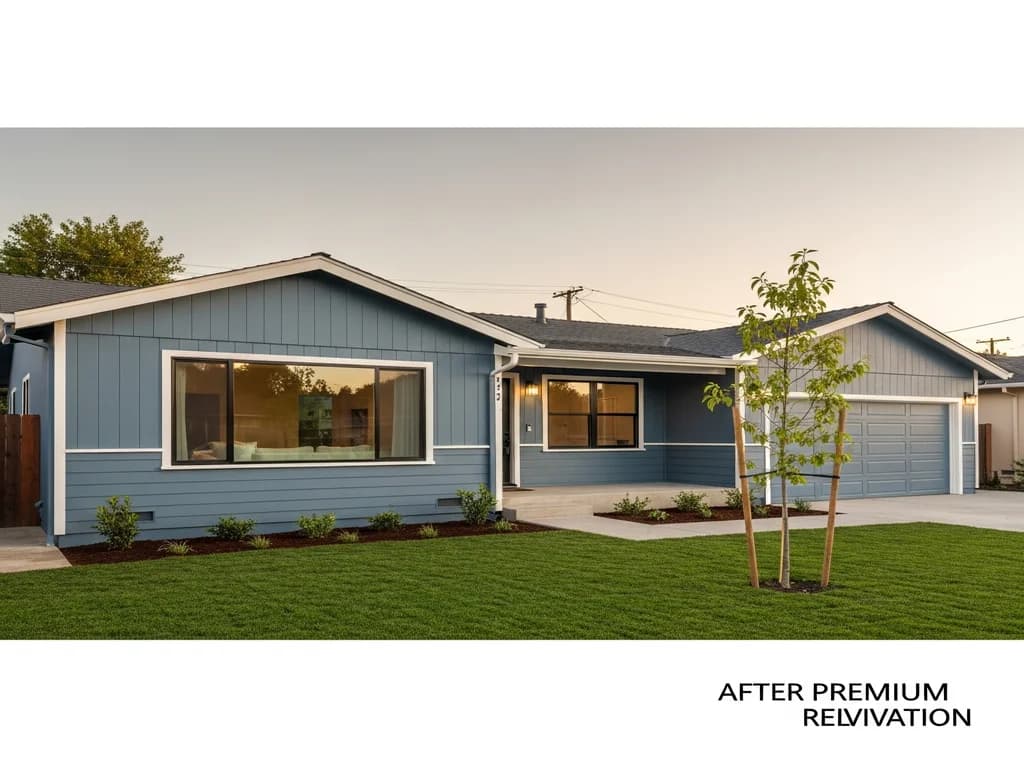
Picture windows belong on modern, contemporary, and view-oriented homes, and they shine on properties with a view worth framing — a Tahoe lakefront outlook, a foothill ridge, or a wine-country vineyard. They are a poor fit on dense urban infill with nothing to look at, or on homes where ventilation matters more than the view. The honest design question is whether the orientation earns a large fixed pane; if it does, the window becomes the room's focal point. If it doesn't, the money is better spent on operable glass.
California climate considerations by region
Spec follows climate. In the Sacramento Valley, low-SHGC glass is essential on south and west elevations and you pair the picture with operable flankers for cross-ventilation against summer heat. In Tahoe, thermal performance and a low U-factor lead — fiberglass or wood-clad frames carry a heated load better and resist freeze-thaw, and Title 24 large-glazing rules apply per the California Energy Commission standards. In the Bay Area, valley logic applies plus moisture-resistant detailing on coastal exposures. We scope glass package by elevation, not one spec for the whole house.
Picture window cost by frame material
| Frame material | Per sq ft of glass | 5'×6' typical |
|---|---|---|
| Vinyl | $35-$65 | $1,100-$2,000 |
| Fiberglass | $55-$95 | $1,700-$2,900 |
| Wood-clad | $75-$120+ | $2,300-$3,600+ |
| Aluminum thermally-broken | $65-$110 | $1,900-$3,300 |
Key takeaways
- Picture windows are priced by glass area, not per unit
- Cost climbs nonlinearly with size as glass and frame thresholds are crossed
- Low-SHGC, low-E glass is critical on large sun-facing panes
- Tempered safety glass is often code-required near doors, walkways, or low sills
- Pair with operable flankers for ventilation and budget the whole assembly
- Spec glass by region — cooling-load in the valley, low U-factor in Tahoe
FAQ
Quick Answers
Above a certain size it is priced by the square foot of glass rather than per unit, because the glass package and supporting structure scale with area. Frame material sets the per-square-foot band.
It is manufacturer-dependent; standard production typically tops out around eight by ten feet, and anything larger moves to custom orders with structural considerations and longer lead times.
On a Tahoe heated load it can be; in the cooling-driven valley it usually isn't. Dual-pane low-E with the correct SHGC is generally the right answer.
Often yes on large panes near doors, walkways, or low sills, where safety glazing is code-required. Your installer confirms it against the specific opening location.
A picture pane is fixed and provides no airflow, so it is typically flanked by operable casements or double-hungs that handle ventilation while the picture frames the view.
If the damage comes from a covered peril such as a storm or falling tree, it generally is — but confirm specifics with your policy and carrier.
Sources
Authoritative references
- ENERGY STAR — Residential Windows, Doors & Skylights
- National Fenestration Rating Council (NFRC) — window performance ratings
- Contractors State License Board (CSLB) — verify a California contractor
External links to government, code, and manufacturer sources. Sierra Siding is not affiliated with these organizations; references are provided for verification.