
12 min read · Guide
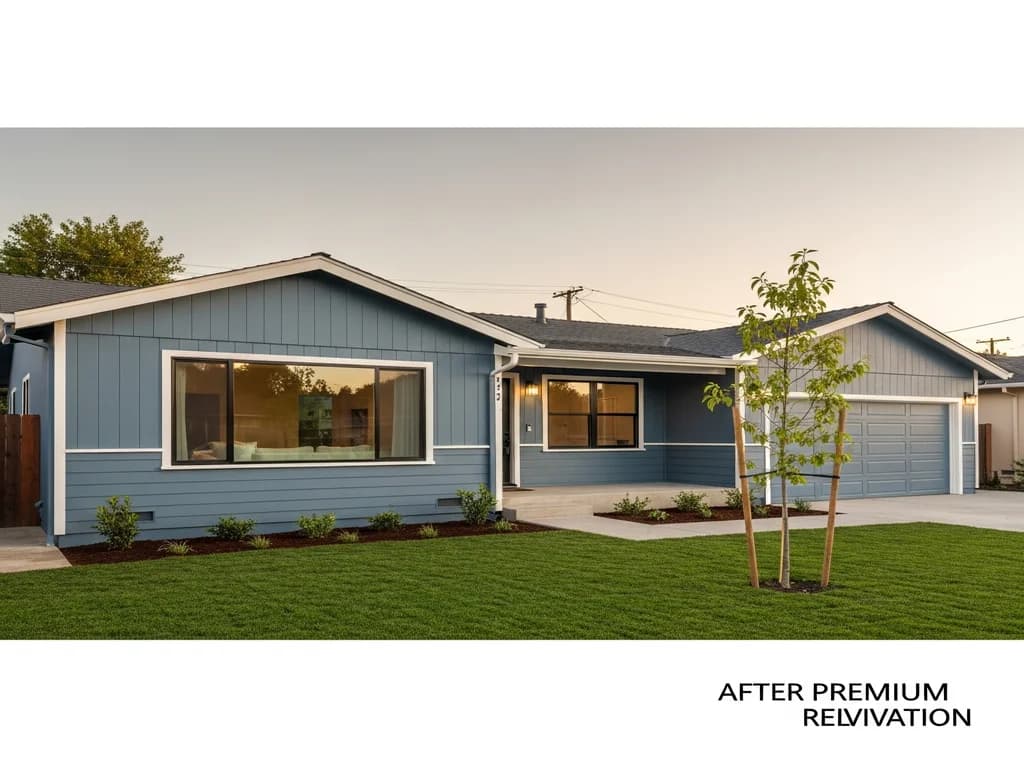
Re-siding a California home pulls together four decisions at once: which material fits your architecture and fire zone, what an honest bid actually covers, how to vet the contractor, and what the calendar really looks like. This guide stitches those threads into one framework so you can scope a project across the valley, foothills, Tahoe, or the North Bay coast without guessing.
Start with material, then climate zone
Material choice in California is rarely a free-for-all because climate and fire exposure narrow it fast. Fiber cement leads statewide for its Class A non-combustibility, dimensional stability, and factory-finished ColorPlus durability, which is why it suits valley, foothill, and mountain work alike. Engineered wood remains a credible warm-grain alternative on parcels outside the wildland-urban interface. Vinyl has narrow budget use, and stucco persists on Spanish-revival and Mediterranean homes. Before you fall in love with a look, confirm whether your parcel sits in a Fire Hazard Severity Zone, because that determines what assemblies are even permitted. Our California siding types overview walks through each material's real-world fit so the choice follows the home rather than the brochure.
What an honest written estimate itemizes
A complete re-side bid is more than a per-square-foot figure. It should separate tear-off and disposal, the weather-resistive barrier and integrated flashing, the cladding installed to manufacturer spec, the finish program, trim and architectural detail, a stated substrate-repair allowance, and permit coordination. The line that protects you most is the substrate allowance, because hidden dry rot or undersized flashing is common once old cladding comes off. Vague bids invite change-order surprises; itemized bids let you compare apples to apples. Pricing belongs in your written estimate after an on-site scope, and that document is what governs the job. Verify any contractor's standing through the state license board at CSLB before you compare numbers at all.
Contractor selection beats chasing the lowest bid
The cheapest quote is frequently the least complete one, especially in fire-zone work where a cladding-only number quietly omits the hardened assembly. Confirm a current CSLB license, active general-liability and workers'-comp coverage, and call three recent local references rather than reading testimonials. Walk a completed project if you can. Ask for the workmanship-warranty document in writing and read what voids it. Manufacturer designations like Hardie Preferred are a positive signal, not a substitute for verification, and we won't claim certifications we don't hold. Our guide to choosing a California siding contractor lays out the questions that separate a genuine pro from a high-pressure sales visit.
The realistic timeline, first call to walk-through
Homeowners consistently underestimate the front end. From first call to a written estimate is typically one to three weeks. From signed estimate to project start runs another four to ten weeks once permits, material lead times, and crew scheduling stack up. The visible work is faster: tear-off and dry-in take one to four days, cladding install three to ten days, and trim and finish two to five days. Total span is usually eight to eighteen weeks first call to completion, with foothill, Tahoe, and premium custom homes running longer because of access, fire detailing, and snow seasons. Building the permit-and-lead-time reality into your expectations prevents the frustration of thinking install week is start week.
Fire-zone scope changes the whole assembly
On parcels inside a designated Fire Hazard Severity Zone, the project is no longer just cladding. The 2025 California Wildland-Urban Interface Code reshapes the envelope: ember-resistant vents, boxed non-combustible eaves and soffits, and ground-to-wall Zone 0 detailing become required scope, not optional finishes. Fiber cement's non-combustibility is the easy part; the cost-relevant work lives in those details around it. A re-side is the right moment to harden the whole assembly because the walls are open. Homeowners can confirm their zone through CAL FIRE and review the official WUI Code text before scoping a foothill or mountain job.
Decisions you'll make mid-project
Even after signing, several choices remain yours. You'll lock a specific product line within the chosen material, then a body color and a trim color from the ColorPlus palette or a field-paint program. You'll decide whether to replace windows during the re-side, which is usually cheaper than a separate later mobilization. HOA submittals get prepared where applicable. And when tear-off reveals substrate damage, you'll approve the repair scope against the allowance in your estimate. Knowing these decision points arrive lets you prepare answers rather than being rushed. We scope on site and keep you informed so none of these choices land as a surprise change order.
Long-term outcome and where we fit
A quality California Hardie install with routine maintenance commonly delivers 30-plus years of service, with the ColorPlus finish holding well for many years before attention is warranted. Maintenance is light: an annual gentle wash and a caulk-joint inspection. Spot repair is generally feasible, while multi-elevation finish failure becomes a re-side conversation rather than a patch. Sierra Siding works across the Sacramento Valley, the Placer and El Dorado foothills, Tahoe, the Bay Area, and the North Bay coast, with fiber cement and James Hardie installation as our core specialty alongside weather-resistant exterior systems. We're transparent about scope, timeline, and what's realistic, and your written estimate is what governs.
California siding replacement complete framework
| Stage | Key elements |
|---|---|
| Material decision | Hardie (dominant), LP SmartSide (non-WUI), vinyl (limited), stucco (specific styles) |
| Cost framework | $25K-$110K+ depending on tier and scope |
| Contractor selection | CSLB + insurance + references + scope itemization |
| Timeline | 8-18 weeks first call to completion |
| Process | Estimate → Permit → Tear-off → Install → Trim → Walk-through |
| Long-term outcome | 30+ year service with quality install + maintenance |
Key takeaways
- Fiber cement leads California re-sides for fire, stability, and finish life
- Confirm your Fire Hazard Severity Zone before choosing a material or look
- An honest bid itemizes tear-off, WRB, cladding, finish, trim, and a substrate allowance
- Verify CSLB license, insurance, and three references over chasing the lowest number
- Plan eight to eighteen weeks first call to completion; permits drive the front end
- Expect 30-plus years of service with quality install and light annual maintenance
FAQ
Quick Answers
Install quality and contractor selection. Material matters, but a correctly built and flashed assembly outlasts a premium product installed poorly.
If they're near end of life, yes. Doing both during one open-wall mobilization is usually cheaper than scheduling a separate window job later.
Check whether your parcel sits in a Fire Hazard Severity Zone or State Responsibility Area. If it does, the hardened assembly is required scope, and your bid should reflect it.
Usually because one includes the full assembly, allowances, and permits while another quotes cladding only. Itemized scope is the only fair way to compare.
Eight to eighteen weeks from first call to completion in most cases, with permits and material lead times accounting for the longest stretch.
Treat them as starting points only. Verify the license at CSLB, confirm current insurance, and call recent references directly.
Sources
Authoritative references
- James Hardie — official product & installation resources
- Contractors State License Board (CSLB) — verify a California contractor
- CAL FIRE — California Department of Forestry and Fire Protection
- 2025 California Wildland-Urban Interface Code (Title 24, Part 7) — exterior walls & wall coverings, §504.5
- Zonda — 2025 Cost vs. Value Report (exterior remodel ROI)
External links to government, code, and manufacturer sources. Sierra Siding is not affiliated with these organizations; references are provided for verification.