
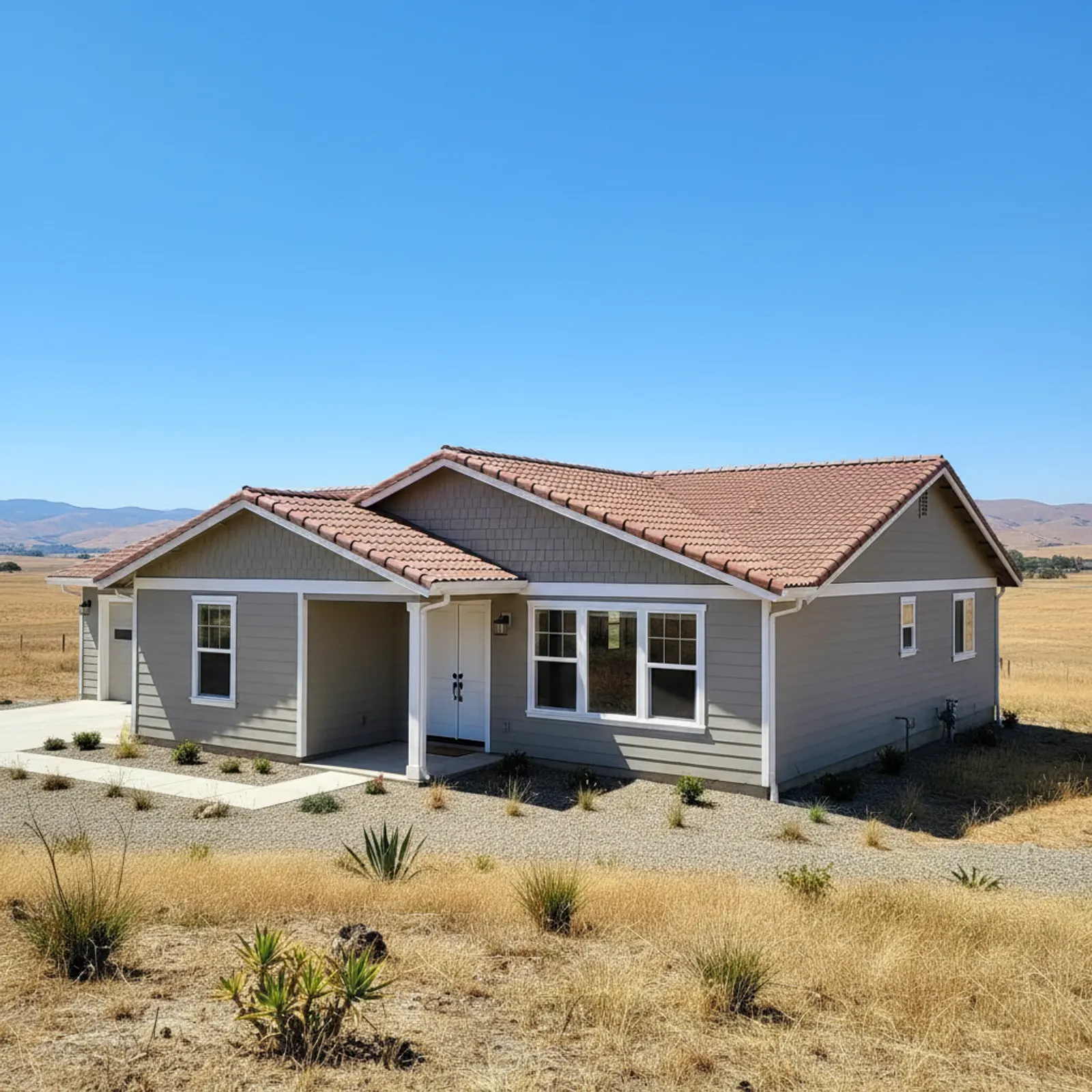
Exterior renovation in King City
King City anchors the southern Salinas Valley — the most agricultural, least coastal-influenced part of Monterey County, a small ranching-and-farming city well over an hour inland from the bay. Its exterior reality is pure interior valley: hot, dry, dusty, high-UV summers and open-country wind, with no salt-air factor at all.
Why King City siding wears the way it does
The real stressor here is not rain — it's the daily temperature swing. Summer afternoons push past anything the coast sees, then drop sharply after dark, and that expansion-and-contraction cycle works fasteners loose and opens caulk joints over time. Add fine farm dust blowing off the surrounding row crops and orchards, which settles into weep channels and trim reveals, and ordinary cladding chalks, gaps, and grays out early. We plan for movement rather than fight it: generous expansion gaps, flexible high-movement sealants, smooth dust-shedding profiles, and color-stable fade-resistant finishes in lighter heat-reflective tones. The result is an exterior still looking intentional after a decade of King City summers.
Considering an exterior project in King City?
King City housing and architecture
King City's stock is older small-town homes near the historic core, modest mid-century and later tracts, and rural and ranch parcels across the surrounding farmland. Practical, durable, low-maintenance exteriors suit both the modest town homes and the working rural properties.
King City's southern-valley climate
King City is among the hottest, driest parts of Monterey County in summer, with intense UV, agricultural dust, and strong open-country wind; winters are cool with occasional frost. Heat, UV, and wind-driven dust and rain govern the specification; there is no coastal salt consideration here.
Recommended materials for King City
James Hardie fiber cement with a low-maintenance fade-resistant factory finish and wind-aware fastening is the core recommendation — heat- and UV-durable, non-combustible, dust- and weather-shedding, and far longer-lasting than original cladding, with minimal upkeep for a practical rural market.
What an exterior project costs in King City
King City pricing follows the standard drivers — size and stories, trim complexity, substrate and dry-rot condition, window integration, open-country wind detailing, and the weather-management scope. We provide a written, scoped estimate after an on-site assessment.
Detailing for King City's heat-and-dust cycle
The hard part of building exteriors in King City is not rain, it is the daily temperature swing. Summer afternoons push well past anything the coast sees, then drop sharply once the valley cools after dark, and that expansion-and-contraction cycle works fasteners loose and opens caulk joints over time. We plan for movement rather than fight it: generous expansion gaps at siding terminations, flexible high-movement sealants instead of cheap painter's caulk, and color-stable, fade-resistant finishes that hold up to the relentless UV load this far inland. Farm dust is the other constant here. Fine grit blowing off the surrounding row crops and orchards settles into weep channels, screen vents, and trim reveals, so we favor smooth profiles that shed it and details that can be hosed clean rather than deeply textured surfaces that trap grit. Light, heat-reflective tones also keep wall assemblies cooler than the dark colors that bake in this sun. The goal is an exterior that still looks intentional after a decade of King City summers, not one that chalks, gaps, and grays out early.
Access and logistics for in-town and ranch jobs
King City work splits into two very different job sites, and we scope each one accordingly. In the older blocks near the historic downtown, lots are tighter, homes sit close to the street, and a project means coordinating staging, dumpster placement, and material drops without blocking narrow frontage or a neighbor's driveway. Out on the surrounding farm and ranch parcels, the challenge flips: long private drives, gravel access, gates, and real distance from the nearest supply yard. Because this far-south corner of the Salinas Valley is a long haul from the coastal supply houses, we batch deliveries and order generously up front rather than counting on quick same-day runs for a missed bundle of trim. Permitting runs through Monterey County and the City of King for in-town addresses, and rural properties can carry their own setback and septic considerations worth confirming before crews mobilize. We walk the site early to sort out water access, power for tools, and where a crew can safely park and load, so the first day is spent building rather than untangling logistics on a remote valley lot.
Our process in King City
- Step 1
Consultation
We listen to your goals and assess your home on site — exposure, substrate, and architecture.
- Step 2
Design & Proposal
A clear written proposal with the right system specified for your climate and a transparent scope.
- Step 3
Expert Installation
Trained crews install to manufacturer best practices with careful weather-management detailing.
- Step 4
Walkthrough & Support
A final walkthrough, full cleanup, and a clear written record of the scope completed — work we stand behind.
King City rewards a tough, low-maintenance exterior built for hot, dusty, windy southern-valley conditions.
FAQ
King City — Common Questions
Low-maintenance James Hardie fiber cement with wind-aware fastening — heat- and UV-durable, non-combustible, dust- and weather-shedding, and far longer-lasting than original cladding.
No — King City is the most inland part of Monterey County, well over an hour from the coast. The priorities are heat, UV, dust, and open-country wind.
Yes — strong open-country wind drives dust and rain into walls, so wind-aware fastening and flashing matter here.
Original cladding reaches end of life after decades, and intense southern-valley UV plus wind-driven grit accelerate it. Fade-resistant, wind-aware detailing resolves it.
Low for the town; surrounding dry rangeland carries a modest seasonal grass-fire consideration on rural parcels.
Yes — including tough, low-fuss systems suited to working rural and ranch buildings.
When feasible, yes — correct flashing integration matters more in a hot, windy, dusty environment.
A correctly installed fiber cement system commonly performs 30+ years in King City's hot, dry, windy southern-valley climate.
Helpful Exterior Guides