
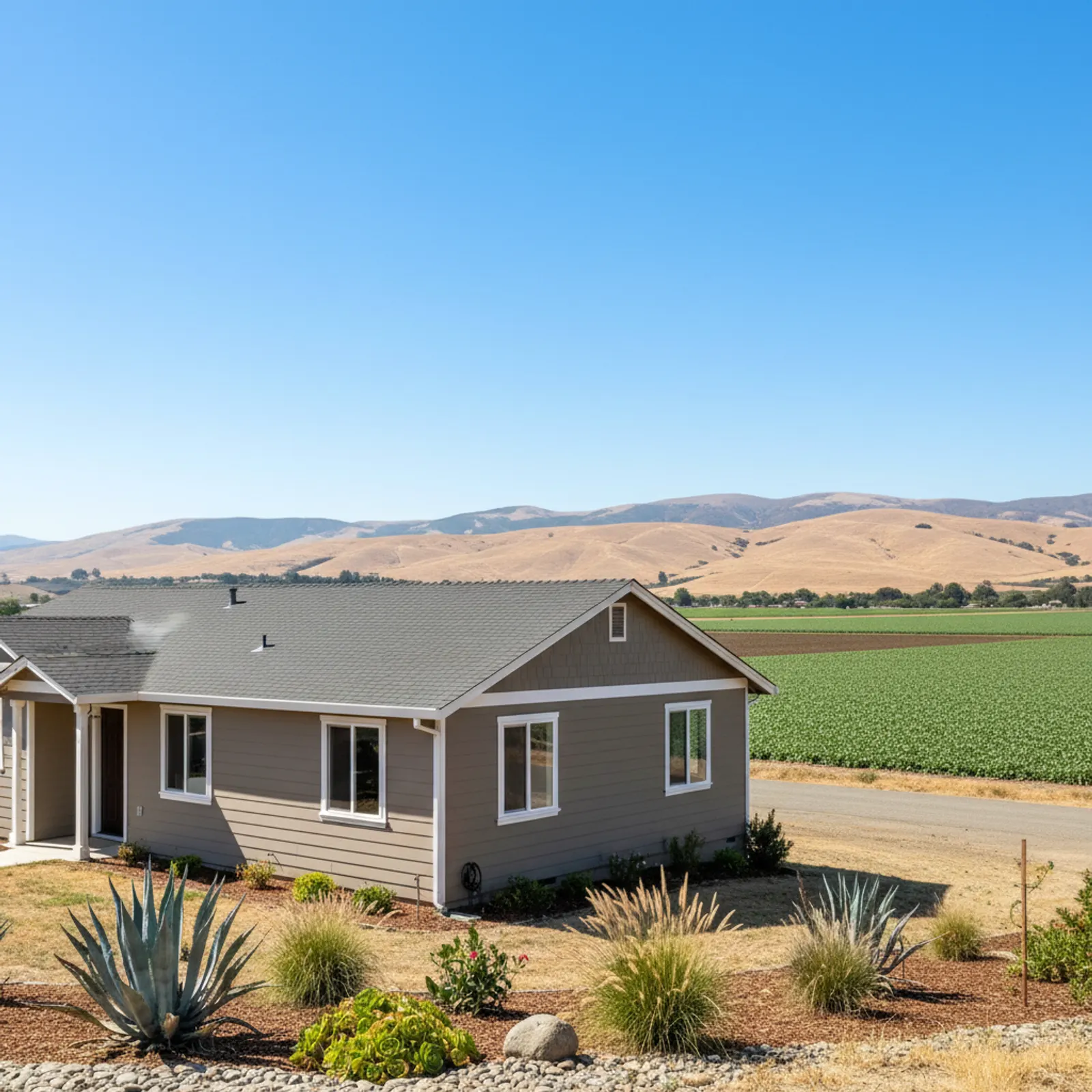
Exterior renovation in Soledad
Soledad sits in the heart of the Salinas Valley below Salinas — a historic mission town that has grown steadily with newer family-oriented subdivisions serving the surrounding agricultural economy. Far from the coast, its exterior priorities are inland: hot, dry, dusty summers and strong down-valley wind, not salt air.
What a re-side delivers in Soledad
Soledad's market is practical: tied to the valley's agricultural workforce, it rewards homes that read maintained and move-in ready over showy custom work. Many of the 1990s–2010s subdivisions are now hitting the age where builder-grade cladding fails on the heat- and UV-punished south and west walls first, and the steady down-valley wind compounds it by driving rain into those same elevations. A re-side here erases the single most visible defect a buyer or inspector flags, while a low-maintenance fiber cement system with wind-aware fastening ends the repaint cycle valley heat forces every few years. We size the spec to what this modest market actually returns rather than over-improving for the street.
Considering an exterior project in Soledad?
Soledad housing and architecture
Soledad's stock blends older town homes near the historic core and mission, 1990s–2010s modest subdivisions, and rural and ag-edge parcels. The newer subdivisions modernize well with a clean, durable lap-and-batten re-side; rural and working properties favor low-fuss systems.
Soledad's Salinas Valley climate
Soledad runs hot and dry in summer with strong UV and agricultural dust, plus the sustained down-valley wind the Salinas Valley funnels through. Heat- and UV-durable finishes with wind-aware fastening define the specification — there is effectively no salt-air consideration this far inland.
Recommended materials for Soledad
James Hardie fiber cement with a low-maintenance fade-resistant factory finish and wind-aware fastening is the core recommendation — heat- and UV-durable, non-combustible, and far longer-lasting than the original cladding on most Soledad homes, with minimal upkeep suited to the practical local market.
What an exterior project costs in Soledad
Soledad pricing follows the standard drivers — size and stories, trim complexity, substrate and dry-rot condition, window integration, wind-aware detailing, and the weather-management scope. We provide a written, scoped estimate after an on-site assessment.
Working around Soledad's afternoon wind and valley dust
Scheduling an exterior job in Soledad means planning around two local realities: the steady afternoon wind that pushes down the valley through town, and the agricultural dust that drifts in off surrounding row-crop and vineyard ground. Wind matters for the install itself. We stage scaffolding and house wrap so panels and trim are not fighting gusts mid-afternoon, fasten on a tighter schedule than a sheltered coastal town would need, and time spray finishes and sealants for the calmer morning hours. Dust matters for prep. Surfaces here need a thorough wash-down before any primer or sealant goes on, because grit settles fast on the south and west walls that face the open fields. Access is generally easy on the newer subdivision streets off Front Street and the highway corridor, with room for a materials trailer, while older lots near the mission core and rural ag-edge parcels can mean long driveway hauls or shared frontage. We confirm staging and lay-down space during the walkthrough so the crew is not improvising on day one.
The re-side market and resale picture in Soledad
Soledad's housing demand is tied closely to the Salinas Valley's agricultural workforce and the correctional and food-processing operations that anchor steady local employment. That shapes a practical re-side market: buyers here reward homes that look maintained and move-in ready over showy custom work, so a clean re-side that erases sun-faded, chalking original siding tends to pay back well at sale. The newer tract subdivisions make up much of the stock, and many are now hitting the age where original builder-grade cladding is failing on the heat- and UV-punished south and west elevations first. Replacing it before listing removes the single most visible defect an inspector or buyer flags. For owners staying put, the math is different but still favorable: a durable, low-maintenance exterior cuts the repainting cycle that valley heat forces on older finishes every few years. Because Soledad price points run modest compared with the Monterey coast, we steer homeowners toward material choices that hold value without over-improving for the street, matching the investment to what this market actually returns.
Our process in Soledad
- Step 1
Consultation
We listen to your goals and assess your home on site — exposure, substrate, and architecture.
- Step 2
Design & Proposal
A clear written proposal with the right system specified for your climate and a transparent scope.
- Step 3
Expert Installation
Trained crews install to manufacturer best practices with careful weather-management detailing.
- Step 4
Walkthrough & Support
A final walkthrough, full cleanup, and a clear written record of the scope completed — work we stand behind.
Soledad rewards a durable, low-maintenance, heat- and wind-ready exterior built for the inland Salinas Valley.
FAQ
Soledad — Common Questions
Low-maintenance James Hardie fiber cement with wind-aware fastening — heat- and UV-durable, non-combustible, and far longer-lasting than original cladding.
No — Soledad is well inland in the Salinas Valley. The priorities here are heat, UV, dust, and down-valley wind, not salt.
Yes — the Salinas Valley funnels sustained down-valley wind that drives rain into walls, so wind-aware fastening and flashing matter here.
Original cladding reaches end of life after decades, and inland UV plus wind-driven moisture accelerate it. Fade-resistant, wind-aware detailing resolves it.
Low for the valley town; surrounding dry hill margins carry a modest seasonal consideration on rural parcels.
Yes — a clean lap-and-batten re-side with refreshed color modernizes these homes while upgrading durability.
When feasible, yes — correct flashing integration matters more in a windy inland environment.
A correctly installed fiber cement system commonly performs 30+ years in Soledad's hot, windy inland climate.
Helpful Exterior Guides