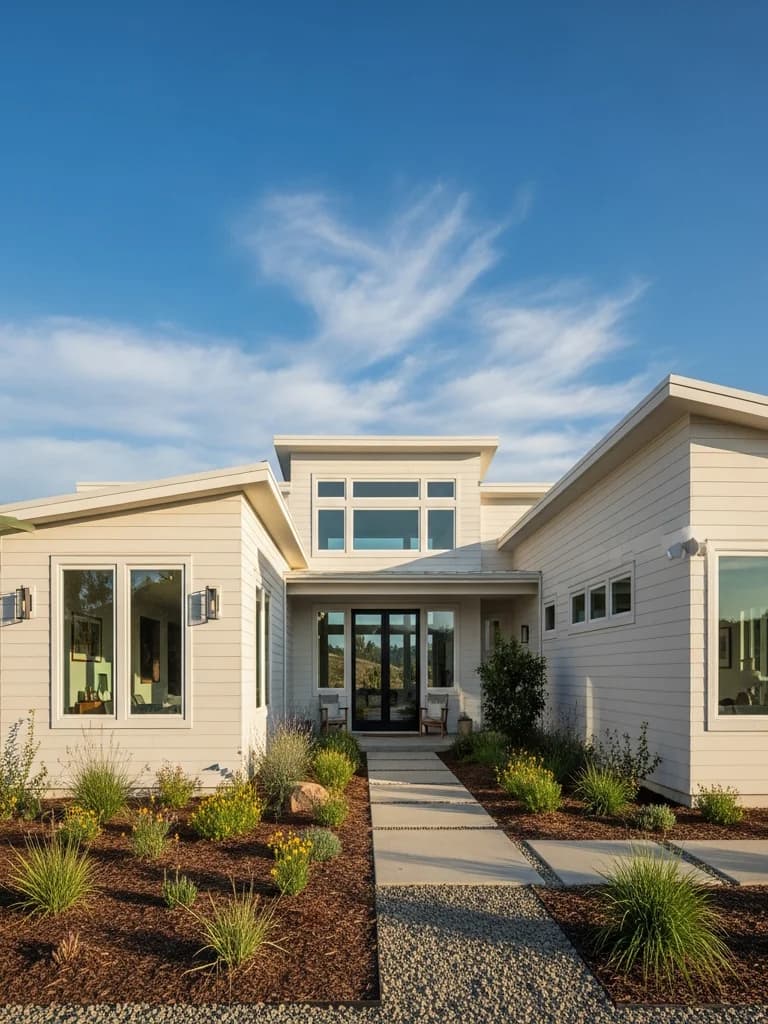
Siding in Rough and Ready
Rough and Ready is a small, historic rural community near Grass Valley, a foothill townsite with genuine 19th-century roots surrounded by oak-and-pine woodland and acreage homes. That heritage and that setting pull a re-side in two directions at once: respect for old, character-rich structures, and serious fire hardening for a community sitting in high foothill wildfire country.
We scope a Rough and Ready re-side honestly on both fronts — careful with historic character where it matters, and uncompromising about non-combustible cladding and ember detailing on lots backed by woodland and dry grass.
High foothill fire exposure is the baseline here
Rough and Ready sits in classic Nevada County fire country, where oak-and-pine woodland and cured grass meet homes on wooded acreage and the historic townsite alike. Wind-driven embers and direct flame are real threats during fire weather, so a re-side here starts non-combustible and then closes the openings embers exploit — eaves, soffits, unscreened vents, trim returns, and the cladding-to-roof line. On woodland-adjacent parcels we treat hardening as the project's purpose, not a feature added at the end.
Historic and rural stock, handled on its own terms
The community's older homes carry the wood lap, simple gable forms, and worn character of a long-standing foothill settlement, while newer acreage homes scatter through the surrounding woodland. We read each one before recommending scope. A character home near the historic townsite wants its proportions, reveals, and trim respected even as the assembly behind the finish is upgraded; a contemporary home on a wooded lot is a more straightforward hardening re-side. Same town, two very different starting points.
Damp shade and dry sun in the same house
Tree cover around Rough and Ready homes keeps north walls shaded, cool, and damp — conditions that feed rot and finish failure on aging wood — while exposed elevations bake under hot, dry foothill summers. A single wall assumption fails one side or the other. We assess exposure elevation by elevation and specify cladding and detailing that handle the moisture under the canopy and the thermal load where the sun reaches, so the whole house ages evenly instead of failing first wherever it's most neglected.
Keeping character while making the wall safer
Re-siding in a historic community shouldn't erase what makes it one. The aim is to keep the clapboard reveals, trim proportions, and modest porch detailing that fit Rough and Ready's era, while delivering them in non-combustible terms that the constant scraping of old wood never could. Fiber-cement profiles and warm, period-appropriate colors can hold the look the town earned over generations and quietly add fire and weather durability that the original construction never had.
Rural access and defensible space
Many properties here sit off narrow rural roads with long drives, grade, and heavy tree cover that complicate getting materials and equipment to the wall — logistics we plan before the first delivery. And because cladding is one layer of survival, we'll talk plainly about the zone around the house: clearing fuel back from the wall, not stacking firewood against it, and keeping woodland from crowding the structure, since a hardened wall set in heavy fuel is only half a hardened home.
Why this matters in Rough and Ready
- Specified for Sierra Foothills conditions
- Class A non-combustible fiber cement as the recommended system
- Correctly detailed weather-resistive barrier and flashing
- Installed by a crew with 20 years combined experience
Recommended systems for Rough and Ready
- Class A non-combustible fiber cement
- fire-aware detailing
- period-sensitive profiles
Fiber Cement Siding for Rough and Ready homes
The full fiber cement siding approach — materials, weather-resistive detailing, and the manufacturer standards we install to — is covered on the main service page, then specified for Rough and Ready's conditions on this one.
Our Rough and Ready process
- Step 1
Consultation
We listen to your goals and assess your home on site — exposure, substrate, and architecture.
- Step 2
Design & Proposal
A clear written proposal with the right system specified for your climate and a transparent scope.
- Step 3
Expert Installation
Trained crews install to manufacturer best practices with careful weather-management detailing.
- Step 4
Walkthrough & Support
A final walkthrough, full cleanup, and a clear written record of the scope completed — work we stand behind.
FAQ
Siding in Rough and Ready — FAQ
High. It sits in Nevada County foothill fire country with oak-and-pine woodland and cured grass against many homes, so non-combustible cladding plus hardened eaves, vents, and trim is the appropriate baseline.
Yes. We keep clapboard reveals, trim proportions, and porch detailing true to the home's era while upgrading the assembly behind it and using non-combustible materials, so the character stays and the maintenance drops.
It matters a lot. Shaded walls hold damp and can rot; exposed walls bake. We spec each elevation for its actual exposure so the whole house performs, rather than applying one assumption everywhere.
No. Cladding is one layer; defensible space, screened vents, and keeping firewood and woodland fuel away from the wall matter just as much. We harden the wall and advise honestly on the surrounding zone.
We plan staging, deliveries, and equipment for grade, tree cover, and distance before starting, so a remote woodland property doesn't become a logistics problem partway through the re-side.
Keep Exploring
More for Rough and Ready homeowners
More in Rough and Ready
Other exterior services in Rough and Ready
Nearby Service Areas
Siding near Rough and Ready
Back to
Nevada County & Rough and Ready
Helpful Exterior Guides