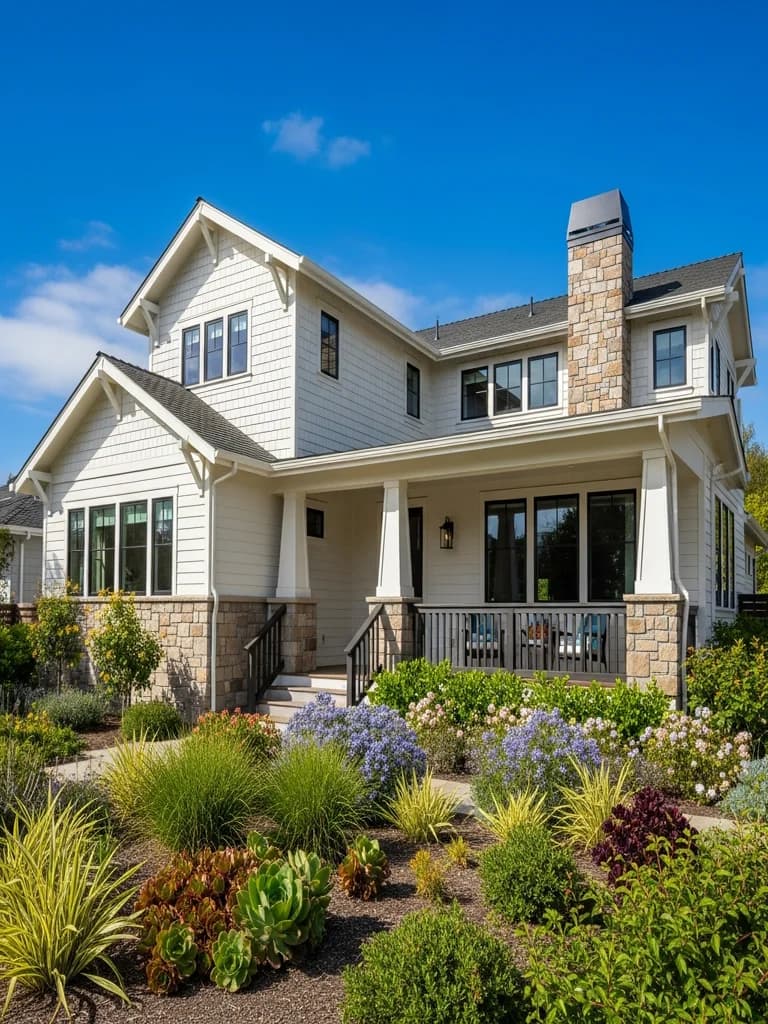
Siding in Live Oak
A Live Oak re-side is a salt problem before it is anything else. This dense unincorporated strip between Santa Cruz and Capitola — the Pleasure Point and Eastside blocks fronting the Monterey Bay surf — takes some of the most aggressive ocean aerosol in the county, layered on top of constant marine moisture. On flat, tightly packed lots a few hundred feet from the water, that combination eats fasteners, flashing, and finishes faster than fog alone ever would.
So a Live Oak project is scoped around corrosion resistance and drying capacity at the same time. The plank you pick matters less than the metal behind it: salt-rated fasteners, sealed corrosion-resistant flashing, and a real drainage plane built for air that carries salt year-round.
Salt aerosol is the controlling stressor
Pleasure Point sits almost on the tideline, and the wind carries salt straight into the wall cavity. Standard fasteners and unsealed flashing corrode from inside the assembly, so the cladding face can look sound while the metal holding it fails. We strip back, swap corroded fastening and flashing for salt-rated components, repair substrate damage where moisture and salt have already worked in, and re-clad over a drying-capable plane sized for this exposure.
Beach cottages and surf-area bungalows, kept in character
Live Oak's stock is dense and mixed: weathered beach cottages, older surf-area bungalows along the Eastside avenues, and newer infill squeezed onto the same compact lots. The cottages and bungalows carry simple but specific trim and reveals, and we replicate those faithfully while upgrading every concealed metal component to coastal grade. The street keeps its low-key surf-town look; the early failure points get engineered out of the wall.
Flat lots, no fire fringe, all envelope
Unlike the homes climbing toward the Santa Cruz Mountains, Live Oak is valley-flat and fully coastal, with no redwood interface to design around. That simplifies the brief in one way and sharpens it in another: there is no fire variable to trade against, so every dollar of the re-side goes into corrosion and moisture control. North-facing and shaded walls between closely set houses stay damp for hours after fog burns off elsewhere, so back-priming, sealed cut ends, and a drainage gap behind the cladding carry the project.
Tight unincorporated blocks, staging a re-side
The Pleasure Point and Eastside grid is dense by design — narrow side yards, shared driveways, and street parking that fills with surfers and beach traffic by mid-morning. That logistics picture shapes the job as much as the wall. Tear-off generates real volume with little room to drop a dumpster out front, so we plan staging, scaffold footprint, and haul-off up front and sequence the work to keep the home weather-tight day to day rather than opening more sheathing than we can close before the afternoon onshore wind picks up. As unincorporated county, permitting and setback rules differ from the Santa Cruz and Capitola city codes next door, so we confirm what the parcel allows before ordering profiles.
Why this matters in Live Oak
- Specified for Central Coast conditions
- non-combustible fiber cement as the recommended system
- Correctly detailed weather-resistive barrier and flashing
- Installed by a crew with 20 years combined experience
Recommended systems for Live Oak
- non-combustible fiber cement
- James Hardie
- corrosion-aware fastening
- rigorous drainage-plane detailing
Fiber Cement Siding for Live Oak homes
The full fiber cement siding approach — materials, weather-resistive detailing, and the manufacturer standards we install to — is covered on the main service page, then specified for Live Oak's conditions on this one.
Our Live Oak process
- Step 1
Consultation
We listen to your goals and assess your home on site — exposure, substrate, and architecture.
- Step 2
Design & Proposal
A clear written proposal with the right system specified for your climate and a transparent scope.
- Step 3
Expert Installation
Trained crews install to manufacturer best practices with careful weather-management detailing.
- Step 4
Walkthrough & Support
A final walkthrough, full cleanup, and a clear written record of the scope completed — work we stand behind.
FAQ
Siding in Live Oak — FAQ
Live Oak sits right on the Monterey Bay surf line, so it adds heavy salt aerosol to marine moisture. That attacks fasteners, flashing, and finishes far faster than inland fog, and corrosion-rated detailing — not the board alone — defines the project.
Usually salt-driven corrosion of fasteners and flashing inside the wall, plus trapped marine moisture. The cladding can look fine while the metal behind it fails. Salt-rated components over a drying-capable plane fix the root cause.
Yes — we document and replicate the original profiles, trim, and reveals on cottages and surf-area bungalows while upgrading every concealed fastener and flashing detail to coastal grade.
No — Live Oak is a flat, fully coastal community with no mountain or redwood interface, so wildfire is not a controlling factor here. Salt and moisture are. Non-combustible fiber cement is still a sound, low-regret default.
Largely yes — salt aerosol carries inland across Live Oak's dense flat grid, so corrosion-rated fastening and flashing matter on the interior avenues, not only the homes directly fronting the water.
Keep Exploring
More for Live Oak homeowners
Helpful Exterior Guides