
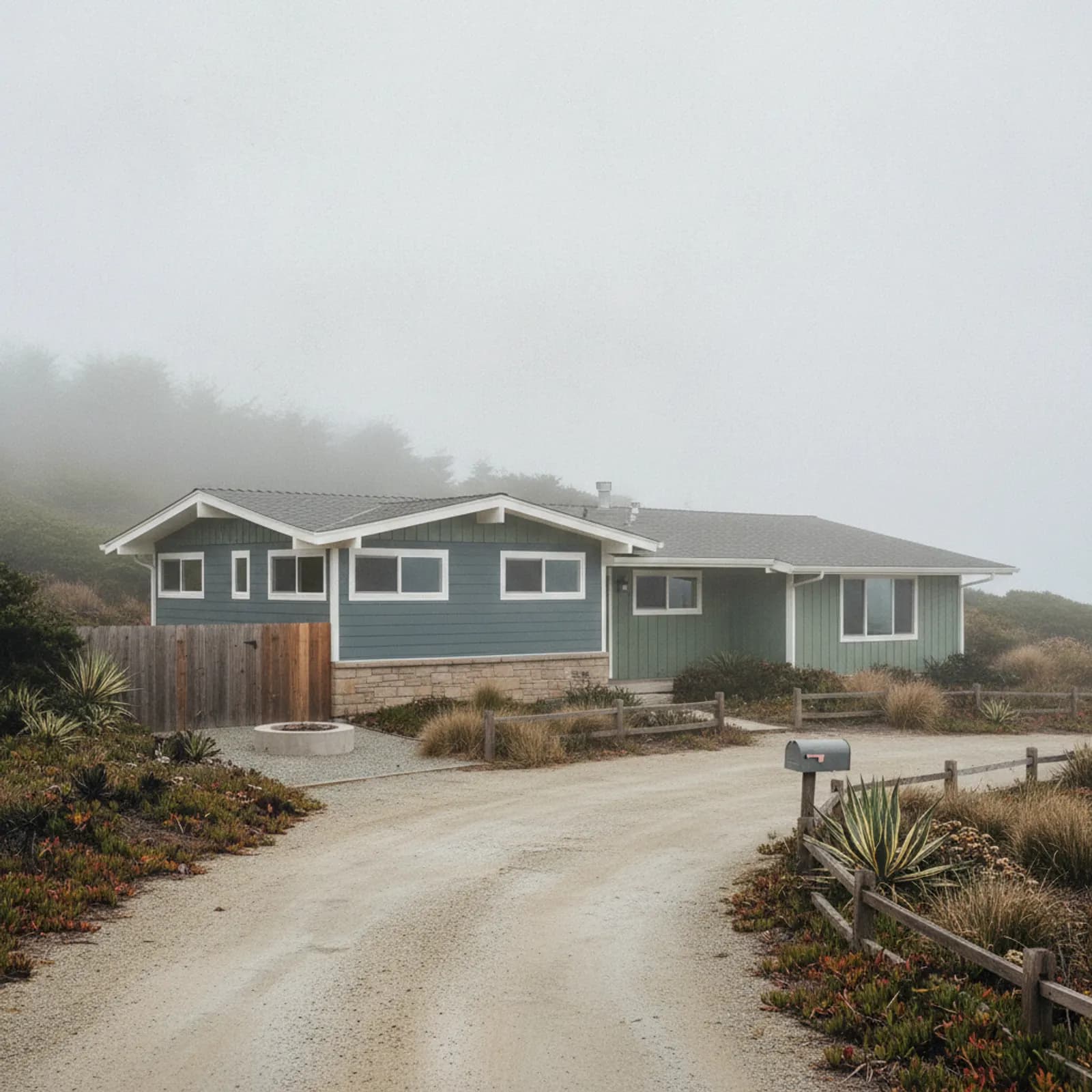
Exterior renovation in Live Oak
Live Oak is the dense unincorporated coastal community wedged between the City of Santa Cruz and Capitola, running from the Eastside neighborhoods out toward Pleasure Point and the harbor. Homes here sit close together and close to the water, which means the controlling problem is rarely fire and almost always weather: persistent marine moisture, salt-laden coastal air, and the wind-driven rain that comes off Monterey Bay. For Live Oak homeowners an exterior project is fundamentally about building a wall that sheds and dries reliably while resisting corrosion, and that coastal exposure drives the material and detailing far more than anything else.
Why a re-side pays off on Live Oak's rentals and duplexes
Much of Live Oak is closely built unincorporated county territory with a high share of rentals, duplexes, and small multifamily, and that changes the math on an exterior project. Steady salt air and slow-drying marine damp swell, rot, and corrode the original wood and hardboard cladding on these homes, so owners get locked into a cycle of repainting and patching damp-damaged walls. For a tenant-occupied building, a non-combustible fiber cement re-side over a detailed drainage plane, with corrosion-aware fasteners and flashing chosen for salt exposure, ends that cycle and trades repeated maintenance for decades of low upkeep. The tight unincorporated lots and shared fence lines make staging more involved than an open lot, so we plan that access up front and detail flashing most aggressively on the near-water blocks toward Pleasure Point and the harbor where the salt hits hardest.
Considering an exterior project in Live Oak?
Live Oak housing and architecture
Live Oak's stock is largely mid-century coastal ranches and post-war tract homes, older beach bungalows near the water, and a meaningful share of small duplexes and multifamily on tight unincorporated lots. Many of these homes still carry original wood or hardboard siding that has weathered decades of salt air and marine damp, often with tired single-pane windows alongside it. The architecture is unpretentious and close-set, so re-side scopes here lean on clean lap profiles, durable finishes, and correct flashing between neighbors rather than ornate trim. We match the casual coastal character while upgrading the wall's weather performance underneath it.
Live Oak's coastal-marine climate
Live Oak's controlling stressor is the marine environment off Monterey Bay: steady salt air, frequent fog and high humidity, and wind-driven rain that loads walls directly facing the water. Summers stay cool and damp rather than hot, and surfaces here dry slowly, so a wall that holds moisture or relies on corrodible fasteners degrades fast. That is what forces the spec in Live Oak — a rigorously detailed drainage plane that sheds and dries, corrosion-aware fastening and flashing chosen for salt exposure, and finishes that hold up to relentless coastal UV and damp. Fire is genuinely a low concern here; weather is the whole job.
Recommended materials for Live Oak
Non-combustible fiber cement, including James Hardie, over a carefully detailed drainage plane is our recommended system for Live Oak's coastal exposure. The reasoning here is moisture and salt rather than fire: fiber cement does not swell, rot, or feed corrosion the way older wood and hardboard cladding does after years of marine damp, and it holds a durable factory or field finish against coastal UV. We pair it with corrosion-aware fasteners and flashing suited to salt air and with a drainage plane that keeps a slow-drying coastal wall venting. The result is a wall built specifically for the bay-front weather Live Oak lives in year-round.
What an exterior project costs in Live Oak
Live Oak project cost is driven mostly by moisture and salt-exposure detailing and by the realities of dense unincorporated lots. Tight setbacks between neighbors, shared fence lines, and close-set duplexes make staging and scaffolding more involved than on an open lot, and substrate discovery is common where salt air and marine damp have worked behind aging wood or hardboard siding. Corrosion-aware fastening, flashing, and durable coastal finishes add deliberate scope because they are what make the wall last here. We assess each home on site and provide a written, itemized estimate, and that written estimate governs the work.
Pleasure Point and the Eastside
Live Oak's identity runs along the water from the Eastside near the harbor out to the Pleasure Point surf neighborhoods, and those near-water blocks see the most direct salt and wind-driven rain in the area. Homes a row or two back are still well within marine influence but face it less head-on, which subtly shifts how aggressively we detail flashing and choose fasteners. Reading where a Live Oak home sits relative to the bay matters, because the same casual bungalow gets a different exterior spec at Pleasure Point than it would a few blocks inland.
Dense unincorporated lots and rentals
Much of Live Oak is closely built unincorporated county territory with a high share of rentals, duplexes, and small multifamily. That changes the work in practical ways: access is tight, neighboring structures are close, and owners often weigh durability and low maintenance heavily because the homes are tenant-occupied. A fiber cement re-side that ends years of repainting and patching corroded, damp-damaged wood is an easy case to make here, and we scope it with the dense-lot access and the rental-durability priorities in mind from the start.
Live Oak is unincorporated: county permits, Soquel Creek Water, Coastal Commission
Live Oak is not a city. It is an unincorporated community — a Census-Designated Place — governed by Santa Cruz County rather than a municipal government of its own. Building permits go through the Santa Cruz County Community Development and Infrastructure Department, and coastal parcels along the Pleasure Point and Eastside blocks additionally fall under California Coastal Commission oversight for scope that alters the building envelope. Electric and gas are PG&E, and Live Oak is in PG&E's PSPS territory. Water is supplied by the Soquel Creek Water District, a customer-owned public agency. Fire response is Central Fire District of Santa Cruz County. We flag utility, permit, coastal, and fire items at the estimate stage.
HZ10 climate and Live Oak's low-fire, high-salt reality
Live Oak is in James Hardie's HZ10 climate zone; installing HZ5 is a documented warranty misapplication. On the fire side, the flat coastal blocks sit in Low FHSZ territory or unmapped under California's 2025 LRA Fire Hazard Severity Zone map — the salt-and-moisture spec is the entire game there. Any parcels toward the wooded inland edge and DeLaveaga fringe can pick up Moderate designations. The code frame changed on January 1, 2026, when Chapter 7A moved into the standalone WUI Code, but on a Live Oak re-side the corrosion, drainage, and dense-lot access work carries the day.
Our process in Live Oak
- Step 1
Consultation
We listen to your goals and assess your home on site — exposure, substrate, and architecture.
- Step 2
Design & Proposal
A clear written proposal with the right system specified for your climate and a transparent scope.
- Step 3
Expert Installation
Trained crews install to manufacturer best practices with careful weather-management detailing.
- Step 4
Walkthrough & Support
A final walkthrough, full cleanup, and a clear written record of the scope completed — work we stand behind.
In Live Oak the whole job is weather — salt air, marine moisture, and bay-front wind-driven rain — and we build a wall specifically for that, not a generic re-side. We scope every Live Oak project on site, and your written, itemized estimate governs the work.
FAQ
Live Oak — Common Questions
No — Live Oak is a dense coastal community between Santa Cruz and Capitola with low wildfire risk. The controlling stressors here are salt air and marine moisture, not fire.
Non-combustible fiber cement, including James Hardie, over a detailed drainage plane with corrosion-aware fastening and flashing chosen for salt exposure.
Steady salt air and slow-drying marine damp swell, rot, and corrode older wood and hardboard cladding and their fasteners — fiber cement avoids those failure modes.
Yes — near-water blocks toward Pleasure Point and the harbor face the most direct salt and wind-driven rain, so we detail flashing and fasteners more aggressively there.
Usually yes — a fiber cement re-side ends years of repainting and patching salt- and damp-damaged wood, which is exactly the low-maintenance durability tenant-occupied homes benefit from.
Yes — close setbacks, shared fence lines, and neighboring duplexes make staging and scaffolding more involved, and we plan that access as part of Live Oak scope.
Often it is worth coordinating — aging single-pane windows in salt air pair naturally with a re-side, and integrating flashing once is cleaner than doing the two jobs separately.
A correctly installed, well-drained fiber cement system with corrosion-aware fastening commonly performs 30+ years in the marine environment.
Explore
Exterior Services
Helpful Exterior Guides