
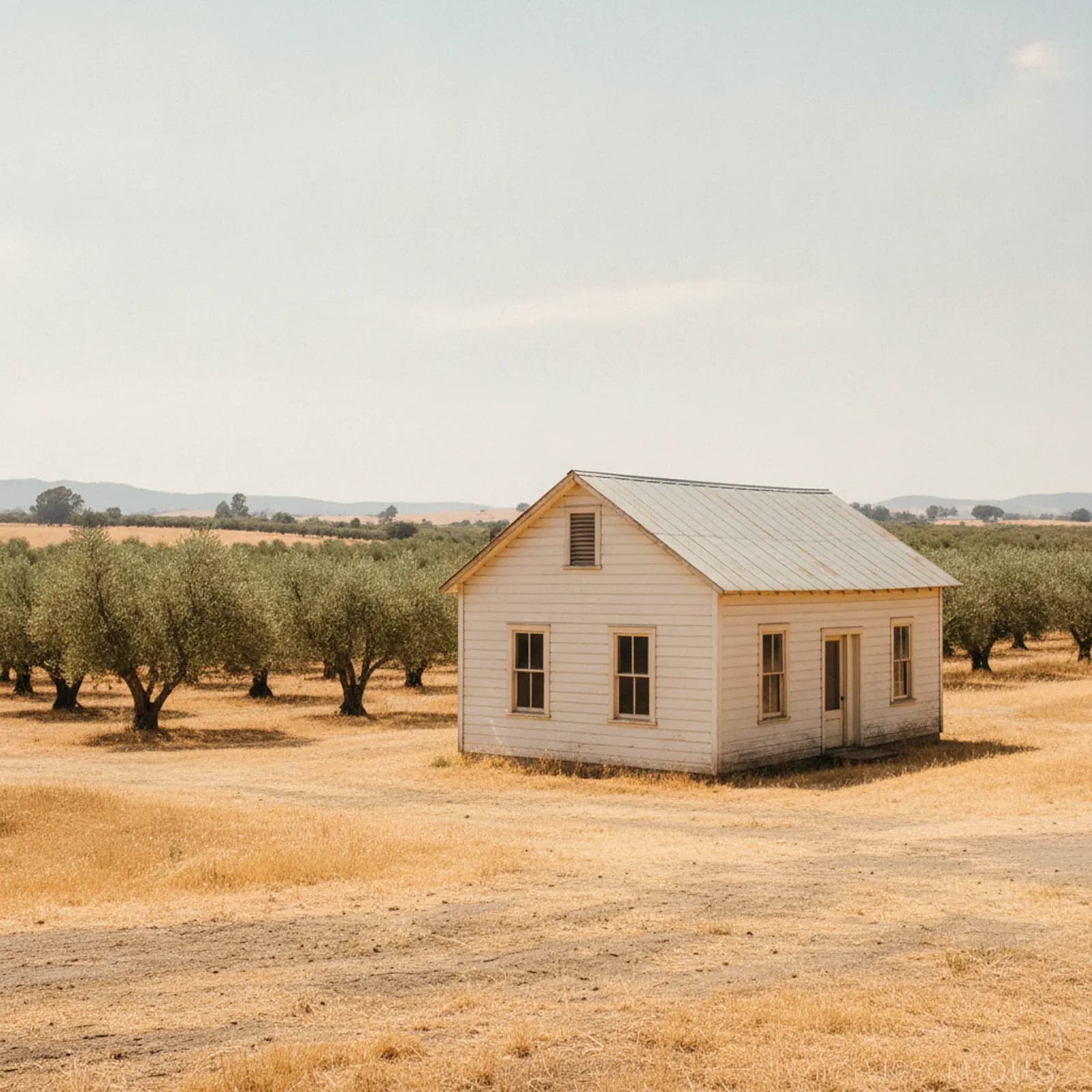
Exteriors in the Olive City
Corning built its name on table olives. The orchards drew the packers, the packers built the plants — Bell-Carter most famously — and the town has worn the Olive City title ever since. The place itself is a modest grid centered on Solano Street, the old Highway 99W, with Interstate 5 pulling newer services and a little newer housing toward the west edge. The homes range from 99W-era grid houses and farmhouses scattered through the orchard rows to mid-century streets and small recent pockets. It is honest, working housing stock, and most of it is overdue for exterior work that takes this end of the valley as seriously as the weather does.
The north end of the valley plays rougher
Tehama County's stretch of the Sacramento Valley records some of the hottest summer runs in inland California, and Corning gets that heat in full. But unlike the mid-valley towns, it pairs the heat with two more forces. The first is the north wind, which pours down from the head of the valley hard enough to drive dust through a summer afternoon and push rain sideways through a winter storm. The second is that winter itself: Pacific storms drop meaningfully more rain up here than they do a hundred miles south. A Corning wall takes triple-digit heat, real wind loading, and genuine water exposure inside the same year, and the specification has to answer all three.
Considering an exterior project in Corning?
A working town's housing stock
Corning's houses are practical the way its economy is practical. The grid off Solano Street holds compact one-story homes from the highway era, plain-gabled and unpretentious. Farmhouses sit among the olive and orchard parcels outside town, often taller, often with a shop or barn alongside. Mid-century ranch streets fill the middle ground, and small newer clusters have followed the freeway. Little of it is ornate, which means the exterior conversation is rarely about reproducing gingerbread — it's about proportion, a good palette, and construction that stands up. We'd rather put the budget into flashing, fastening, and a finish that lasts than into decoration the architecture never asked for.
Heat, north wind, and real winter rain
The heat half of the Corning specification looks familiar for a valley town — factory-cured color that fades slowly through triple-digit stretches, and room in every course for boards that expand and contract daily. The wind half is where this town departs from places further south: fastening schedules stop being a formality when the north wind gets running, and blind-nailed lap needs correct nail placement to stay put for decades. The water half follows from the wind — rain that arrives horizontally finds every unflashed window head and every lazy housewrap lap, so the layers behind the siding are engineered here, not just installed. Heat gets the attention in most valley towns; in Corning, wind and water have earned equal billing.
Fire weather and the town's edges
The same north wind that rattles trim in January pushes grass fire in August, and that makes it the multiplier in any honest fire conversation about Corning. The core of town is actually well positioned — irrigated olive and orchard ground is poor fuel and buffers the grid — but the dry range beyond it, west toward the Coast Range and east toward the foothills, burns somewhere in most summers. On edge and rural properties we put non-combustible cement board on the walls, screen the vents, keep the eave line tight, and hold flammable material away from the base of the wall, because wind-driven embers attack openings and accumulation points rather than the wall face. Cladding is one layer of protection, not a promise; nothing we or anyone installs makes a house fireproof.
Our Corning specification
We build Corning walls around cement board with a factory-baked color coat, and the local logic is specific: the finish holds under the north valley's punishing sun, the board stays dimensionally steady through extreme heat cycling, it takes wind-appropriate fastening without complaint, and it will not ignite when the fire season turns windy. Behind it we run the water layers as if the house were on a coast — fully lapped wrap, metal head flashings, sealed penetrations — because wind-driven winter rain treats this town more like one than its summer reputation suggests. For palettes, olive country has its own character: warm whites, silvered greens, and earth tones sit beautifully against orchard rows, and we lean into that rather than importing a subdivision color card.
Pricing a Corning project honestly
Corning's compact one-story grid homes often make for tight, affordable scopes — modest wall area, easy access, simple trim. Three things push a figure upward: repair carpentry where wind-driven rain got past old caulk at window heads and sills, tall gable ends on the farmhouse stock that add staging, and multi-building scopes on orchard parcels where a shop or barn joins the project. This is a value-conscious market and we price like we know it: durable and correct, without gold-plating the scope. The estimate arrives after we've walked the property, broken into line items you can question one at a time.
Solano Street and the 99W grid
The old highway grid is where Corning's history lives, and its houses are refreshingly straightforward to re-side: compact footprints, simple rooflines, and owners who want the job done right more than they want it done fancy. The main caution is age — cladding that has been through fifty north-wind winters may be hiding fatigue in the layers beneath, so we confirm what we're fastening into before production starts. A clean lap field, correctly flashed openings, and a considered color do more for these blocks than any amount of ornament would.
Farmhouses in the orchard rows
The properties out among the olives and almonds are the most individual work we do in Corning. The houses are older and taller, the outbuildings matter to the operation, and the exposure is maximal — full sun, full wind, and dry ground nearby in fire season. We scope these as whole-property projects: the house gets the complete assembly, working structures get hardened where they face open fuel, and the staging plan respects harvest schedules and farm traffic. It is the kind of work where showing up organized counts as much as the material list.
When the north wind blows
Locals don't need the north wind explained to them — it strips shade structures, drives dust under doors, and makes a January storm feel like a pressure washer aimed at the north wall. For an exterior contractor it dictates two disciplines: fastening that exceeds the minimum, because the minimum was written for calmer places, and water detailing that assumes rain can arrive at any angle. Homes that get both stay quiet and dry in weather that makes lesser installations rattle and leak. That is the standard we build to here, in both seasons the wind owns.
City of Corning, city water, and Corning Fire / CAL FIRE
Working exteriors in Corning coordinates with a few local authorities. Building permits come through the City of Corning Community Development Department (Corning is one of Tehama's three incorporated cities alongside Red Bluff and Tehama). Electric and gas are PG&E. Water and wastewater are supplied by the City of Corning municipal utilities, while irrigation on many olive and almond parcels runs through district and mutual-company systems drawing from the Sacramento River corridor and local groundwater. Fire response is the Corning Volunteer Fire Department (city) alongside the Tehama County Fire Department and CAL FIRE Tehama-Glenn Unit on wildland calls into the west-side range climbing toward the Mendocino National Forest and the eastern foothills toward Paskenta and the North Fork Cottonwood corridor.
HZ10 and the Ranch-Fire-adjacent FHSZ reality
Corning is in James Hardie's HZ10 climate zone; installing HZ5 is a documented warranty misapplication. On the fire side, the downtown Corning core and the irrigated olive-and-orchard blocks sit in Low or Moderate FHSZ territory under California's 2025 LRA Fire Hazard Severity Zone map, while west-facing rural parcels running toward the Coast Range and the Mendocino National Forest boundary, and eastern parcels climbing the Cottonwood-Paskenta corridor, carry Moderate to High designations. The 2018 Ranch Fire (Mendocino Complex, 410,203 acres) and the 2020 August Complex (1,032,648 acres — California's largest recorded fire) both burned range and forest ground on this corridor and pushed evacuation into the county's eastern edge. On wildland-adjacent parcels the 2025 California Wildland-Urban Interface Code governs the exterior wall. Chapter 7A moved into the standalone WUI Code on January 1, 2026.
Our process in Corning
- Step 1
Consultation
We listen to your goals and assess your home on site — exposure, substrate, and architecture.
- Step 2
Design & Proposal
A clear written proposal with the right system specified for your climate and a transparent scope.
- Step 3
Expert Installation
Trained crews install to manufacturer best practices with careful weather-management detailing.
- Step 4
Walkthrough & Support
A final walkthrough, full cleanup, and a clear written record of the scope completed — work we stand behind.
Corning deserves exterior work as unpretentious and tough as the town itself: a specification that holds its color through north-valley summers, stays fastened and dry through north-wind winters, and adds ember-sensible detail where the range gets close. We walk each Corning property before quoting, and every line of the estimate is there to be questioned.
FAQ
Corning — Common Questions
Cement board with a factory-baked finish, installed over fully engineered water layers. The finish survives the north valley's extreme sun, the board handles heat cycling and wind-rated fastening, and it won't ignite — a package matched to a town that gets triple-digit summers, hard north wind, and wetter winters than the mid-valley.
In three measurable ways: hotter summer runs than the mid-valley, a north wind strong enough to make fastening schedules and flashing genuinely matter, and more winter rainfall than towns further south. We specify for all three rather than treating Corning like a generic valley address.
Because Corning's rain arrives on the wind. Horizontal rain finds unflashed window heads and sloppy housewrap laps that calm-weather towns get away with, so the layers behind the siding — wrap laps, head flashings, sealed penetrations — are engineered here, not treated as paperwork.
At the edges, yes. The orchard ground around the core is poor fuel and buffers the town, but properties facing the dry range west or the foothills east get non-combustible cladding, screened vents, and a clean base-of-wall zone, because the north wind can carry embers a long way. No product makes a home fireproof, and we never claim one does.
Helpful Exterior Guides