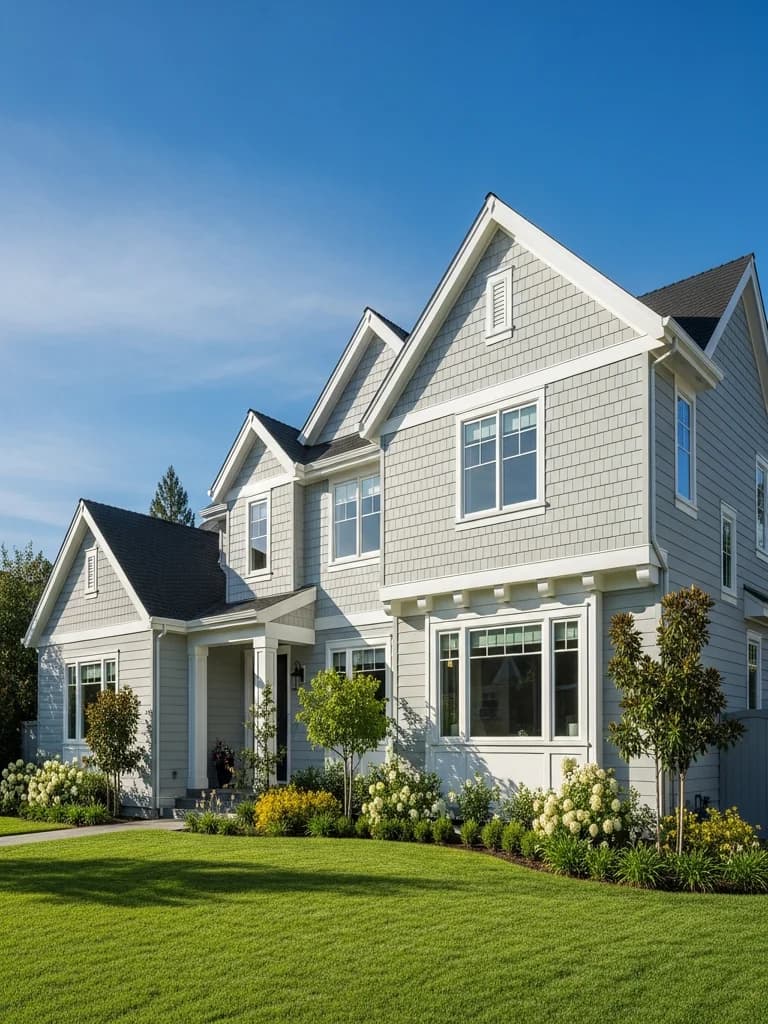
Fire-Resistant Siding in Linda
Let's be straight about Linda before anything else: this is flat valley-floor ground, an unincorporated community of postwar tracts strung along Highway 70 between the Feather River and the gates of Beale Air Force Base, and wildfire is not the threat anybody here loses sleep over. The fuel that drives the headline fires sits up in the Sierra foothills well to the east. Around Linda you find row crops, the base's open managed acreage, and homes built fast and affordable in the decades after the war. We aren't going to manufacture a fire emergency a value-conscious neighborhood doesn't have.
What is honestly worth saying: cured summer grass runs right up to the edges of these subdivisions, and a non-combustible wall is a cheap, low-regret durability call for owners watching every dollar.
Linda's real exposure: a tract community, not a wildland one
Linda grew as workforce and base-adjacent housing — modest single-story homes on flat lots, laid out in grids rather than tucked into canyons or perched on ridges. That layout is itself a fire advantage: there is no steep terrain pulling flame upslope toward the eaves and no forest canopy raining embers into the neighborhood. The land between subdivisions is farmed or sits inside Beale's controlled boundary, both of which read very differently from chaparral and timber. So the honest baseline for a Linda address is low. We start there with every homeowner instead of importing a foothill checklist that the geography here flatly does not earn.
Where the dry-grass margins actually matter
The one wrinkle worth naming is the seam where a subdivision meets open ground. Plenty of Linda lots back onto an unmaintained field, an irrigation easement, or a strip of annual grass that goes gold and brittle by July. A grass fire in cured fuel moves fast and low, and if it reaches a fence line bolted to the side of the house, the question becomes what that wall is made of. This isn't ridge-town ember storm territory — it's a ground-level grass-contact scenario. For the homes that actually sit on that edge, swapping a combustible wall for a mineral one closes a small but real gap.
A durability upgrade that happens to be non-combustible
Here's the framing we think fits a value market: choose the wall for how long it lasts, and let the fire resistance ride along for free. Fiber cement holds up to Linda's punishing summer UV and the swing between dry heat and river-corridor humidity far better than aged wood or vinyl, which is the reason a budget-minded owner should look at it in the first place. That it also won't carry flame is a bonus you don't pay extra for. Reframing it this way keeps the decision honest — you are buying decades of low maintenance, and the grass-margin protection is something you get on top, not the thing being sold.
The cheap fire habits worth keeping regardless
Whatever a Linda wall is made of, a handful of zero-cost moves matter more than any single product. Mow or disc the dry grass back from the structure before fire season, keep wood fences from running uninterrupted into the siding, screen crawlspace and attic vents so a stray ember can't slip inside, and don't stack firewood or store solvents against the wall. On a flat tract lot these are an afternoon's work, not a Chapter 7A retrofit, and they pay off against grass fire, base-perimeter burns, and ordinary stray sparks alike — a sensible floor for any value-market home, fire risk high or low.
Why this matters in Linda
- Specified for Sacramento Valley conditions
- James Hardie fiber cement as the recommended system
- Correctly detailed weather-resistive barrier and flashing
- Installed by a crew with 20 years combined experience
Recommended systems for Linda
- James Hardie fiber cement
- factory finishes
- modern lap and board-and-batten profiles
- durable trim packages
Fire-Resistant Siding for Linda homes
The full fire-resistant siding approach — materials, weather-resistive detailing, and the manufacturer standards we install to — is covered on the main service page, then specified for Linda's conditions on this one.
Our Linda process
- Step 1
Consultation
We listen to your goals and assess your home on site — exposure, substrate, and architecture.
- Step 2
Design & Proposal
A clear written proposal with the right system specified for your climate and a transparent scope.
- Step 3
Expert Installation
Trained crews install to manufacturer best practices with careful weather-management detailing.
- Step 4
Walkthrough & Support
A final walkthrough, full cleanup, and a clear written record of the scope completed — work we stand behind.
FAQ
Fire-Resistant Siding in Linda — FAQ
Not in the foothill sense. Linda sits on flat valley floor among farmland and Beale's open acreage, far from the Sierra fuel that drives major fires. The honest baseline exposure for a tract home here is low.
Mostly for durability. Fiber cement outlasts wood and vinyl against Linda's summer heat and UV, which is reason enough on a tight budget. The fire resistance simply comes along for free rather than being something you pay a premium for.
A little. Dry summer grass running to a fence line is the one real fire wrinkle in Linda, and it's a ground-level grass-contact risk, not an ember storm. A mineral wall on that edge closes a small, genuine gap.
Mow the grass back before fire season, keep wood fences from butting into the siding, screen your vents against embers, and keep firewood and solvents off the wall. On a flat tract lot that's an afternoon, not a full retrofit.
Keep Exploring
More for Linda homeowners
Nearby Service Areas
Fire-Resistant Siding near Linda
Helpful Exterior Guides