
5 min read · Design
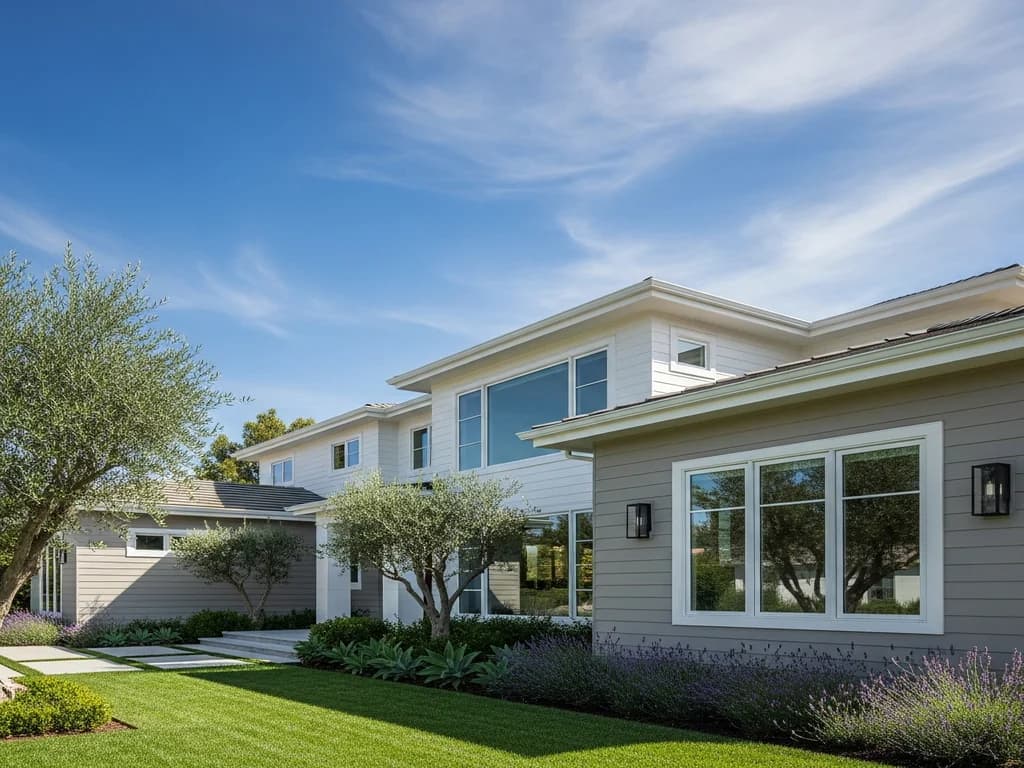
Black windows on Hardie siding has gone from a niche detail to one of California's most-photographed exterior combinations. The contrast reads as deliberate architecture, defining every opening as a composed element rather than a hole in the wall. But the look only works on the right styles, and the frame material you pick matters more than most homeowners expect under full California sun. Here is the design and engineering framework.
Why black windows work architecturally
Black frames create high contrast against most cladding colors, which turns windows into intentional design elements instead of neutral cutouts. The dark frames echo trim lines visually and give the elevation rhythm, so the composition reads as planned rather than accidental. The effect suits modern farmhouse, contemporary, and modern ranch architecture especially well, where clean geometry and crisp openings are the point. On a Hardie wall the flat, true panel faces give the black frames a clean field to play against, which is part of why the combination photographs so cleanly across modern exterior designs.
Best Hardie body colors to pair with black
Arctic White with black windows is the highest-contrast pairing and the modern farmhouse classic. Iron Gray with black windows reads monochromatic and bold for a contemporary look. Boothbay Blue gives a softer contrast while still defining the openings firmly. Mountain Sage brings natural, earthy tones under confident dark frames, and Cobble Stone delivers a warm minimalist result. The choice depends on how loud you want the contrast — white maximizes it, darker bodies mute it into a moody, cohesive envelope. Sampling a factory ColorPlus finish from James Hardie against the actual frame color in real sunlight is the only reliable way to commit.
Frame material options for black
Vinyl offers black on major brands, but dark colors absorb solar heat and can accelerate thermal expansion and warping unless the manufacturer has specifically engineered the product for it — acceptable, not ideal. Fiberglass is the strongest choice for black: it is dimensionally stable, holds color without fading, and tolerates heat absorption well. Wood-clad windows with a black aluminum or fiberglass exterior and interior wood are a premium option. Aluminum is dimensionally fine in black but conducts heat aggressively into the home, which works against energy performance in the Central Valley and foothills.
Why fiberglass is usually the right call
California heat absorption on dark frames is real, and fiberglass handles it without the dimensional or finish problems that plague other materials. Black vinyl can warp or develop thermal failures over years of valley summers, and aluminum pulls outdoor heat straight through the frame. Fiberglass in black is effectively the engineered answer for this climate — stable, fade-resistant, and energy-sensible. When you compare frame performance, lean on the independent NFRC rating label rather than brochure language, and our window frame materials guide breaks down each option for California exposures.
Where black windows don't belong
The honest answer is that black windows usually fight traditional architecture. Craftsman, Tudor, Spanish revival, and traditional cottage homes historically used wood-tone or white trim, and pure black frames read as anachronistic against those vocabularies. Modern reinterpretations of those styles can borrow black accents successfully, but a faithful historical restoration rarely should. If you love a 1920s bungalow's character, forcing black windows onto it tends to undercut the very thing that makes it special — and we will say so during scoping rather than chase a trend onto the wrong house.
Practical details people overlook
Black exterior frames usually mean black interior frames too, unless you choose a wood-clad product with a stained or painted interior. Some homeowners discover after install that they did not want black framing on the inside of every room, so check the specific product's interior finish before committing. Heat is the other practical issue: pair black frames with low-SHGC glass to keep solar gain in check, especially on west and south elevations. An ENERGY STAR-rated window for our climate zone handles that gain without sacrificing the look.
Coordinating trim with black windows
Three trim approaches all work, and the right one depends on the composition. Body color plus black windows plus matching black trim gives a tight, monochromatic, modern result. Body color plus black windows plus warm white trim is the classic high-contrast farmhouse formula. Body color plus black windows plus body-matching trim keeps the frames as the only dark accent for a subtle effect. None is wrong; the failure mode is choosing trim in isolation rather than against the whole elevation. Lay the body, frame, and trim samples together in sunlight before you lock the scheme.
Black window frame material choice for California
| Material | California fit |
|---|---|
| Fiberglass black | Best — dimensional stability + heat tolerance |
| Wood-clad with black exterior | Premium choice; excellent |
| Vinyl black | Acceptable on major brands; not optimal |
| Aluminum black | Dimensionally fine; heat conduction issue |
Key takeaways
- Black windows on Hardie is the dominant modern California direction — best on modern farmhouse, contemporary, and modern ranch.
- Fiberglass is the right frame material for black: dimensionally stable and fade-resistant in heat.
- Black vinyl can warp and aluminum conducts heat; fiberglass is the engineered answer for this climate.
- Traditional styles (craftsman, Tudor, Spanish revival) usually fight black frames.
- Black exterior frames typically mean black interior frames unless you choose wood-clad.
- Pair black frames with low-SHGC, ENERGY STAR-rated glass to manage solar heat gain.
FAQ
Quick Answers
Fiberglass black holds color very well; vinyl black is more prone to fading over years of California sun. Material choice drives durability here.
There is usually a standard upcharge — often around 5 to 10 percent above white on most window brands, depending on the product line.
Black frames absorb solar heat and can transfer some indoors. Spec low-SHGC glass and an ENERGY STAR-rated unit and the effect is well controlled.
Usually not on a faithful restoration — those styles used wood-tone or white trim. A modern reinterpretation can borrow black accents, but pure historical work rarely should.
Typically yes, unless you choose a wood-clad product with a different interior finish. Check the specific product before committing if interior color matters to you.
Arctic White gives the highest-contrast farmhouse look; Iron Gray reads bold and monochromatic. Sample your top choices against the real frame in sunlight.
Sources
Authoritative references
- ENERGY STAR — Residential Windows, Doors & Skylights
- National Fenestration Rating Council (NFRC) — window performance ratings
- James Hardie — official product & installation resources
External links to government, code, and manufacturer sources. Sierra Siding is not affiliated with these organizations; references are provided for verification.