
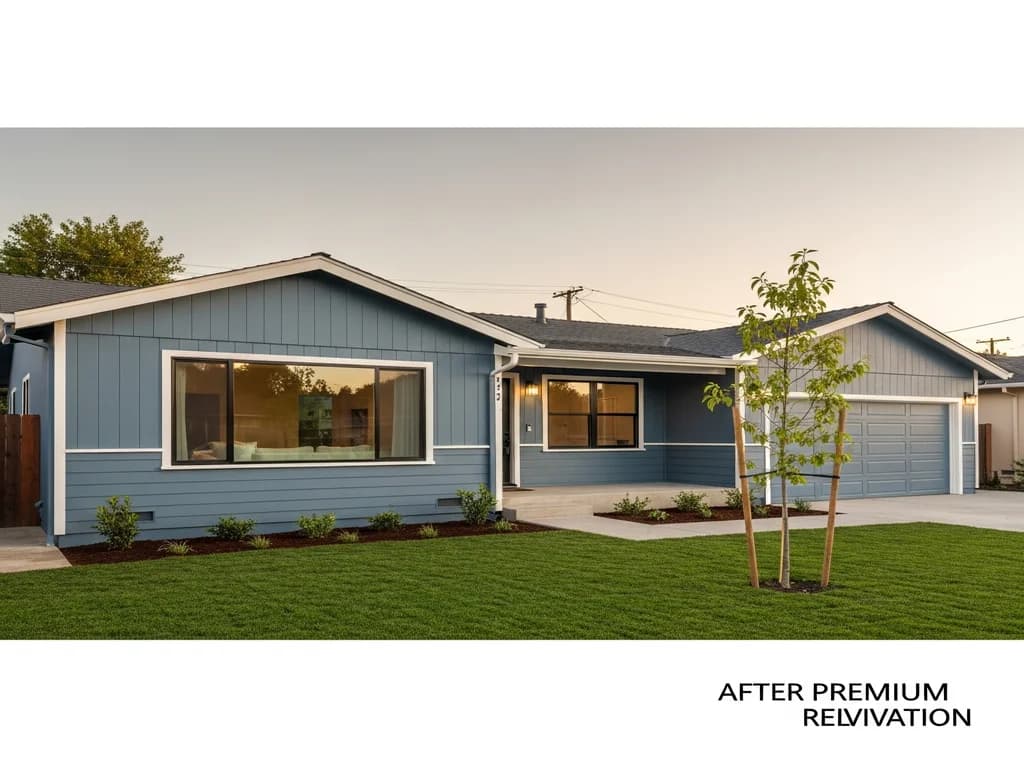
5 min read · Cost
Exterior painting cost in San Jose sits above the inland valley band, driven by South Bay prevailing labor and HOA color approvals across the city's many master-planned and tract neighborhoods. Substrate prep — and which substrate you own — is the variable that moves your number most. The South Bay's mild climate keeps the core system straightforward, so budget tends to go toward coating quality and sun-side prep rather than coastal or wildfire hardening. We scope each home on site and your written estimate governs.
What sets a San Jose paint price
South Bay prevailing labor sets the baseline, and it runs above the inland valley. On top of that, the dominant variable is substrate prep, which depends entirely on whether your home is stucco-wrapped or wood-sided. HOA color approval is common across master-planned neighborhoods and acts as a schedule factor more than a dollar one. Trim complexity, story count, and lot access fill in the rest. The cleanest way to read a quote is to separate prep, paint material, and labor, then confirm the prep is matched to your actual wall type. A premium acrylic system specced for South Bay sun is the long-cost win here; the cheapest line of paint fades fastest on the exposures that matter. Our exterior painting scope is built around that prep-first logic.
Stucco versus wood-siding prep
Most older San Jose homes are stucco-wrapped, and prep there means hairline crack repair, caulk renewal at trim and penetrations, spot-priming, then a quality topcoat. The work is real but bounded, and serious stucco damage is the exception rather than the rule. Wood-sided homes are a different job: scrape, sand, prime bare areas, and address any failed boards or trim before a finish coat goes on. That sequence adds hours and material, so a wood-sided custom prices above a comparable stucco body of the same size. The honest line item to watch is prep — a bid that glosses over it on a wood home is underestimating the labor that actually determines how long the finish lasts. If your home mixes substrates, expect the estimate to reflect both prep paths.
How San Jose neighborhoods shape the quote
No two San Jose paint jobs price the same, and the reason usually starts with the neighborhood. The Eichler enclaves carry flat or low-slope rooflines, large glass walls, vertical grooved siding, and exposed post-and-beam detail — all of which demand careful masking and a system suited to thin, sun-exposed panels rather than fast spray work. Willow Glen, the Rose Garden, and Naglee Park bring older character homes with wood trim, eaves, and decorative millwork that add hand-cutting, scraping, and detail brushing. The vast postwar tracts across the east and south are simpler stucco-and-fascia bodies that paint efficiently and price lower per foot. Lot access matters too: tight streets and narrow driveways slow staging and ladder placement. Knowing which housing type you own tells you most of what drives your number before anyone measures.
What the South Bay climate adds — and doesn't
San Jose sits in a mild South Bay pocket, so the pressures that inflate paint specs in coastal or wildfire zones are largely absent. Salt-air corrosion is a non-issue inland, hard freezes never arrive, and ember-resistant detailing is not a routine driver the way it is in the foothills. That keeps the core system straightforward and holds cost down versus harsher microclimates. The real factor is sun: long, dry summers and strong afternoon exposure fade darker colors and stress south- and west-facing walls, so a quality job leans on UV-stable, fade-resistant acrylics rather than the cheapest paint. Eichler glass walls and flat-roof fascias take the most heat and benefit most from the better coating. Occasional bay moisture means caulking at stucco cracks and trim joints still matters, but remediation is minor. Spend your budget on coating quality and sun-side prep, not freeze or coastal hardening.
When paint isn't the answer — and what underlies it
Paint protects and beautifies sound cladding; it cannot rescue failing siding. On older San Jose wood homes, we sometimes open a wall during prep and find soft trim, splitting boards, or moisture behind the coating — conditions that a fresh topcoat will only hide for a season. An honest crew flags that before painting and prices any board repair separately rather than burying it. If the underlying material is at end of life, repainting is throwing good money after bad, and a re-side conversation is the more honest one; our guide to best siding for Bay Area moisture walks through durable replacement options. Where the substrate is sound, the right call is simply thorough prep and a premium coating. We won't overstate the problem, but we also won't paint over a wall that needs more than paint.
Comparing San Jose painting bids
A fair San Jose paint bid itemizes three things: prep matched to your substrate, the paint specification (premium acrylic, two coats), and the management of any HOA color submittal. Headline totals hide the real differences — two bids hundreds apart often diverge entirely on how much prep each assumes. Confirm the spec calls out pressure wash, caulk, primer, and coat count, and ask where the estimator expects prep surprises so nothing is buried. Before hiring anyone, verify the contractor's license is active and unblemished at the Contractors State License Board; a verified license is the floor, not a bonus. For broader context on how cladding condition feeds into these decisions, our California siding cost guide is a useful companion. Pricing within roughly 10–15% across reputable bidders is typical.
What drives a San Jose exterior painting price
| Cost driver | Effect |
|---|---|
| South Bay prevailing labor | Baseline shift above the valley |
| Substrate prep (stucco vs wood) | Main variable by substrate type |
| HOA color approval | Schedule and palette factor |
| Trim complexity | Per-elevation labor |
| Premium acrylic spec | Long-cost win |
San Jose exterior painting scope bands (for planning)
| Project size | Sierra Siding scope band |
|---|---|
| Single-story stucco, light trim | $5,500–$11,000 |
| Two-story, moderate trim | $9,000–$17,000 |
| Large two-story or wood-sided custom | $13,000–$26,000+ |
Typical exterior painting planning range for the Bay Area — a general California market range, not a Sierra Siding quote. Includes pressure wash, surface prep, caulk, primer, two-coat premium acrylic, and standard masking/cleanup. Final number is set on-site — your written estimate is what governs.
Key takeaways
- South Bay labor sits above the inland valley band
- Substrate type — stucco versus wood — is the main prep variable
- Mild climate means budget goes to UV-stable coating, not coastal or fire hardening
- Eichler glass walls and sun-facing elevations benefit most from premium acrylic
- Paint can't rescue failing cladding; honest bids flag that before coating
- Compare itemized prep and paint spec, not headline totals, and verify CSLB license
FAQ
Quick Answers
Most need at least hairline crack caulk and minor surface repair. Serious stucco damage is the exception rather than the rule.
Wood needs scrape, sand, prime, and board repair before finish coats. That prep adds labor and material beyond a stucco crack-and-caulk pass.
Yes — standard project management on master-planned neighborhoods. It's mostly a schedule factor, since approval cycles add lead time.
No coastal or fire hardening inland, but strong summer sun does. A UV-stable, fade-resistant acrylic protects sun-facing walls and Eichler panels far longer than bargain paint.
We'll flag it before painting and discuss repair or re-side honestly. Painting over end-of-life cladding only hides the problem for a season.
Sources
Authoritative references
- Contractors State License Board (CSLB) — verify a California contractor
- Zonda — 2025 Cost vs. Value Report (exterior remodel ROI)
External links to government, code, and manufacturer sources. Sierra Siding is not affiliated with these organizations; references are provided for verification.