
5 min read · Design
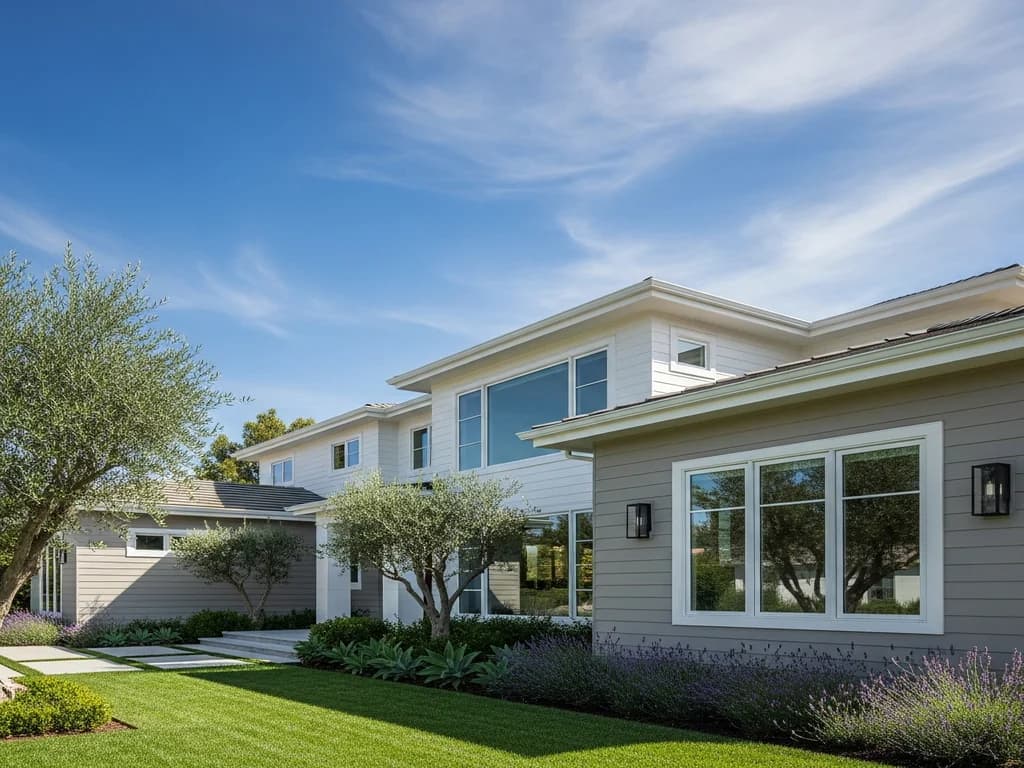
The siding color you approve on a tiny swatch indoors is almost never the color you live with. California sun shifts dramatically from a warm 9 AM angle to neutral noon overhead to a rich 4 PM west glow, and eaves, trees, and trim throw shadows that change the read across every elevation. The fix is simple but non-negotiable: judge color on the actual wall, across a full day, before you commit.
Why exterior color shifts through the day
Sunlight's color temperature is not constant. Morning light is warm and golden, midday light is more neutral and white, and late afternoon warms again toward gold. Because cladding color is just reflected light, the body color shifts with whatever light source is hitting it — a hue that reads warm and inviting at noon can turn cool and gray by 4 PM, or a beige can pick up a yellow cast at sunset. This is physics, not a manufacturing flaw, and it affects every product line including baked-on factory finishes. When you evaluate James Hardie ColorPlus samples, you are evaluating how that specific pigment behaves across your day, not a fixed swatch number.
California-specific light intensity
California sun is intense and direct, so the contrast between a sunlit plane and a shadowed one is sharper here than in cloudier climates. That intensity is not uniform statewide: marine-influenced coastal blocks get fog that softens and cools the light, clear inland valley days amplify it into hard-edged brightness, and foothill and Tahoe altitude intensifies UV while the thinner air reduces atmospheric warming. The same body color can read crisp and saturated on a clear Sacramento elevation and muted and cool on a foggy coastal morning. Spec color for the light your home actually lives in, not for a showroom or a glossy brochure shot.
Architectural shadow patterns
No exterior wall is ever lit evenly. Deep eaves cast a hard shadow band across the upper wall, sharpest on a south face under noon sun. Tree canopies drift dappled shadow across the home as the sun moves, so an elevation that is half-shaded at 10 AM may be fully lit by 2 PM. Window and door trim project their own small shadows, and gable returns and porch overhangs add more. The result is that one body color reads as several values across a single wall. Plan the composition knowing the color will never appear as one flat tone — the shadows are part of the design.
Sample boards in real conditions
Never choose exterior color from an indoor swatch or a phone screen. Mount large sample boards on the actual home — ideally a full board, not a chip — and view them at 9 AM warm angled light, noon overhead light, and 4 PM warm western light. A combination that reads well across all three is usually safe; one that fails badly in any single condition is a risk you will see every day. Leave the boards up several days so weather and sun angle vary. This step costs almost nothing and prevents the most expensive mistake in any exterior painting or re-side color decision.
North elevations and shadow on dark colors
North-facing California elevations get no direct sun all year — just cool, dappled ambient light. Cool colors there can look washed out and lifeless, while warm colors often read better than you would expect, so always test a sample on the north wall specifically. Dark colors behave differently again: a dark body under a dark eave shadow can read nearly black at the corners, which is a striking architectural effect when intended and an oppressively heavy one when it is not. Decide deliberately whether you want that depth, because shadow will deepen any dark field you choose more than the swatch suggests.
Trim contrast and seasonal change
Trim color carries the composition across light conditions. White or light trim reads brilliant in sun and quiets down in shadow, holding the lines of the home all day; dark trim reads quiet in sun and can nearly vanish in shadow, softening the architecture. Season matters too: summer sun rides high with short, sharp shadows, while winter sun sits low and throws long shadows that reach far across walls and pick up different planes. Spec for year-round appearance, not just the season you happen to be choosing in. Browsing the most popular Hardie colors for California helps, but only your own elevations confirm the choice.
When to model shadows versus just sampling
Some architects model shadow and sun-path effects directly on design renderings, which is genuinely useful on premium custom work where the elevations are complex and the budget supports it. For standard residential projects, that modeling is rarely available or worth the cost — and full-size sample boards observed in real conditions across several days are the practical, reliable alternative that catches the same problems. Either way, the goal is the same: see the color in your light before it is permanent. We will help you place and read sample boards as part of scoping a Hardie color so the final result matches what you actually approved.
Time-of-day color reading
| Time | Light character | Color impact |
|---|---|---|
| 9 AM | Warm angled | Colors read slightly warmer |
| Noon | Direct overhead | Most neutral; colors closest to swatch |
| 4 PM | Warm angled (west) | South/west elevations richest |
| Sunset | Deep golden | Warm colors glow; cool colors look off |
| Overcast | Cool diffuse | Colors muted, slightly cool |
Key takeaways
- California sun shifts color reads from warm morning to neutral noon to rich late afternoon
- Coastal fog, valley clarity, and Tahoe altitude each change how a color reads
- Eaves, trees, and trim mean no wall is ever lit evenly
- Sample full-size boards on the actual home at 9 AM, noon, and 4 PM
- North elevations and dark colors deserve their own dedicated samples
- Spec trim and body color for year-round appearance, not one season
FAQ
Quick Answers
At minimum two to three days so you see them across changing light and weather, and ideally a full week. The goal is to catch any condition where the color reads badly.
Yes. Summer sun rides high with sharp short shadows, while winter sun sits low with long shadows, so the same color reads differently across seasons. Spec for the year-round look.
North elevations get no direct sun, only cool ambient light, which can wash out cool colors and flatter warm ones. Always test a sample on the north wall specifically.
Yes. Even baked-on finishes like Hardie ColorPlus are reflected light, so they read warmer or cooler with the sun's angle. The finish is consistent; the light is not.
It can. Dark body colors deepen in eave and corner shadows and may read near-black, which is dramatic when intended and oppressive when not. Sample it on the actual home first.
Rarely for final decisions. Screen color is unreliable and cannot reproduce your site's specific light, so confirm with physical sample boards on the wall.
Sources
Authoritative references
External links to government, code, and manufacturer sources. Sierra Siding is not affiliated with these organizations; references are provided for verification.