Siding in South Lake Tahoe
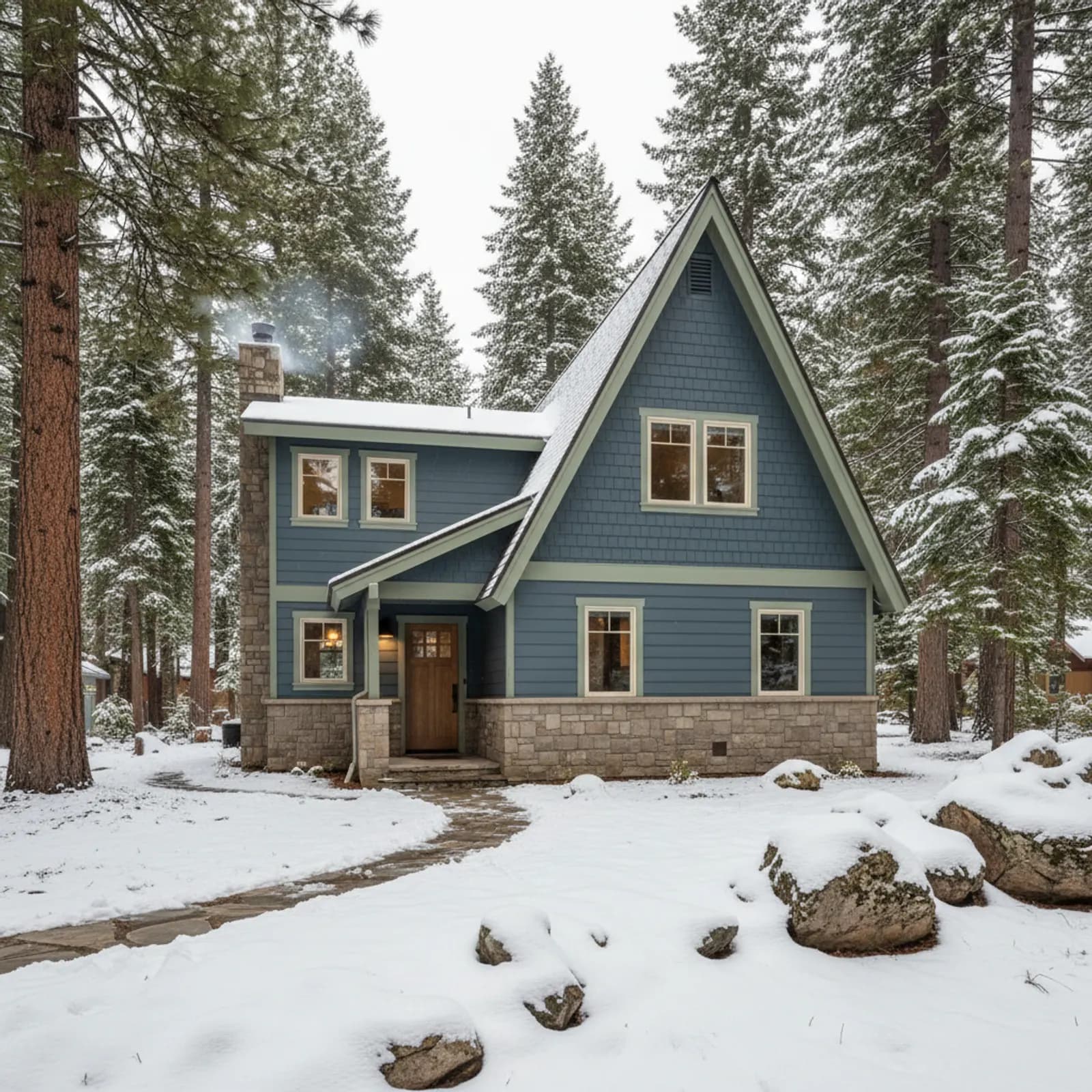
A South Lake Tahoe re-side is an alpine-basin problem with a distinct twist from Truckee: alongside extreme snow and high forested fire exposure, it adds lake-effect wind and moisture off the water, an aging stock of 1960s–70s cabins and A-frames, and a heavy absentee short-term-rental ownership profile. It also sits under TRPA basin and shorezone regulation.
So a South Lake Tahoe project is scoped for snow, fire, and lake exposure together, with low-maintenance durability for owners who aren't there to babysit it — and with the basin's defensible-space and environmental rules built into the plan.
Aging cabins and A-frames, absentee owners
Much of South Lake Tahoe is original 1960s–70s cabin and A-frame stock long past its cladding life, often owned as vacation or STR property. The brief here is a durable, genuinely low-maintenance non-combustible re-clad that survives unattended winters, not a finish that needs annual attention.
Snow, fire, and lake exposure as one envelope
We strip combustible siding, correct the assembly for extreme snow and freeze-thaw, harden eaves and vents for the forested fire exposure, and detail the lake-facing elevations for wind-driven moisture — one envelope, three hazards, plus TRPA defensible-space and shorezone constraints respected.
TRPA review, BMPs, and the WUI fire spec behind a South Shore re-side
Re-siding a home near the south shore rarely starts with cladding choices; it starts with the basin's rules. Most South Lake Tahoe parcels fall under TRPA jurisdiction, and any exterior work that disturbs soil, alters coverage, or touches a near-shore or lakefront lot can trigger Best Management Practices review and shorezone scrutiny. We scope that early so staging, scaffolding, and tear-off debris stay off the lake-runoff path and out of trouble. The other governing layer is fire. Sitting inside a wildland-urban-interface basin, a re-side here is also a hardening opportunity: noncombustible or fire-resistant cladding, ember-resistant soffit and eave detailing, and clean transitions at vents and decks that align with defensible-space expectations. For an absentee owner on the Pioneer Trail or Al Tahoe side, folding ignition resistance into the new envelope is far cheaper during a full re-side than as a separate retrofit. We build the permit path, the BMP plan, and the fire spec into one scope instead of three disconnected jobs.
Detailing siding to shed snow and survive freeze-thaw at 6,200 feet
At roughly 6,200 feet the wall assembly takes abuse that lower-elevation El Dorado County homes never see. Snow piles against the lower courses for months, meltwater wicks up behind poorly flashed laps, and the daily freeze-thaw cycle pries open any joint that holds water. That physics drives our detailing more than the material brand does. We hold cladding well clear of grade and finished snow lines so siding is not buried in a wet, freezing drift, and we kick-out flashing at every roof-to-wall intersection on those steep A-frame and gable rooflines so shed snow does not dump moisture into the wall. Fastening is set for movement, since alpine wood and panels expand and contract hard between subfreezing nights and high-UV afternoons. A rain-screen gap and a robust water-resistive barrier let any intruding moisture drain and dry rather than sit. For lakefront and near-shore exposures, where wind drives moisture sideways, those drainage and flashing details matter even more than the visible cladding.
Why this matters in South Lake Tahoe
- Specified for Lake Tahoe / Sierra Alpine conditions
- non-combustible fiber cement as the recommended system
- Correctly detailed weather-resistive barrier and flashing
- Installed by a crew with 20 years combined experience
Recommended systems for South Lake Tahoe
- non-combustible fiber cement
- mountain-grade clearances and flashing
- freeze-thaw-durable detailing
- high-UV factory finishes
Fiber Cement Siding for South Lake Tahoe homes
The full fiber cement siding approach — materials, weather-resistive detailing, and the manufacturer standards we install to — is covered on the main service page, then specified for South Lake Tahoe's conditions on this one.
Our South Lake Tahoe process
- Step 1
Consultation
We listen to your goals and assess your home on site — exposure, substrate, and architecture.
- Step 2
Design & Proposal
A clear written proposal with the right system specified for your climate and a transparent scope.
- Step 3
Expert Installation
Trained crews install to manufacturer best practices with careful weather-management detailing.
- Step 4
Walkthrough & Support
A final walkthrough, full cleanup, and a clear written record of the scope completed — work we stand behind.
FAQ
Siding in South Lake Tahoe — FAQ
It adds lake-effect wind and moisture off the water and a heavy aging-cabin / absentee-STR ownership profile to the same extreme-snow, high-fire alpine demands, under TRPA basin and shorezone rules.
A durable, genuinely low-maintenance non-combustible re-clad that survives unattended winters and the fire season, so it isn't a recurring upkeep burden between guests.
Yes — high forested wildfire exposure plus extreme snow and freeze-thaw; both, plus lake-facing wind/moisture, are designed into one assembly.
Yes — the 1960s–70s stock is largely past its cladding life and benefits most from a non-combustible, low-maintenance, mountain-detailed re-clad.
They can — basin defensible-space and shorezone constraints factor into scope and scheduling; we plan around them honestly rather than promising valley-style timelines.
Keep Exploring
More for South Lake Tahoe homeowners
More in South Lake Tahoe
Other exterior services in South Lake Tahoe
Back to
El Dorado County & South Lake Tahoe
Helpful Exterior Guides