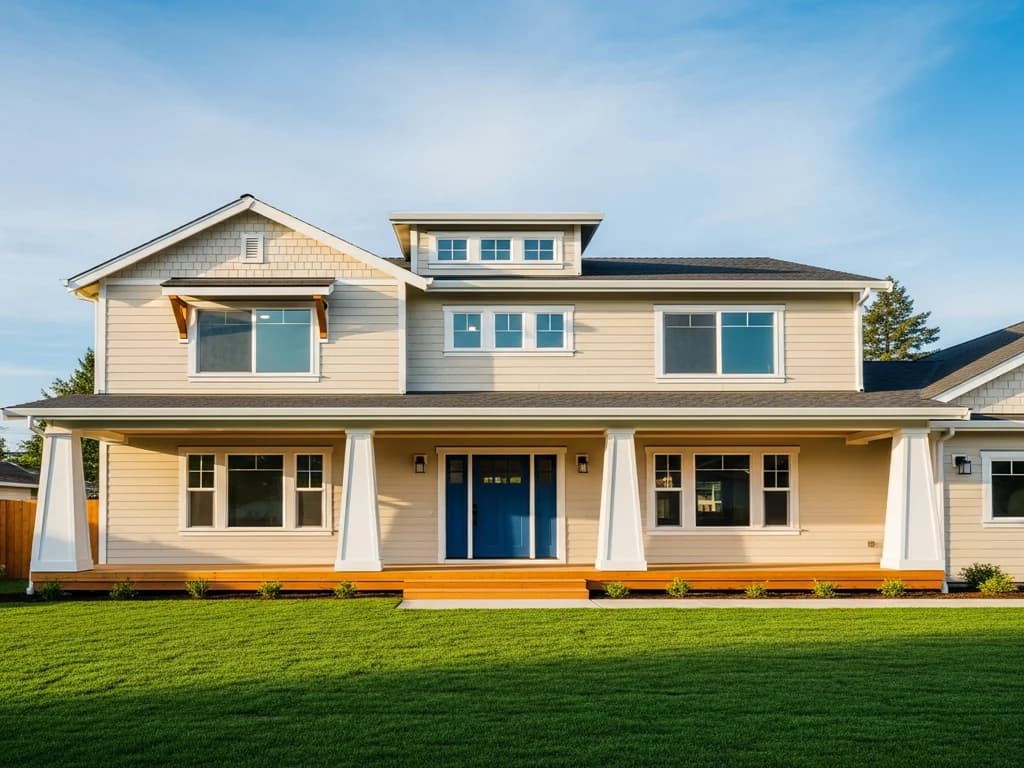
Siding in Point Reyes Station
Point Reyes Station sits at the head of Tomales Bay in West Marin, a small ranching village ringed by wooded ridges and washed daily by ocean fog rolling in off the Point Reyes National Seashore. Re-siding here is a two-sided problem: the marine air carries salt and the fog keeps walls damp for hours, while the forested slopes above town add a measured wildfire dimension. A re-side that ignores either side fails early.
We re-side the village's older shingled cottages, board-and-batten ranch houses, and the rural homes scattered along the Olema and Inverness approaches. The goal on every wall is an assembly that sheds coastal moisture and dries fast, not one that simply hides behind fresh paint.
What West-Marin fog and salt do to siding
Unlike the inland Marin towns over the ridge, Point Reyes Station rarely bakes — it broods under marine fog. Walls stay wet long after the sun is up, and salt drifting off Tomales Bay accelerates corrosion at nails, flashings, and fastener heads. Untreated wood swells and cups, paint blisters from moisture pushing out from behind, and any siding installed tight to the sheathing traps that dampness against the structure. The controlling question on a coastal-ranch wall is not whether water hits it, but how quickly the wall dries between fog cycles. We build for drying, not just for shedding.
Materials suited to a damp marine village
Fiber cement is the workhorse here because it does not feed rot or swell when the fog sits on it for days, and it holds a coating in salt air far better than bare wood. For owners committed to the village's cedar-shingle and board-and-batten character, we install real wood with back-priming, generous end-sealing, and corrosion-rated stainless or hot-dipped fasteners so the look survives the climate. Whatever the cladding, the choice is driven by Point Reyes Station's persistent damp and salt load, not by what is cheapest to nail up.
A rain-screen so the wall can breathe
The single most important detail on a foggy coastal wall is a drainage gap behind the cladding. We install a continuous weather-resistive barrier, then furring that creates a vented rain-screen cavity, so any moisture that gets behind the siding can drain and air-dry instead of soaking the sheathing. In a place where walls are wet more mornings than not, that ventilated gap is the difference between a re-side that lasts decades and one that quietly rots from behind. It is standard on our West-Marin coastal work.
Respecting the historic and rural fabric
Point Reyes Station's small downtown and surrounding ranch homesteads have a settled, unfussy character that the wrong cladding can erase. We match exposures, trim proportions, and shingle coursing to what is already there, and we keep the rural homes reading as ranch houses rather than suburban remodels. The aim is a wall that looks like it always belonged on this stretch of West Marin, while performing far better than the original against fog, salt, and the fire-prone ridges above.
Sequencing a re-side in a coastal climate
Open walls and marine fog are a bad combination, so we stage the work to keep the structure dry — pulling old cladding in manageable runs, drying-in promptly with the weather barrier, and flashing every opening before the next fog bank arrives. On rural parcels along Olema or toward Inverness, we also plan access and material staging around narrow lanes and limited turnaround. The result is a controlled job that never leaves your sheathing exposed to a damp West-Marin night.
Why this matters in Point Reyes Station
- Specified for North Bay conditions
- James Hardie as the recommended system
- Correctly detailed weather-resistive barrier and flashing
- Installed by a crew with 20 years combined experience
Recommended systems for Point Reyes Station
- James Hardie
- fiber cement
- engineered wood
Fiber Cement Siding for Point Reyes Station homes
The full fiber cement siding approach — materials, weather-resistive detailing, and the manufacturer standards we install to — is covered on the main service page, then specified for Point Reyes Station's conditions on this one.
Our Point Reyes Station process
- Step 1
Consultation
We listen to your goals and assess your home on site — exposure, substrate, and architecture.
- Step 2
Design & Proposal
A clear written proposal with the right system specified for your climate and a transparent scope.
- Step 3
Expert Installation
Trained crews install to manufacturer best practices with careful weather-management detailing.
- Step 4
Walkthrough & Support
A final walkthrough, full cleanup, and a clear written record of the scope completed — work we stand behind.
FAQ
Siding in Point Reyes Station — FAQ
Because the village lives under marine fog and salt air off Tomales Bay, walls stay damp for hours and corrosion runs faster. Siding that performs fine in a dry inland town can rot or blister here unless it is built to dry quickly.
Yes. We install real wood shingles with back-priming, sealed ends, and corrosion-rated stainless fasteners so the historic look survives the coastal climate. Owners who want the look without the upkeep often choose fiber cement detailed to read similarly.
It is a vented drainage gap behind the cladding. In a fog-soaked marine village it lets the wall drain and air-dry instead of trapping moisture against the sheathing, which is the leading cause of premature siding failure on this coast.
Yes. We re-side homes along the Olema and Inverness approaches and the ranch parcels around town, and we plan material staging and access around the narrow rural lanes those properties sit on.
Keep Exploring
More for Point Reyes Station homeowners
More in Point Reyes Station
Other exterior services in Point Reyes Station
Nearby Service Areas
Siding near Point Reyes Station
Back to
Marin County & Point Reyes Station
Helpful Exterior Guides