
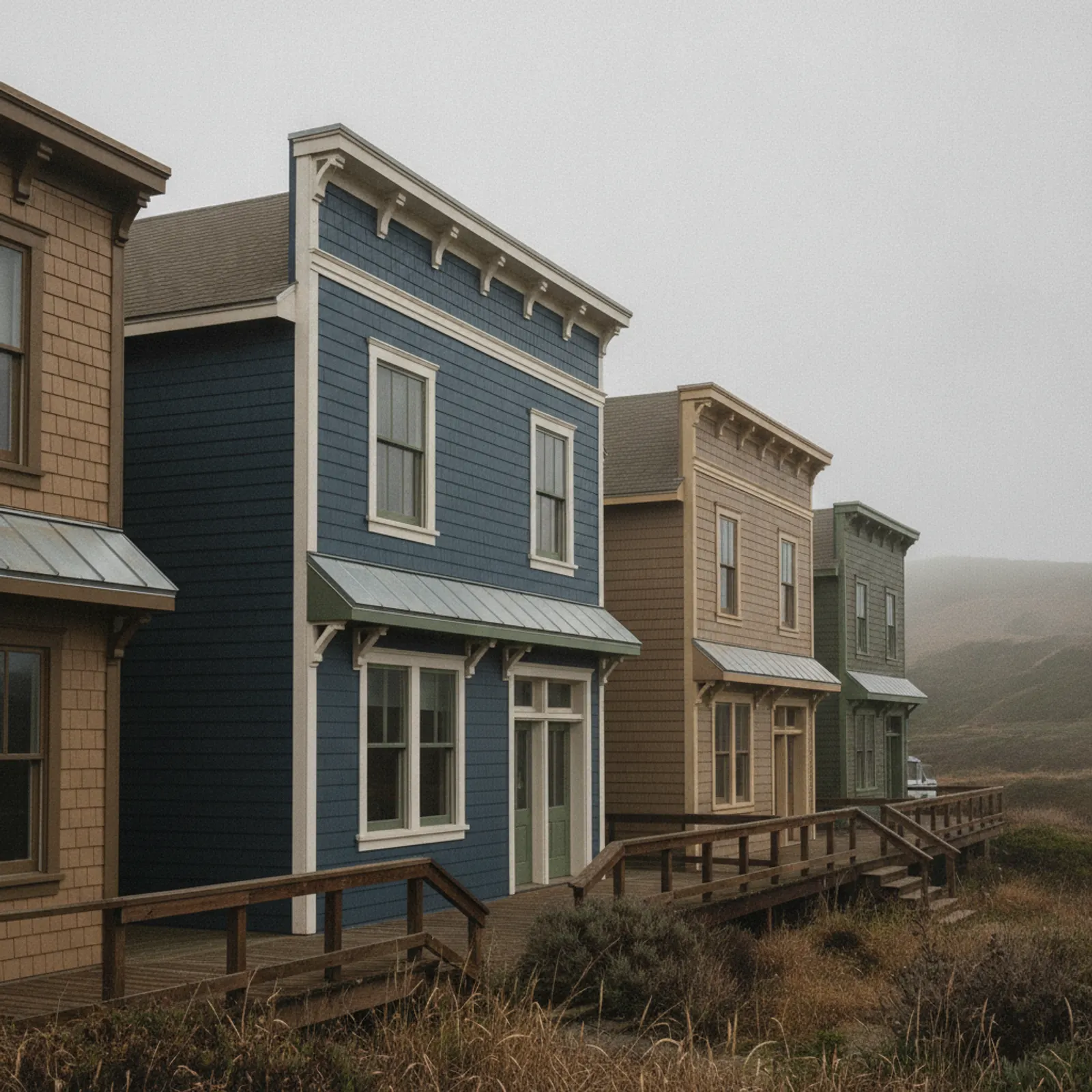
Fire-Resistant Siding in Point Reyes Station
Point Reyes Station occupies an unusual middle ground for fire planning. The village floor near Tomales Bay is coastal and fog-damp, but the wooded ridges that surround West Marin carry a real, measured wildfire exposure, and homes set back toward the forested slopes or up the Inverness Ridge sit in genuine wildland-urban-interface terrain. Fire-resistant cladding here is about honest, location-specific hardening — heavier where the ridge looms, more measured down by the water.
We assess each property for where it actually falls on that gradient, then specify non-combustible siding and ember-resistant detailing to match — not a one-size-fits-all fire package.
A moderate, ridge-driven fire exposure — stated plainly
We will not overstate the risk. The downtown and the low ground by the bay are not high-intensity fire terrain. But West Marin's surrounding forested ridges are a different story, and a home tucked against the woods toward Inverness or up a wooded lane has meaningfully higher ember and exposure risk than one in the village core. The right response is proportional: we harden hardest where the trees and slope warrant it, and we are candid when a given lot does not need the full WUI treatment.
Embers, not just flame fronts
Most homes that burn in interface fires ignite from wind-blown embers, not a wall of flame — and embers can travel well ahead of any fire on the ridge. Non-combustible fiber cement siding gives those embers no fuel at the wall plane. The siding is one layer of a system that also closes the gaps embers exploit: vents, eaves, the base of walls, and the junctions where decks or fences meet cladding. We treat the whole envelope, because a fire-rated wall with an open vent beside it is still a way in.
The WUI code and the WUI map
Where a Point Reyes Station property falls inside a designated wildland-urban-interface zone, WUI-code standards drive material and assembly choices for new and replacement exteriors. We build to those requirements where they apply — non-combustible cladding, compliant ember-resistant venting, and properly detailed wall-to-roof and wall-to-deck transitions — and we tell you honestly when your parcel sits outside the mapped zone so you are not paying for ratings the location does not call for.
Defensible space the siding can't replace
Non-combustible siding works alongside the cleared, lean zone immediately around the house. We point out where vegetation crowds the wall, where the first five feet should be kept ember-resistant and free of bark mulch or woodpiles, and how the wooded edge of a West-Marin lot changes the calculus. The cladding is the last line; the defensible space is the first. On ridge-adjacent homes we make sure both are doing their job rather than relying on the wall alone.
Fire hardening that still has to handle the fog
Point Reyes Station's complication is that fire-resistant siding here must also survive constant marine moisture and salt. Fiber cement answers both: it does not burn and it does not rot in the damp. We still detail it for drying with a vented rain-screen so the same wall that resists embers from the ridge also sheds the fog off the bay. That dual demand — fire above, water below — is exactly what makes hardening in this village different from a dry inland foothill town.
Why this matters in Point Reyes Station
- Specified for North Bay conditions
- James Hardie as the recommended system
- Correctly detailed weather-resistive barrier and flashing
- Installed by a crew with 20 years combined experience
Recommended systems for Point Reyes Station
- James Hardie
- fiber cement
- engineered wood
Fire-Resistant Siding for Point Reyes Station homes
The full fire-resistant siding approach — materials, weather-resistive detailing, and the manufacturer standards we install to — is covered on the main service page, then specified for Point Reyes Station's conditions on this one.
Our Point Reyes Station process
- Step 1
Consultation
We listen to your goals and assess your home on site — exposure, substrate, and architecture.
- Step 2
Design & Proposal
A clear written proposal with the right system specified for your climate and a transparent scope.
- Step 3
Expert Installation
Trained crews install to manufacturer best practices with careful weather-management detailing.
- Step 4
Walkthrough & Support
A final walkthrough, full cleanup, and a clear written record of the scope completed — work we stand behind.
FAQ
Fire-Resistant Siding in Point Reyes Station — FAQ
The village floor by the bay is low-exposure, but the wooded ridges surrounding West Marin carry a real, moderate fire risk. Homes set toward the forested slopes or up the Inverness Ridge can sit in genuine wildland-urban-interface terrain and warrant hardening.
It depends on whether your parcel falls inside a designated WUI zone. We check where your property sits and build to 7A where it applies — and tell you honestly when your lot is outside the mapped zone so you are not over-specifying.
Wind carries embers well ahead of a fire and lands them against walls, in vents, and in debris at the base of the house. Non-combustible siding plus ember-resistant venting removes those ignition points before flame ever arrives.
Yes — that is why we favor fiber cement here. It is non-combustible against ridge embers and rot-proof against the marine moisture, and we detail it with a vented rain-screen so it dries between fog cycles.
Keep Exploring
More for Point Reyes Station homeowners
More in Point Reyes Station
Other exterior services in Point Reyes Station
Nearby Service Areas
Fire-Resistant Siding near Point Reyes Station
Back to
Marin County & Point Reyes Station
Helpful Exterior Guides