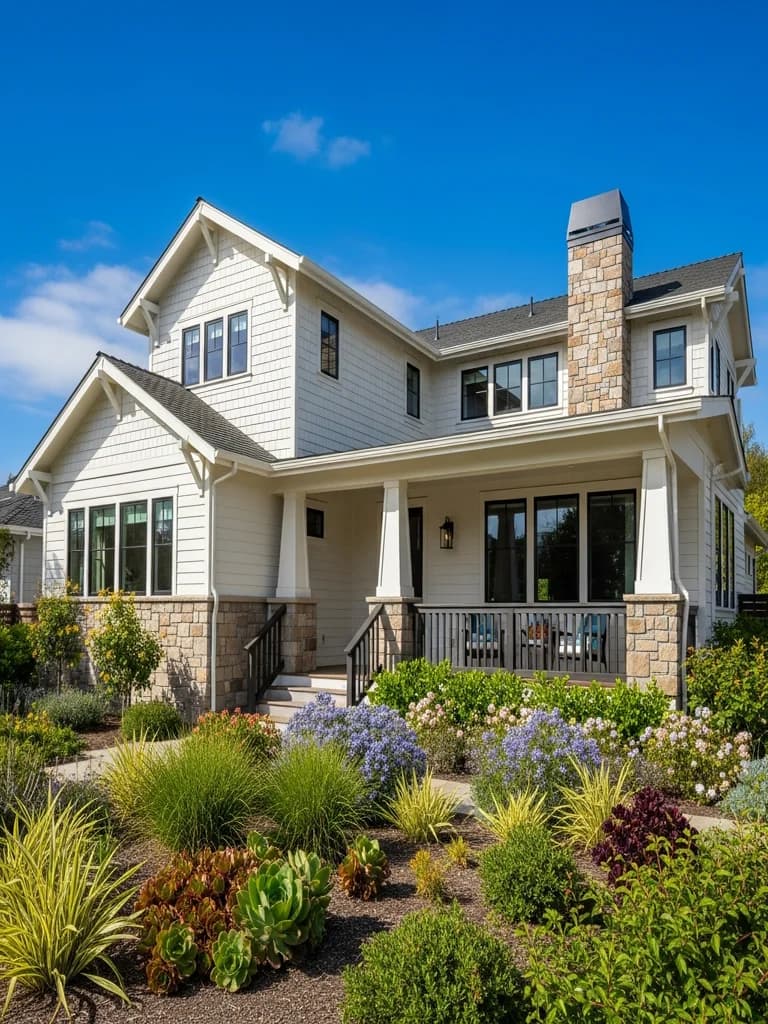
Siding in Fairfax
Fairfax is a small, tree-shaded canyon town tucked into the upper end of the Ross Valley, where the eclectic stock — old cottages, 1900s-to-mid-century bungalows, and one-off hillside customs — climbs steep wooded slopes off narrow, winding lanes. A Fairfax re-side has to answer two pressures at once: heavy canyon moisture from fog, creekside damp, and dense tree canopy that keeps walls wet, and genuine wildfire exposure on the brushy, forested ridges above town.
We scope each Fairfax job to that double load — a drying, non-combustible assembly that survives wet shade and ember attack — and we plan the access before we plan the wall, because most of these lots are reached by tight, twisting roads.
The wooded-canyon moisture load
Fairfax sits low and narrow in the canyon, so fog pools overnight and a thick tree canopy blocks the sun that would otherwise dry walls by mid-morning. North-facing and downhill elevations on these hillside homes can stay damp for most of the cooler season, and creekside lots near the canyon floor carry persistent ground moisture. That standing damp is what rots the sheathing behind the older cottage cladding we replace here. We treat a Fairfax wall as a drainage system: continuous water-resistive barrier, a vented gap so the back of the board can dry, and base clearance kept well off leaf litter and damp soil.
Real fire exposure on the ridges
Unlike the flatter baylands towns down-valley, much of Fairfax backs onto steep, brush-and-forest slopes with continuous fuel and constrained evacuation routes — this is genuine WUI terrain, not a token concern. Homes on the upper canyon and ridge edges face real ember and radiant exposure. We specify Class A non-combustible cladding there and harden the weak points embers exploit: eaves, soffits, vents, deck-to-wall junctions, and the ground-to-siding transition where wind-driven embers collect against the wall base.
Eclectic older stock, handled honestly
Fairfax's character comes from its mixed, decades-deep housing — quirky cottages, board-and-batten bungalows, and hillside customs that rarely match a catalog detail. A faithful re-side here means matching reveal, trim depth, and profile rather than wrapping the house in a generic flat panel. We replicate period proportions where they define the home and let owners choose a cleaner modern read where the original detailing was never special, all within a single drained, non-combustible system that suits the canyon.
Tight hillside access drives the plan
Reaching a Fairfax house is often the hard part. Lots climb off narrow, twisting canyon roads with little frontage, short or steep driveways, and almost no flat staging room — conditions a down-valley flat lot never imposes. We stage siding bundles in lifts, run scaffold off the downhill elevation, protect the wooded slope below from tear-off debris, and strip and dry-in one elevation at a time so a sudden North Bay storm cannot soak an open wall. Non-combustible cladding is heavier than the old wood it replaces, which matters when material is hand-carried up a hillside path, so labor and sequencing — not just square footage — shape the Fairfax timeline. We walk the approach with you before quoting.
Why this matters in Fairfax
- Specified for North Bay conditions
- Class A non-combustible fiber cement as the recommended system
- Correctly detailed weather-resistive barrier and flashing
- Installed by a crew with 20 years combined experience
Recommended systems for Fairfax
- Class A non-combustible fiber cement
- James Hardie
- rigorous drainage-plane detailing
- fire-hardened eave and vent detailing
Fiber Cement Siding for Fairfax homes
The full fiber cement siding approach — materials, weather-resistive detailing, and the manufacturer standards we install to — is covered on the main service page, then specified for Fairfax's conditions on this one.
Our Fairfax process
- Step 1
Consultation
We listen to your goals and assess your home on site — exposure, substrate, and architecture.
- Step 2
Design & Proposal
A clear written proposal with the right system specified for your climate and a transparent scope.
- Step 3
Expert Installation
Trained crews install to manufacturer best practices with careful weather-management detailing.
- Step 4
Walkthrough & Support
A final walkthrough, full cleanup, and a clear written record of the scope completed — work we stand behind.
FAQ
Siding in Fairfax — FAQ
Fairfax leads with a wooded-canyon combination of heavy shade-and-fog moisture plus genuine ridge wildfire on tight access, whereas San Anselmo's story centers on a creekside flood-damp historic core, and the flatter baylands towns have neither the steep fire slopes nor the canopy-trapped damp.
It is real on the brushy, forested slopes above and around town — continuous fuel and constrained access make much of Fairfax genuine wildfire terrain, so non-combustible hardened exteriors are a baseline there, not optional.
Canyon fog, creekside damp, and a tree canopy that blocks drying sun keep walls wet for long stretches, and trapped moisture decays sheathing behind the old cladding. A drained, vented assembly with proper base clearance fixes the root cause.
Yes — we match reveal, trim depth, and profile on homes whose detailing defines them, and offer a cleaner modern read where the original was plain, all within one non-combustible drained system.
Often significantly — staging, scaffold, and debris control on tight twisting roads and steep lots take planning, so we settle the access plan and sequencing before quoting rather than discovering it mid-tear-off.
Keep Exploring
More for Fairfax homeowners
More in Fairfax
Other exterior services in Fairfax
Nearby Service Areas
Siding near Fairfax
Helpful Exterior Guides