
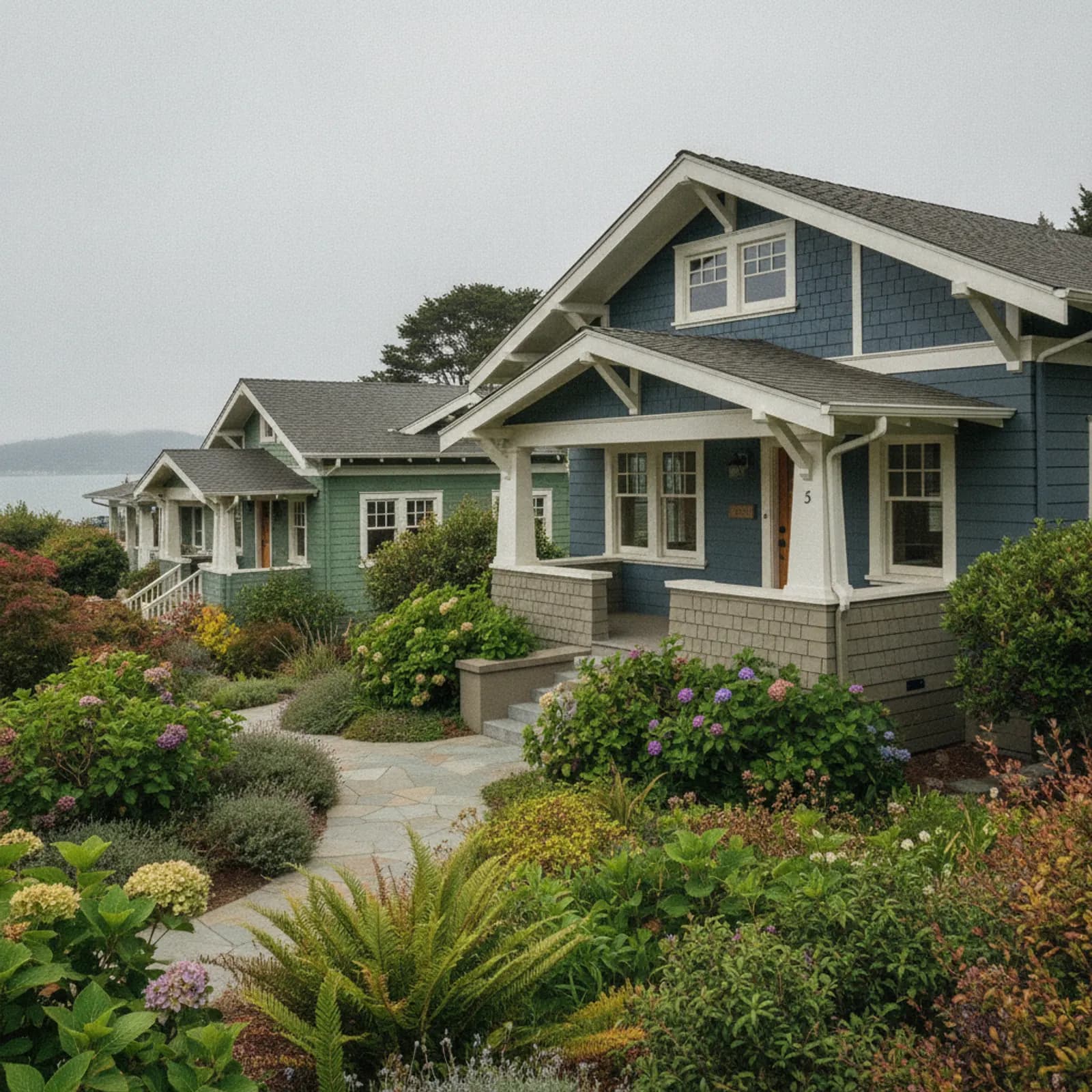
James Hardie Siding in Fairfax
Fairfax asks a cladding to solve two problems at once that most towns only face one at a time. Down in the shaded creek-side pockets and on north-facing walls, the canyon stays wet and slow to dry, which is rough on wood. Up the brushy, forested slopes that climb out of town, the same homes sit in genuine wildland-fire terrain where wind-driven embers are the real threat. A fiber-cement system like James Hardie is worth a hard look here precisely because one material can answer both the damp and the canyon's fire exposure, where a wood or vinyl wall is forced to lose on one front or the other.
What it cannot do is rewrite the town's character, and Fairfax's mix of cottages, bungalows, and hillside customs is part of what people are protecting — so the value is in matching that stock as much as in the engineering.
One wall, two Fairfax problems
The reason fiber cement keeps coming up on these lots is that it does not have to pick a fight. It shrugs off the repeated wetting that punishes wood on a fog-shaded creek-side or north elevation, and it does not add fuel to a slope fire the way combustible siding does. On a Fairfax parcel that is damp at the base and fire-exposed on the uphill side — sometimes the very same house — that dual answer is the whole point. The catch is that the board alone is not the solution; how it is detailed for drainage and for ember resistance is what actually carries the wall through both hazards, which is where the real work lives.
Built for a wet, mild climate — not a freezing one
Hardie engineers its boards for the regional climate they will live in, and a fog-shaded Ross Valley canyon falls firmly into the wet, mild, freeze-light category rather than the hard-frost regions other formulations target. That matters because the failure these walls invite is the long soak-and-dry cycle of a Fairfax winter, not the freeze-thaw of a snow town. We confirm the climate-correct product is what actually lands on the truck rather than assuming it, because the wrong regional board looks identical on delivery day and only betrays itself years later on a damp canyon wall that never gets the chance to fully dry out.
A factory finish that earns its keep on a steep, shaded lot
The case for ordering Hardie with its color already cured on at the plant is unusually strong in Fairfax, and it is a practical one, not a cosmetic one. Re-coating a home perched up a tree-tight canyon lane means hauling scaffold back up a grade and working in shade that keeps paint slow to cure and quick to mildew. A plant-applied finish skips most of that cycle, holds its color far longer than a field coat on a damp, low-sun wall, and saves an owner from repeating the chore every few seasons. On a hillside reached by a single-lane road, the finish you do not have to redo is worth as much as the board you do not have to replace.
Honoring Fairfax's mixed cottage and hillside stock
Fairfax is not a subdivision, and a single wide plank wrapped over everything would erase what makes the town look like itself. Hardie's range gives us the vocabulary to match what is already there — a tighter lap reveal on a period cottage, a vertical-and-batten field on a board-and-batten bungalow, a shingle-look panel on a wooded hillside custom, and trim sized to keep original window and corner proportions. Because so many of these homes read at close range from a narrow lane or a neighbor's porch, we mock the profile and color against the existing trim and roofline before anything is ordered, so the protection arrives without flattening the home's character.
Installed for the canyon, not just nailed up
A fiber-cement wall only delivers on either the moisture or the fire promise if it is built to the published method and then detailed for this specific terrain. We hold the fastening, clearances, and joint treatment to spec, run the cladding over a continuous weather barrier with a drainage gap so the wall can dry instead of trapping canyon damp behind it, and harden the places embers actually attack — the ground-to-siding base, eaves, and vents on the uphill exposure. A shaded, fire-adjacent Fairfax wall punishes shortcuts faster than a dry inland one, so the detailing is not optional polish; it is what makes the dual-hazard case real.
Why this matters in Fairfax
- Specified for North Bay conditions
- Class A non-combustible fiber cement as the recommended system
- Correctly detailed weather-resistive barrier and flashing
- Installed by a crew with 20 years combined experience
Recommended systems for Fairfax
- Class A non-combustible fiber cement
- James Hardie
- rigorous drainage-plane detailing
- fire-hardened eave and vent detailing
James Hardie Siding for Fairfax homes
The full james hardie siding approach — materials, weather-resistive detailing, and the manufacturer standards we install to — is covered on the main service page, then specified for Fairfax's conditions on this one.
Our Fairfax process
- Step 1
Consultation
We listen to your goals and assess your home on site — exposure, substrate, and architecture.
- Step 2
Design & Proposal
A clear written proposal with the right system specified for your climate and a transparent scope.
- Step 3
Expert Installation
Trained crews install to manufacturer best practices with careful weather-management detailing.
- Step 4
Walkthrough & Support
A final walkthrough, full cleanup, and a clear written record of the scope completed — work we stand behind.
FAQ
James Hardie Siding in Fairfax — FAQ
Because one material answers the town's two simultaneous hazards — it survives the damp, slow-drying canyon walls far better than wood and does not feed the slope fires that threaten the brushy uphill lots, with the detailing doing the real protective work.
Fairfax's wet, mild, freeze-light canyon calls for the regional formulation built for moisture and soak-and-dry cycling rather than the freeze-thaw product meant for snow regions, and we confirm the correct one is what arrives rather than assuming it.
For most steep, tree-shaded lots, yes — the plant-cured color holds far longer on a damp, low-sun wall and spares you hauling scaffold back up a narrow canyon lane to repaint every few seasons.
Usually — its lap, vertical-and-batten, and shingle-look profiles plus sized trim let us hold the home's original reveal and proportions, and we mock options against the existing trim before ordering since these walls read up close from the lane.
Very much — the board only delivers if it is built to spec over a drainage gap and weather barrier so the wall dries, and hardened at the base, eaves, and vents where embers attack, because a shaded, fire-adjacent canyon wall punishes shortcuts fast.
Keep Exploring
More for Fairfax homeowners
More in Fairfax
Other exterior services in Fairfax
Nearby Service Areas
James Hardie Siding near Fairfax
Helpful Exterior Guides