Exterior renovation in Mariposa
Mariposa is the county seat and commercial heart of Mariposa County, a small historic town on Highway 140 that doubles as one of the principal gateways to Yosemite. Its identity runs deep in the Gold Rush: the downtown preserves genuine 19th-century commercial and residential stock, including the storied county courthouse, and that historic core sits amid foothill acreage homes, ranches, cabins, and scattered rural residences spreading out through oak woodland and pine toward Midpines and the park. Much of this housing is older and combustible — wood, board-and-batten, T1-11 — set in terrain where fire, not routine weathering, is the controlling exterior stressor. A re-side in Mariposa is a hardening project first.
A town that has lived the worst case
What distinguishes Mariposa from the valley communities to the west is that catastrophic fire is not theoretical here — it has come to the doorstep twice in recent years. The Detwiler Fire of July 2017 burned through the foothills near town, destroyed homes, and forced the evacuation of the county seat; the Oak Fire of July 2022 ignited near Midpines just east of town and again destroyed homes and drove evacuations. Homeowners here arrive already understanding fire exposure, so our job is less to make the case for non-combustible cladding than to deliver it correctly — hardened, detailed, and documented — on both surviving older homes and the rebuilds going up in the burn footprints.
Considering an exterior project in Mariposa?
Mariposa housing and architecture
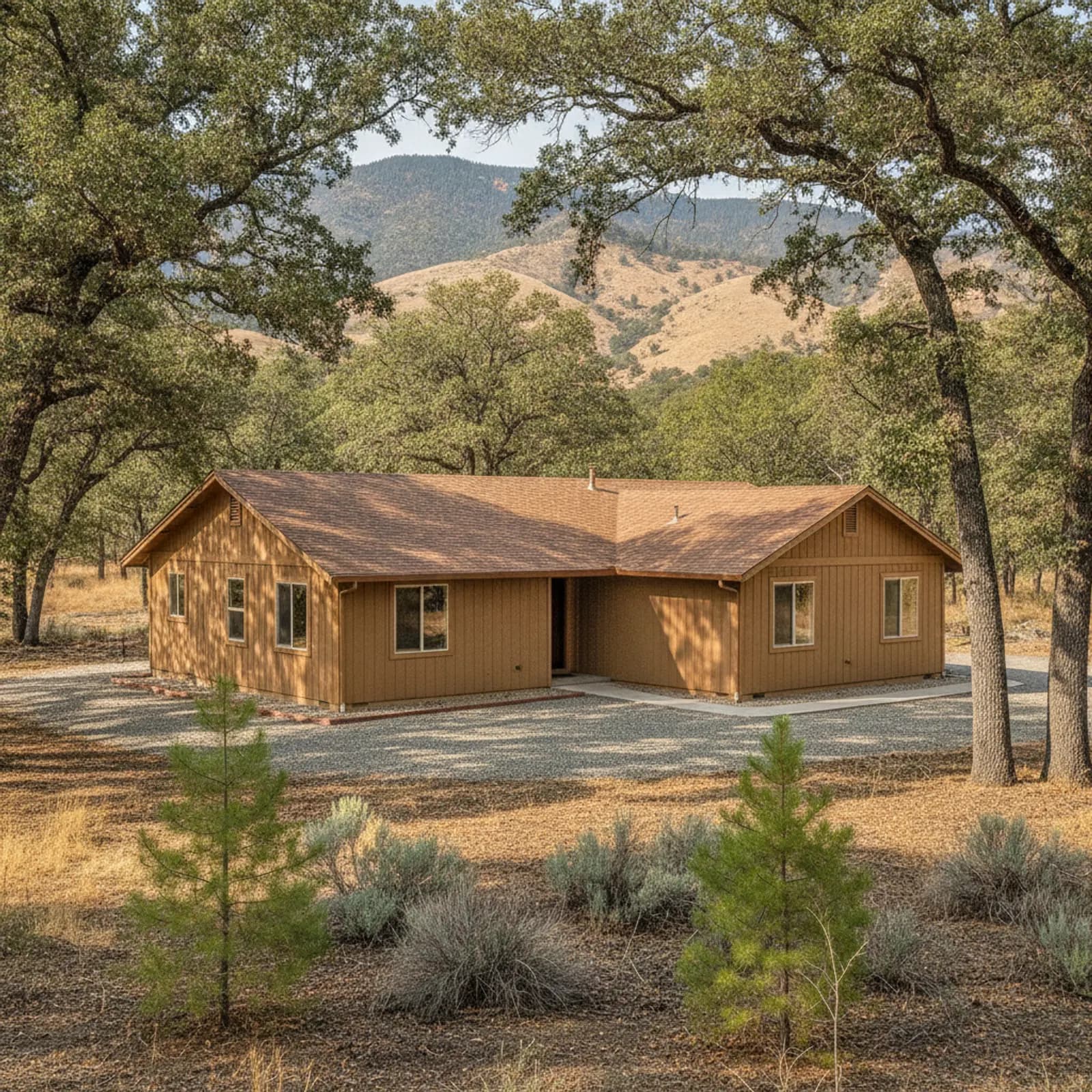
Mariposa's stock is a distinctive layering of historic and rural. The downtown and its surrounds hold preserved Gold Rush-era homes and commercial buildings with real period character that demands restraint — the right profile, accurate trim proportions, and a light hand, since a generic re-cladding reads as a mistake on these old streets. Beyond the core the housing spreads into foothill acreage homes, ranch houses, cabins, and rural residences along the Highway 140 corridor toward Midpines, much of it clad in combustible wood or T1-11. And increasingly there are post-fire rebuilds in the Detwiler and Oak fire footprints, many already non-combustible from the studs out. We design to each home's era and, above all, to its wildland exposure.
Mariposa's foothill fire climate
The controlling stressor in Mariposa is wildfire, driven by a hot, dry Mediterranean foothill climate. Summers are long, high-UV, and low-humidity, curing the surrounding grass, brush, oak, and pine to tinder by mid-season — the same heat that fades south- and west-facing walls is what fuels the fire season. Winters are cool and wet, which keeps sound drainage-plane and flashing detailing on every project, but everything defers to the fire agenda. Snow at the town's foothill elevation is light and intermittent rather than a design load. The exterior here is specified for ember-and-radiant-heat behavior first, with heat durability and wet-winter detailing folded into the same non-combustible system.
Wildfire hardening in Mariposa
Mariposa warrants rigorous, honest fire-hardening practice. We specify Class A non-combustible fiber cement (ASTM E84) and detail carefully at the vulnerable points — eaves, soffits, vents, decks, and the ground-to-wall transition where embers collect — recognizing the foothills' high ember exposure. On surviving older homes, re-cladding combustible wood or T1-11 is the single highest-value hardening upgrade available to the structure; on the Detwiler and Oak fire rebuilds, the cladding is coordinated with a current-code, non-combustible shell. We work to current California WUI standards and document the assemblies so the work supports defensible-space, code, and insurability conversations. We won't overstate it, though — siding is one layer of a whole-home and whole-property strategy, not a guarantee.
Recommended materials for Mariposa
Non-combustible fiber cement, hardened and detailed to current WUI practice, is the cladding we recommend across Mariposa, and on exposed foothill and wildland-interface parcels it is effectively the only one we'll install. It carries a Class A fire rating, adds no fuel to the wall, and also delivers the heat and UV durability the exposed terrain requires, so the safest material is also the soundest. Factory finishes hold color through the long foothill summers far better than field paint. On the historic downtown homes we select period-appropriate lap profiles and trim so the upgrade reinforces the Gold Country character rather than erasing it, and combustible cladding is the material we replace here, not one we add.
What an exterior project costs in Mariposa
Mariposa pricing is driven by the fire-hardening scope, current-code detailing, foothill and rural access on long or rough driveways, and substrate discovery on older surviving homes. Two variables are particular to town: the historic downtown homes most frequently reveal layered original siding and dry rot at demolition after a century of foothill sun, and rural acreage parcels can mean longer material delivery and debris hauls that affect staging. On a post-fire rebuild the hardening is simply how the home is built; on a surviving older home it is a deliberate upgrade with its own discovery. We assess on site and provide a written, itemized estimate — the hardening scope here is the point, not an upsell, and your written estimate governs.
The historic downtown and Gold Rush core
Mariposa's preserved 19th-century downtown and its surrounding historic homes are the heart of the town's identity and the most demanding exterior work in the county. These buildings carry detailing expectations a generic re-side will visibly miss, so we match lap width, trim proportions, and finish to the era while upgrading durability and fire performance. They are also the most likely to hide dry rot or multiple layers of original siding after a century of foothill weather, which we plan for at demolition rather than discover mid-project. Getting the character right here protects both the home and one of the Gold Country's best-preserved streetscapes.
Detwiler and Oak fire rebuilds and surviving homes
The 2017 Detwiler Fire near town and the 2022 Oak Fire near Midpines left Mariposa with two different exterior jobs. A rebuild in the burn footprint is typically non-combustible from the framing out, its cladding coordinated with a current-code shell. A surviving older home is a retrofit, where re-cladding combustible wood or T1-11 in hardened fiber cement is the highest-value survival upgrade available to it — but it comes with substrate and dry-rot discovery a rebuild doesn't. We scope each path for what it actually is, honestly, and document what goes on the walls.
The Yosemite corridor and rural access
Highway 140 through Mariposa is a main artery to Yosemite, and the housing thins into rural acreage, cabins, and ranch parcels the farther it runs toward Midpines and the park. That geography shapes every project: long or rough driveways affect material delivery and debris removal, and regrowing vegetation can crowd the work zone. We plan staging, scaffold placement, and clearances during the site visit so the schedule reflects the real approach rather than an optimistic guess from a map, and so the crew sequences work efficiently across the structures that matter on a property.
Mariposa is unincorporated: county permits, PG&E + PSPS, MPUD water
Mariposa is not a city — the county has no incorporated cities. Building permits, planning review, and code enforcement all run through Mariposa County's Planning Department. Electric and gas are PG&E, and Mariposa is in one of the highest-PSPS corridors in the state. Water is supplied by the Mariposa Public Utility District (MPUD) in the town core, with private wells and small mutual water companies elsewhere. Fire response is Mariposa County Fire Department alongside CAL FIRE's Madera-Mariposa-Merced Unit. The Downtown Mariposa Historic District (California Historical Landmark #670) — one of the most intact Gold Rush-era commercial districts in the state — carries preservation review on visible exterior work.
HZ10 and Very-High FHSZ across Mariposa County
Mariposa is in James Hardie's HZ10 climate zone; installing HZ5 is a documented warranty misapplication. On the fire side, essentially all of Mariposa County sits in Moderate to Very High FHSZ under California's 2025 LRA Fire Hazard Severity Zone map, with substantial territory in State Responsibility Area outright. The 2017 Detwiler Fire and 2022 Oak Fire reset the county's fire and insurance conversation. The 2025 California Wildland-Urban Interface Code governs the exterior wall on essentially every re-side here. The code frame changed on January 1, 2026, when Chapter 7A moved into the standalone WUI Code.
Our process in Mariposa
- Step 1
Consultation
We listen to your goals and assess your home on site — exposure, substrate, and architecture.
- Step 2
Design & Proposal
A clear written proposal with the right system specified for your climate and a transparent scope.
- Step 3
Expert Installation
Trained crews install to manufacturer best practices with careful weather-management detailing.
- Step 4
Walkthrough & Support
A final walkthrough, full cleanup, and a clear written record of the scope completed — work we stand behind.
Mariposa asks for exteriors that take its fire history seriously and honor its Gold Rush character at the same time — genuinely hardened, detailed to current WUI practice, documented, and period-sensitive where the home calls for it. We scope every Mariposa project on site so the hardening matches the actual parcel, and your written, itemized estimate governs the work.
FAQ
Mariposa — Common Questions
It is the defining exterior factor. The 2017 Detwiler Fire burned near town and the 2022 Oak Fire struck just east at Midpines — both destroyed homes and forced evacuations. We apply rigorous non-combustible hardening and current WUI detailing on Mariposa projects.
No siding is fireproof, and we won't claim otherwise. Fiber cement is non-combustible with a Class A rating (ASTM E84), so it adds no fuel to the wall — one important layer of a whole-home hardening and defensible-space strategy, not a guarantee against wildfire.
Re-cladding combustible wood or T1-11 in hardened non-combustible fiber cement is the single highest-value survival upgrade available to an existing foothill home, and it also solves the sun-driven fading these exposed walls suffer.
Yes. We choose period-appropriate profiles and accurate trim proportions so the result upgrades durability and fire performance without erasing the Gold Rush character of Mariposa's preserved downtown.
Yes — we install non-combustible, hardened exterior assemblies to current California WUI standards and document the materials used, coordinating the cladding with a current-code shell on a rebuild.
We build to current WUI standards and document every assembly so the work supports defensible-space, code, and insurability conversations. Insurers set their own criteria and we don't speak for them, but a documented non-combustible assembly is a strong position to bring.
A correctly installed fiber cement system commonly performs 30+ years in the foothill climate while materially reducing the ignition risk on an exposed parcel.
Explore
Exterior Services
Helpful Exterior Guides