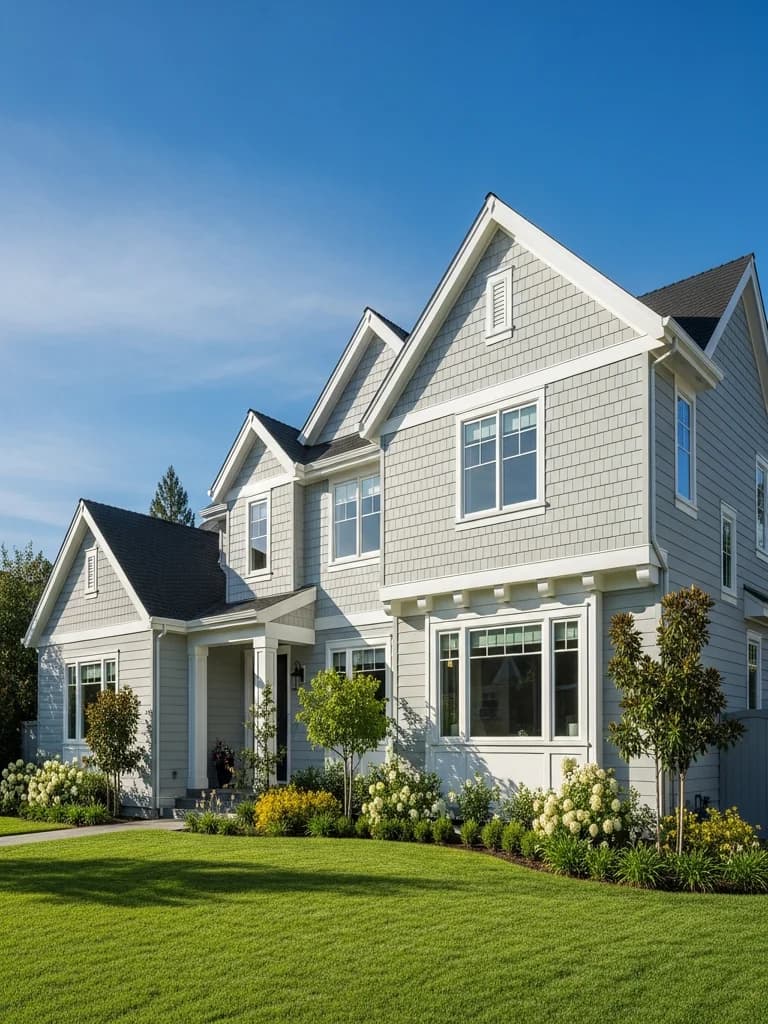
Fire-Resistant Siding in Greenfield
Direct answer first: Greenfield sits on the flat Salinas Valley floor south of Soledad and is not a high wildfire-exposure area — there is no wildland-urban interface pressing on the town the way there is on the chaparral slopes inland. Heat and UV, not flames, are the real concern here, and we won't manufacture fire urgency for a Greenfield address.
Greenfield's exposure reality
Greenfield's ag-town and subdivision housing carries low wildfire exposure: open valley farmland and row-crop ground, no forested ridgeline or brush slope feeding embers into neighborhoods. We tell owners plainly that the failures that actually hit Greenfield walls are heat, UV, and seam dust — not fire — so fire-resistant cladding here is a sensible low-regret choice rather than a need.
Ember and defensible-space basics still worth doing
Even on the valley floor, the fundamentals that harden any home cost little and never hurt. Keep the first few feet around the foundation free of bark mulch and stacked combustibles, screen vents against blown embers, and don't store firewood or propane against the wall. These are cheap, sensible steps for any Greenfield home regardless of risk level — and they matter far more for a low-exposure address than swapping cladding does.
Why valley heat, not flames, sets the fiber-cement spec here
On the inland valley floor Greenfield occupies, the case for fire-resistant siding is really a case for a panel that survives relentless summer UV and 100-plus-degree afternoons. Class-A non-combustible fiber cement happens to also be the most heat-stable cladding we install, so a Greenfield owner gets the fire rating as a free byproduct of a material chosen mainly for thermal endurance. The spec we write reflects that priority: factory-baked finishes that resist chalking and fade under high UV, generous expansion gaps so boards don't buckle as panel temperatures swing across a long dry day, and fasteners rated for that movement. Wood and many composites cup, check, or bleed under sustained inland sun. Because Greenfield carries effectively no wildland interface, we frame the non-combustible benefit honestly as durability insurance rather than evacuation-zone necessity — cladding picked for the climate that actually punishes it, with fire performance riding along at no extra cost.
Non-combustible value without overstating the threat
There is a real, honest upside to non-combustible cladding on any home, and it's worth naming without inflating it. A Class-A fiber-cement wall doesn't feed a fire that starts at a neighbor's, at a parked vehicle, or from a stray ember in a dry valley summer, and that margin can matter for insurance conversations as carriers tighten across California. But on a flat Greenfield lot with no brush slope above it, that is a margin of safety, not the reason we'd urge a re-clad. The reason is the sun. We'd rather a Greenfield owner choose non-combustible board because it's the most heat- and UV-durable option for this climate and simply accept the fire rating as a bonus, than be sold an upgrade on a wildfire story that the town's flat agricultural geography doesn't support.
Why this matters in Greenfield
- Specified for Monterey Peninsula conditions
- fiber cement as the recommended system
- Correctly detailed weather-resistive barrier and flashing
- Installed by a crew with 20 years combined experience
Recommended systems for Greenfield
- fiber cement
- James Hardie
- LP SmartSide
Fire-Resistant Siding for Greenfield homes
The full fire-resistant siding approach — materials, weather-resistive detailing, and the manufacturer standards we install to — is covered on the main service page, then specified for Greenfield's conditions on this one.
Our Greenfield process
- Step 1
Consultation
We listen to your goals and assess your home on site — exposure, substrate, and architecture.
- Step 2
Design & Proposal
A clear written proposal with the right system specified for your climate and a transparent scope.
- Step 3
Expert Installation
Trained crews install to manufacturer best practices with careful weather-management detailing.
- Step 4
Walkthrough & Support
A final walkthrough, full cleanup, and a clear written record of the scope completed — work we stand behind.
FAQ
Fire-Resistant Siding in Greenfield — FAQ
Greenfield sits on flat valley farmland with no wildland interface, so it's a low-regret upgrade rather than a necessity. We won't overstate fire risk for this address.
Low — flat Salinas Valley agricultural floor south of Soledad with no forested ridge or brush slope feeding embers. Heat and UV are the controlling factors here.
No — the fiber cement we recommend for Greenfield's heat-and-UV durability is already Class-A non-combustible, so the fire performance is included at no premium.
Heat- and UV-stable cladding and factory finishes, sealed seams against blown valley dust, and air-sealed windows — the failures that actually affect inland valley homes. Basic ember-resistant housekeeping is cheap and worth doing regardless.
Keep Exploring
More for Greenfield homeowners
More in Greenfield
Other exterior services in Greenfield
Nearby Service Areas
Fire-Resistant Siding near Greenfield
Helpful Exterior Guides