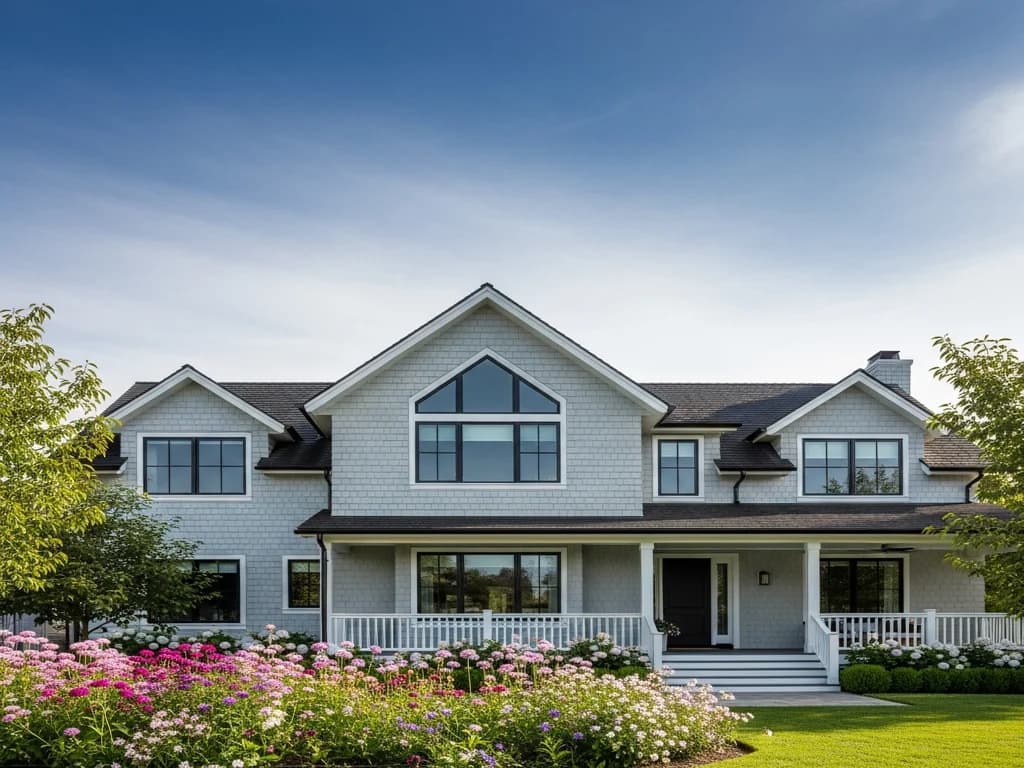
Siding in Walnut Grove
A Walnut Grove re-side is the Delta-moisture case, not a hot-and-dry valley job. This historic Sacramento River town straddles both banks of the river behind the levees, so homes here live with a high water table, river-corridor damp, and the kind of persistent ground moisture you don't get up on the valley floor. Wildfire is a non-issue; the controlling stressor is keeping water and humidity out of the wall assembly.
So a Walnut Grove project is scoped around moisture management first: a proper weather-resistive barrier, generous clearances, and back-ventilated detailing, paired with cladding that won't rot or swell in the Delta's damp river air.
High water table and river-corridor damp
Sitting low behind the levees on the Sacramento River, Walnut Grove has a high water table and a humid river-corridor microclimate that keeps the base of walls and crawlspaces damper than anywhere up on the valley plain. That's the failure mode here: original wood cladding wicks ground moisture, swells through seasonal high water, and rots from the bottom up. A re-side is the chance to correct it with rot-resistant fiber cement, raised ground clearances, and a drainage plane that lets the wall dry.
Detailing for a damp assembly
In a moisture-driven town the install details matter more than the material name. We set a full weather-resistive barrier behind the cladding, hold proper clearance above grade and hardscape so the bottom course isn't sitting in damp, and flash every penetration and horizontal joint to shed water rather than trap it. Where the original assembly held moisture against the sheathing, we open it up, inspect, and rebuild the drainage path so the new wall actually dries between wettings instead of staying saturated.
Historic and river-corridor housing stock
Walnut Grove carries a genuinely old building stock — historic homes and river-town storefront-era structures near the core, often with deep eaves, narrow original lap, and decades of patched repairs. A re-side here isn't a stark modern panel; owners usually want a profile that keeps the established river-town character, which means careful trim replication and tie-ins around original window and door surrounds. We measure each run fresh on these settled, sometimes out-of-square buildings rather than assuming the dimensions a tract home would give us.
Levee setting and split-bank access
Walnut Grove is unusual in straddling both banks of the river, with parts of town tucked below the levee line and reached by narrow river-road frontage. That shapes the jobsite as much as the climate does. Staging and material delivery have to work around tight levee-side lanes and limited setback between the road and the homes, so we plan deliveries to fit the access rather than forcing a standard suburban approach. The same low, behind-the-levee position that drives the moisture concern also means we pay close attention to grade, drainage, and where water sits after a wet stretch when we set clearances. Scoping a Walnut Grove re-side honestly means accounting for the river corridor's particular geography before the first board goes up.
Why this matters in Walnut Grove
- Specified for Sacramento Valley conditions
- James Hardie as the recommended system
- Correctly detailed weather-resistive barrier and flashing
- Installed by a crew with 20 years combined experience
Recommended systems for Walnut Grove
- James Hardie
- fiber cement
- engineered wood
Fiber Cement Siding for Walnut Grove homes
The full fiber cement siding approach — materials, weather-resistive detailing, and the manufacturer standards we install to — is covered on the main service page, then specified for Walnut Grove's conditions on this one.
Our Walnut Grove process
- Step 1
Consultation
We listen to your goals and assess your home on site — exposure, substrate, and architecture.
- Step 2
Design & Proposal
A clear written proposal with the right system specified for your climate and a transparent scope.
- Step 3
Expert Installation
Trained crews install to manufacturer best practices with careful weather-management detailing.
- Step 4
Walkthrough & Support
A final walkthrough, full cleanup, and a clear written record of the scope completed — work we stand behind.
FAQ
Siding in Walnut Grove — FAQ
Moisture — the town sits low behind the levees on the Sacramento River with a high water table and damp river-corridor air. Rot from ground moisture and seasonal high water, not heat or fire, is what drives a re-side here.
No — this is a low-lying Delta river town with no wildland interface. Non-combustible fiber cement is still a sound default, but moisture management is the real reason to re-clad here.
In Walnut Grove's high-water-table setting the base of the wall wicks ground moisture and stays damp, and original wood swells and rots from the bottom up. A re-side lets us raise clearances and rebuild the drainage plane so the wall can dry.
Yes — we replicate the lap profile and trim so the river-town character is preserved, while upgrading to rot-resistant fiber cement and proper flashing behind it. We measure these settled old buildings fresh rather than assuming square dimensions.
Both are Delta moisture towns, but Walnut Grove straddles both banks of the Sacramento River with split levee-side access, while Isleton is the small island river city to the south. The damp drivers are similar; the geography and access differ.
Keep Exploring
More for Walnut Grove homeowners
Nearby Service Areas
Siding near Walnut Grove
Back to
Sacramento County & Walnut Grove
Helpful Exterior Guides