
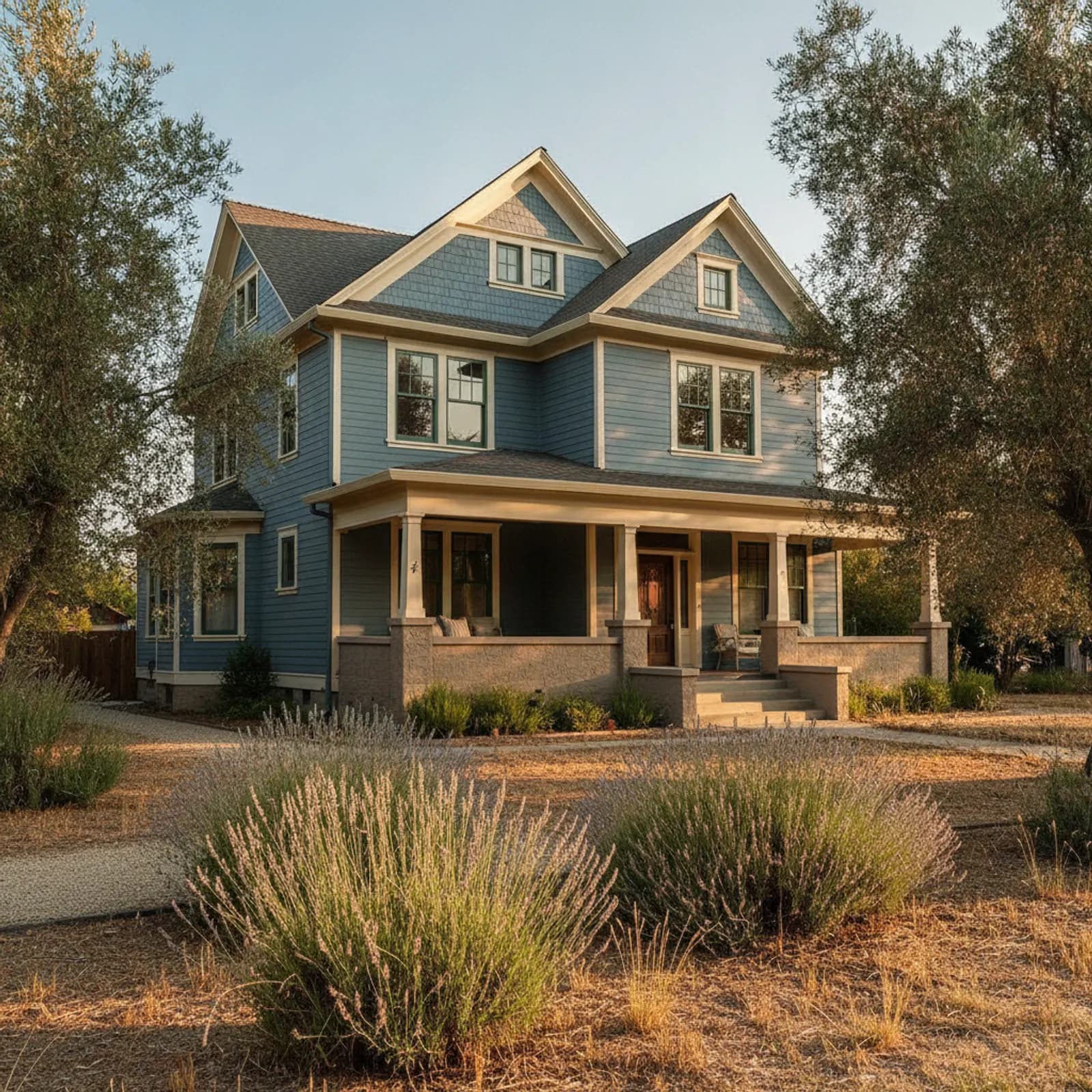
Exterior renovation in Walnut Grove
Walnut Grove is a historic Delta river town straddling the Sacramento River at the southern edge of Sacramento County, one of the few communities with neighborhoods on both banks behind the levees. Its older homes sit close to the water in a setting defined by the river, the levee road, and the surrounding pear orchards and reclaimed islands. Re-sides here are not suburban tract work: many homes are early-1900s structures on raised foundations, weathered by decades of river humidity, and owners want an exterior that respects the town's river-town character while finally putting an end to rot and constant repainting.
Why the Delta setting matters here
What makes Walnut Grove distinct is moisture. Sitting low against the river behind the levee, with a high Delta water table and persistent humidity rising off the water and orchards, homes here see far more standing dampness and ground-driven moisture than the dry valley suburbs to the north. That river setting is the controlling stressor — it dictates the substrate condition we expect to find, the flashing and clearance details we insist on, and the materials that will actually survive on the Sacramento River's edge.
Considering an exterior project in Walnut Grove?
Walnut Grove housing and architecture
Walnut Grove's stock is heavily historic: early-1900s river-town homes, modest cottages and bungalows, and main-street and commercial structures from the town's Delta heyday, with the nearby historic enclave of Locke nearby reinforcing the period character of the area. Many homes sit on raised foundations to keep living space above the damp ground, and original wood siding has often been painted and patched for generations. A re-side here is approached with restraint — matching profile scale, exposure, and trim character to the era so a refreshed home still reads as part of a historic Delta town rather than a transplant, while quietly upgrading the wall to something that no longer rots.
Built for Walnut Grove's river humidity
Walnut Grove's controlling stressor is Delta moisture. Perched low against the Sacramento River behind the levee, with a high water table and humid air rising off the river and surrounding orchards, walls here stay damp longer and ground-driven moisture wicks into siding and trim — the classic cause of the swelling, peeling paint, and dry rot common on the town's older homes. Long, hot summers then bake that moisture out and back in, cycling the wood hard. The proven response is a moisture-managed wall: generous ground and hardscape clearance, a drainage gap behind the cladding, meticulous flashing at every penetration, and a non-absorbing fiber cement skin that does not feed rot the way old wood does.
Recommended materials for Walnut Grove
James Hardie fiber cement is the core recommendation for Walnut Grove because the river setting is fundamentally a moisture problem, and fiber cement does not swell, rot, or wick water the way the original wood siding on these historic homes does. Paired with a proper drainage plane, correct ground clearance above the damp Delta soil, and rigorous flashing, it ends the repaint-and-patch cycle that the river humidity drives. Where an owner wants authentic wood grain on a historic facade, engineered wood is a defensible choice on well-flashed, better-drained elevations, but on the lowest and most exposed river-facing walls we favor the non-absorbing fiber cement system.
What an exterior project costs in Walnut Grove
Walnut Grove pricing is shaped by the age and condition of the homes more than their size. Decades of river humidity mean we frequently uncover dry rot, failed flashing, and damaged sheathing once the old siding comes off, and that substrate repair — along with raised-foundation detailing, careful ground-clearance and drainage work, window integration, and the care a historic facade deserves — is the real cost driver here, not square footage alone. Tight levee-road lots and Delta access add their own logistics. We provide a written, scoped estimate after an on-site assessment so each river-town home is priced on what we actually find behind the siding.
Working on the levee and the riverbank
Walnut Grove job sites are unusual because the town lives on and below the levee. Homes sit on narrow lots along the river road, sometimes with the house pad lower than the levee crest and the Sacramento River just beyond it, so staging scaffolding and moving full-length fiber cement planks takes planning on constrained access. Crews have to account for the levee corridor, riverbank slopes, and the damp ground when setting up, and any drainage or downspout work has to move water away cleanly without undermining the wall or the bank. We plan access, protection, and drainage carefully so a re-side on the river goes smoothly and leaves the home better defended against the moisture that surrounds it.
Respecting Walnut Grove's historic river-town character
Walnut Grove and neighboring Locke carry real Delta history, and a heavy-handed re-side can strip a home of the character that gives this town its identity. Our approach is to upgrade the wall while keeping the look right — matching clapboard exposure and trim proportions to the era, choosing colors that sit comfortably on a historic river street, and treating porches, brackets, and window casings as features worth preserving rather than smoothing over. The result is a home that still reads as part of a 100-year-old Delta town, now with a wall that resists the rot and repainting the river setting has always forced.
Flooding, dampness, and a wall that outlasts it
Life behind a Delta levee means living with a high water table, seasonal high water, and the constant background dampness of the river and orchards. That reality argues for an exterior that treats water as the permanent adversary it is here: a non-absorbing cladding, a drainage gap that lets the wall dry, ground clearance that keeps siding up out of the wet, and flashing that never relies on caulk alone. For a Walnut Grove owner tired of stripping peeling paint and chasing soft spots every few years, the value of a re-side is not just appearance — it is finally having a wall built for the river it sits beside.
Sacramento County, Walnut Grove Fire, and Delta permits
Working exteriors in Walnut Grove coordinates with a few local authorities. Walnut Grove is unincorporated Sacramento County, so building permits come through Sacramento County Building Permits and Inspection rather than a municipal department. Electric is SMUD, and gas is PG&E. Water is supplied by small local mutual and community systems, with wastewater on private on-site systems for most parcels. Fire response is the Walnut Grove Fire Protection District (independent local district) alongside adjacent Delta volunteer companies. Walnut Grove sits within the Sacramento-San Joaquin Delta Historic District and Locke National Historic Landmark District — those designations shape design considerations on visible exterior work, and FEMA flood-hazard zoning applies to levee-adjacent parcels.
HZ10 climate on Walnut Grove's Delta setting
Walnut Grove is in James Hardie's HZ10 climate zone; installing HZ5 is a documented warranty misapplication. On the fire side, essentially all of Walnut Grove sits in Low or unmapped FHSZ territory under California's 2025 LRA Fire Hazard Severity Zone map — this is Delta levee ground with high water table and abundant surface water, and wildland fire is not the local threat. The controlling exterior hazard here is Delta moisture and FEMA-designated flood exposure. Chapter 7A moved into the standalone WUI Code on January 1, 2026, but does not typically drive Walnut Grove's spec.
Our process in Walnut Grove
- Step 1
Consultation
We listen to your goals and assess your home on site — exposure, substrate, and architecture.
- Step 2
Design & Proposal
A clear written proposal with the right system specified for your climate and a transparent scope.
- Step 3
Expert Installation
Trained crews install to manufacturer best practices with careful weather-management detailing.
- Step 4
Walkthrough & Support
A final walkthrough, full cleanup, and a clear written record of the scope completed — work we stand behind.
Walnut Grove rewards a moisture-managed, non-absorbing exterior that honors its historic Delta character while ending the rot-and-repaint cycle the river drives. When you are ready, we will assess your home on the levee and put an honest, scoped plan in front of you.
FAQ
Walnut Grove — Common Questions
James Hardie fiber cement on a proper drainage plane with correct ground clearance and flashing — it does not swell or rot the way old wood does in the river's humidity, ending the constant repaint-and-patch cycle.
The town sits low against the Sacramento River behind the levee, where a high water table and persistent humidity keep walls damp and wick moisture into wood, causing the swelling, peeling, and dry rot common on older homes here.
Yes — we match clapboard exposure, trim proportions, and color to the era and preserve porches and casings, so the home still reads as part of a historic Delta town while gaining a wall that resists rot.
Low — it is a riverfront Delta community surrounded by water and orchards, not grassland or forest. Non-combustible fiber cement is still a sound, low-regret choice.
On river-town homes it is common. Decades of Delta humidity often hide rot, failed flashing, and damaged sheathing, which we assess and repair as part of the scope rather than siding over it.
We keep cladding up off the damp ground with proper clearance, add a drainage gap behind the siding, and flash every penetration so the wall sheds and dries instead of trapping the river's moisture.
They add logistics — narrow access along the river road and the levee corridor require careful staging — but we plan delivery, protection, and drainage so a riverside re-side runs cleanly.
A correctly installed, well-flashed fiber cement system commonly performs 30+ years even in the Delta's demanding river-edge moisture.
Helpful Exterior Guides