
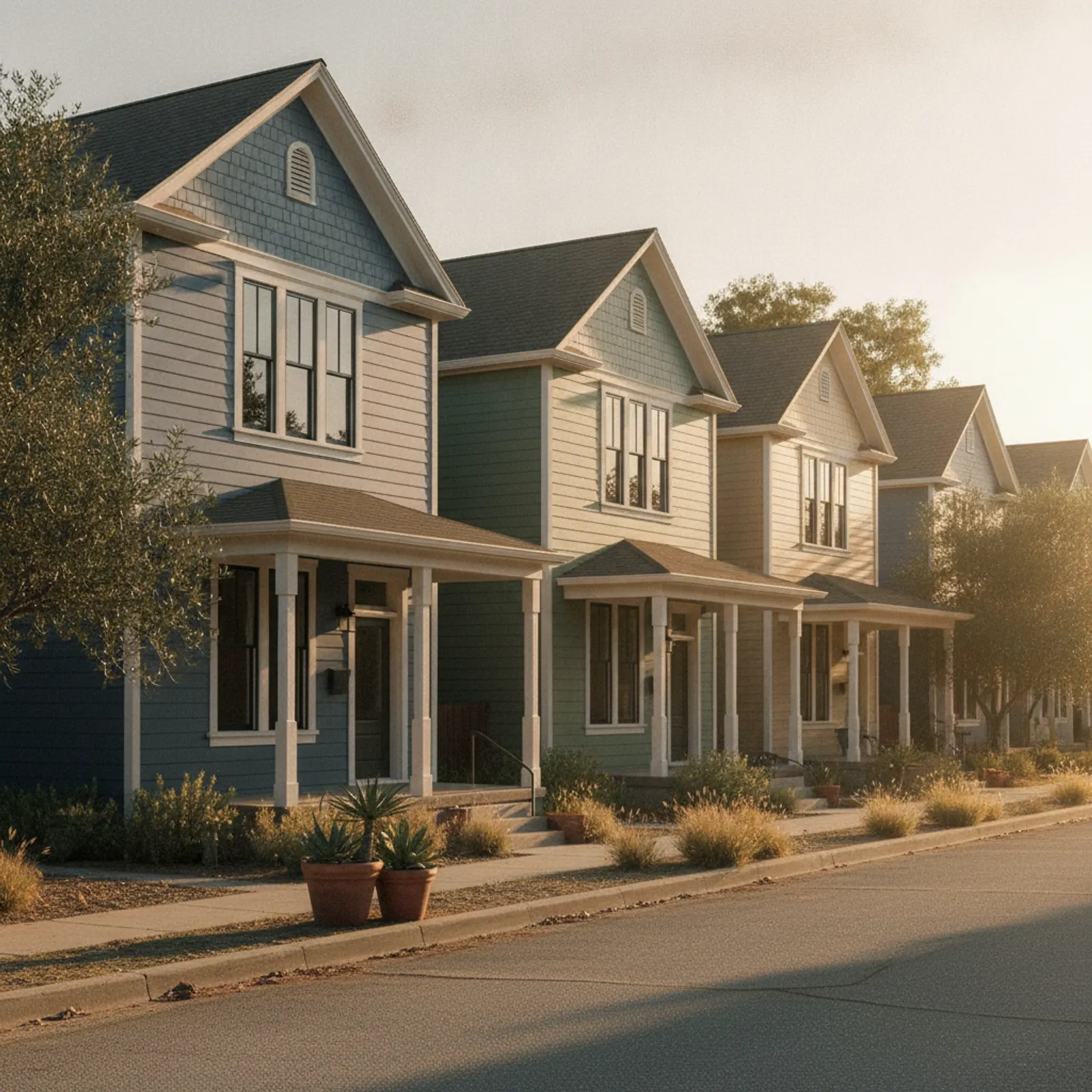
Fiber Cement Siding in Walnut Grove
Walnut Grove inverts the usual Sacramento County exterior problem. Almost all valley advice leads with heat and UV; on this Delta river town behind the levee, the controlling factor is moisture — river humidity and a high water table working on historic wood siding that has been absorbing it for a century.
Getting that backwards produces a specification aimed at the wrong failure, which is the most common thing we see on Delta homes.
Why moisture beats heat here
Walnut Grove sits low on the Sacramento River behind the Delta levee, and the water table is high enough that the ground itself stays damp in a way valley-floor Sacramento does not. Add river humidity and the result is an environment where wood siding never fully dries out, paint fails from behind rather than from UV above, and rot appears at the bottom of walls and at every unsealed end-grain. Summers are still hot — this is the valley — but heat is the secondary story. A Delta home whose paint keeps failing is almost never telling you about the sun.
The rot-and-repaint cycle, and how to end it
The pattern on this stock is consistent and expensive. Wood siding absorbs moisture from the humid air and the damp ground, the paint film loses adhesion from behind, an owner repaints, and the coating fails again within a few seasons because the substrate never dried. Meanwhile the wood softens at the bottom courses and at butt joints. Fiber cement breaks that cycle for the straightforward reason that it does not absorb moisture the way wood does — which is why on a Delta house the material change matters more than it would in a dry-climate town where the same siding might last decades.
Raised foundations, levees, and the bottom of the wall
Much of Walnut Grove's stock sits on raised foundations, which is a sensible response to the setting and which concentrates attention at the base of the wall. Clearance between the bottom course and grade matters more here than almost anywhere in the county, because the ground below is damp and splash-back from it is a genuine mechanism. Skirting and foundation venting need to allow the crawl space to breathe rather than trapping humidity under the floor. On a raised Delta home the bottom eighteen inches of the exterior is where most of the trouble lives.
Historic character and what preserves it
The town's early-1900s river-town homes, its main-street structures, and the fabric around the Locke area carry real historic character, and a modern wide-lap product misrepresents it regardless of color. Fiber cement reproduces period profiles convincingly when board width, reveal, and trim proportion are specified deliberately rather than defaulted, so ending the rot cycle does not mean losing the building. Where a property carries genuine historic significance there may be review considerations beyond a standard permit, which is a question for the county and any applicable body rather than for us.
Why this matters in Walnut Grove
- Specified for Sacramento Valley conditions
- James Hardie as the recommended system
- Correctly detailed weather-resistive barrier and flashing
- Installed by a crew with 20 years combined experience
Recommended systems for Walnut Grove
- James Hardie
- fiber cement
- engineered wood
Fiber Cement Siding for Walnut Grove homes
The full fiber cement siding approach — materials, weather-resistive detailing, and the manufacturer standards we install to — is covered on the main service page, then specified for Walnut Grove's conditions on this one.
Our Walnut Grove process
- Step 1
Consultation
We listen to your goals and assess your home on site — exposure, substrate, and architecture.
- Step 2
Design & Proposal
A clear written proposal with the right system specified for your climate and a transparent scope.
- Step 3
Expert Installation
Trained crews install to manufacturer best practices with careful weather-management detailing.
- Step 4
Walkthrough & Support
A final walkthrough, full cleanup, and a clear written record of the scope completed — work we stand behind.
FAQ
Fiber Cement Siding in Walnut Grove — FAQ
Moisture, and it is worth being clear because almost all valley advice leads with heat. River humidity and a high water table mean wood siding never fully dries, paint fails from behind rather than from UV, and rot appears at the bottom of walls and at end-grain. Summers are hot, but heat is the secondary story.
Because the substrate never dried. Wood siding here absorbs moisture from the humid air and damp ground, and the paint film loses adhesion from behind — so a repaint fails again within a few seasons no matter how well it was applied. That is the cycle a non-absorbing material breaks.
It concentrates attention at the base of the wall. Clearance between the bottom course and damp ground matters more here than almost anywhere in the county, splash-back is a real mechanism, and skirting and foundation venting need to let the crawl space breathe rather than trapping humidity underneath.
Generally yes, if board width, reveal, and trim proportion are specified deliberately rather than defaulted — a modern wide-lap product misrepresents these buildings regardless of color. Note that a designated property may carry review beyond a standard permit, which is worth establishing with the county before design.
Keep Exploring
More for Walnut Grove homeowners
More in Walnut Grove
Other exterior services in Walnut Grove
Nearby Service Areas
Fiber Cement Siding near Walnut Grove
Back to
Sacramento County & Walnut Grove
Helpful Exterior Guides