James Hardie Siding in Santa Cruz
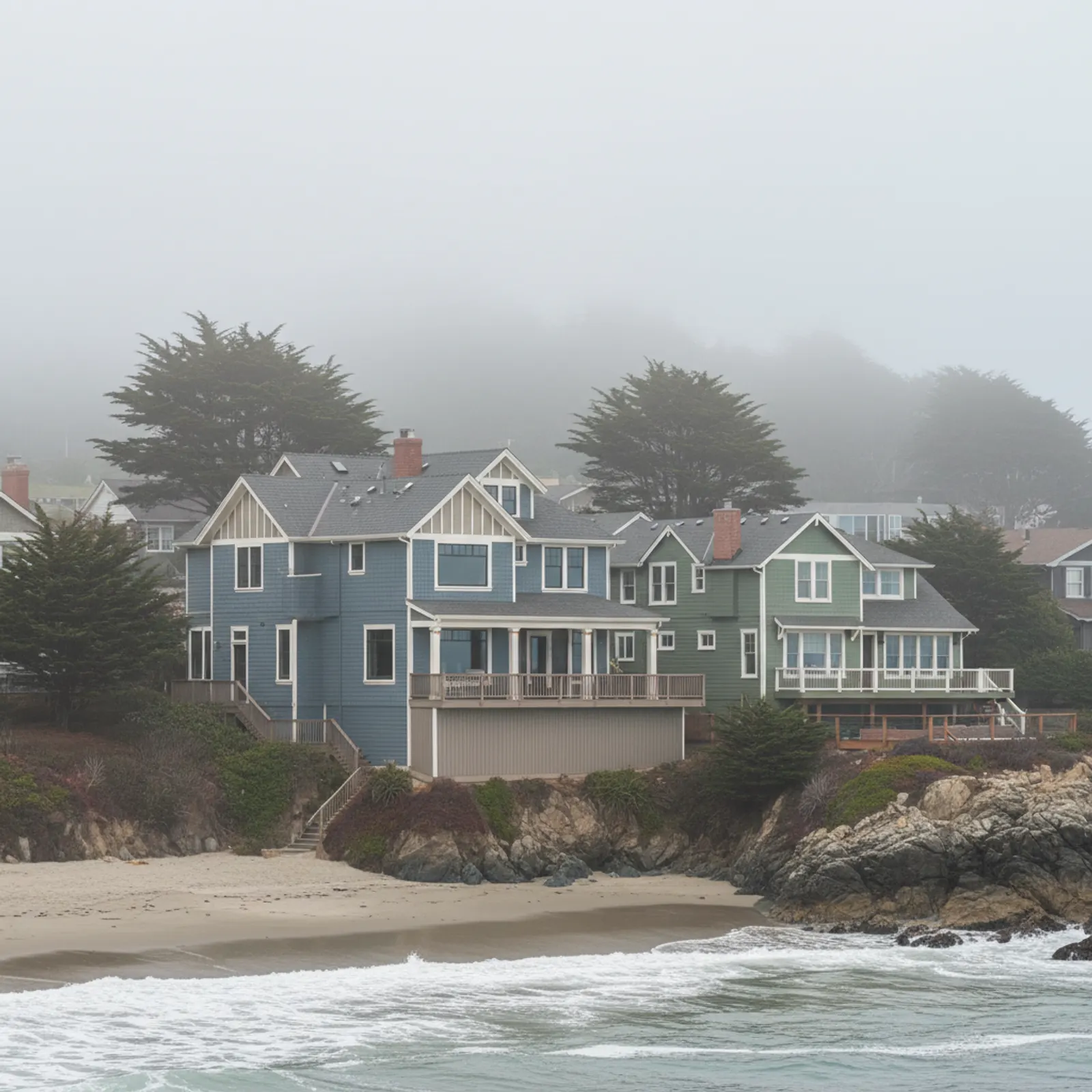
Santa Cruz's hardest condition isn't sun — it's salt. The Westside and beach-adjacent neighborhoods sit in near-constant marine aerosol, and on a fastener-and-flashing level that's what decides whether an exterior lasts 8 years or 30. The James Hardie case here is really a corrosion-engineering case wearing a cladding label.
Where Santa Cruz exteriors actually fail
It is almost never the board face — it's the metal. Standard fasteners and flashing rust from the inside of the assembly out in this salt load, and the wall fails behind a still-intact surface. We specify coastal-rated fasteners and flashing and install Hardie to its ground-clearance and flashing spec over a drying-capable plane, because on the Westside that detail, not the product choice, is the whole game.
Westside vs. the bohemian core
A Westside or beach-area home is a maximum-corrosion job; the older central-Santa-Cruz Victorians and bungalows are a touch more sheltered but carry character that the profile and trim have to respect. We scope the two differently — exposure drives the metallurgy, the home's age drives the look.
Where the redwoods meet the cladding spec
Santa Cruz is not one risk profile but two stitched together. Homes on the Westside and the beach blocks live in salt aerosol, but parcels climbing toward the Santa Cruz Mountains and the redwood fringe inherit a genuine wildfire consideration that pushes the James Hardie conversation in a different direction. Fiber cement earns its place here because it is noncombustible, which matters on a wooded lot where wind-driven embers, not a direct flame front, are the realistic threat. The spec that follows is specific: tight, properly sized joints and gaps so embers cannot lodge behind the boards, careful treatment where cladding meets eaves and vents, and attention to the base of the wall where ground litter and bark mulch tend to pile against a forested-edge home. A blanket coastal package built for a Westside cottage is the wrong answer for a house under the canopy, and the reverse holds too. We read the parcel's actual exposure before settling on the assembly, because a Santa Cruz address tells you almost nothing until you know which side of that collision the home sits on.
Old bungalows, tight lots, and the realities of re-cladding
A large share of Santa Cruz housing predates modern wall science. The Victorian-era homes near the bohemian core and the older bungalows scattered through the Eastside were framed long before continuous drainage planes or housewrap were standard, and that history dictates how James Hardie goes on. You rarely get to treat one of these as a clean substrate. Stripping the original cladding often exposes board sheathing, knob-and-tube remnants, or rot already started behind a deceptively sound exterior, and the scope grows accordingly. Lot access is its own constraint: many of these parcels sit on narrow streets with neighbors close on both sides, so staging material and cutting fiber cement without coating the block in silica dust takes planning rather than improvisation. Original trim profiles and the proportions that give these blocks their character also matter, since a thoughtful Hardie installation should reproduce the reveal and casing dimensions rather than flatten them. Cost and timeline on a Santa Cruz bungalow are driven far more by what hides behind the old siding than by the board itself.
Why this matters in Santa Cruz
- Specified for Central Coast conditions
- non-combustible fiber cement as the recommended system
- Correctly detailed weather-resistive barrier and flashing
- Installed by a crew with 20 years combined experience
Recommended systems for Santa Cruz
- non-combustible fiber cement
- corrosion-aware fastening
- rigorous drainage-plane detailing
James Hardie Siding for Santa Cruz homes
The full james hardie siding approach — materials, weather-resistive detailing, and the manufacturer standards we install to — is covered on the main service page, then specified for Santa Cruz's conditions on this one.
Our Santa Cruz process
- Step 1
Consultation
We listen to your goals and assess your home on site — exposure, substrate, and architecture.
- Step 2
Design & Proposal
A clear written proposal with the right system specified for your climate and a transparent scope.
- Step 3
Expert Installation
Trained crews install to manufacturer best practices with careful weather-management detailing.
- Step 4
Walkthrough & Support
A final walkthrough, full cleanup, and a clear written record of the scope completed — work we stand behind.
FAQ
James Hardie Siding in Santa Cruz — FAQ
That's the classic Westside failure: the cladding face is intact while the fasteners and flashing behind it corrode out in the salt air. It's why coastal-rated metal and correct flashing matter more here than the cladding brand itself.
Less UV, yes — but salt accelerates field-paint breakdown regardless of sun, so coastal repainting is frequent and costly. Factory ColorPlus is the practical reason to go fiber cement here, not climate UV.
Yes, with period-aware profiles and trim — but we'll always lead with the corrosion detailing, because on these streets that's what actually determines the home's lifespan.
Keep Exploring
More for Santa Cruz homeowners
More in Santa Cruz
Other exterior services in Santa Cruz
Nearby Service Areas
James Hardie Siding near Santa Cruz
Back to
Santa Cruz County & Santa Cruz
Helpful Exterior Guides