Exterior Contractor in Vacaville
Vacaville sits at the Sacramento Valley's western edge in significantly hotter, drier terrain than the bay-influenced rest of Solano County. The summers approach Sacramento's heat, the housing stock is a mix of older central neighborhoods and newer master-planned subdivisions (Browns Valley, North Village, Cheyenne), and most homes face the same builder-cladding aging story as Sacramento County's production market.
A Vacaville integrator delivers an envelope tuned for valley heat and UV — fiber cement with heat-stable finishes, correct thermal expansion gapping, and a refined trim package — as one project. The integrator's value here is straightforward: do the whole envelope once with heat-durable specs rather than across staged trade engagements.
What an integrated Vacaville exterior includes
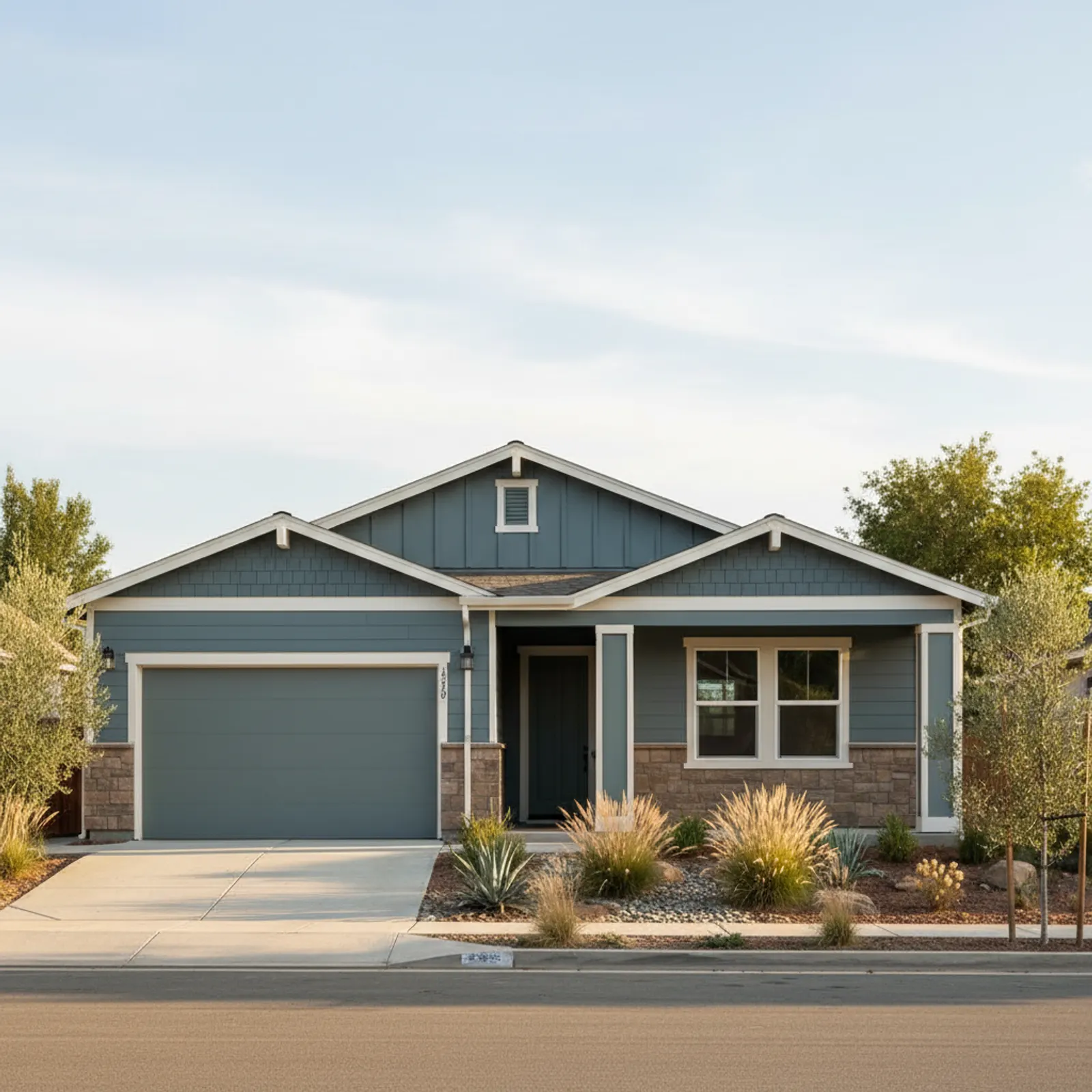
On a Browns Valley or North Village home an integrated scope strips failed builder cladding (often hardboard or vinyl heat-aged out), corrects the WRB, integrates window replacement where original units are dated, and re-clads in fiber cement with factory ColorPlus finishes selected for valley UV durability. The trim package is sized for the modern modernization aesthetic.
Where the split-trade exterior fails in Vacaville
Vacaville's failure mode is heat-related: separate trades each pick finishes that age differently, the south- and west-facing elevations chalk and fade at different rates, and the home looks visually mismatched after a few years. An integrator owns finish selection across the whole envelope.
Materials and detailing we specify for Vacaville
Fiber cement with factory ColorPlus finishes specifically selected for valley UV durability, correct thermal expansion gapping for the heat range, integrated window package where needed, and a clean modern trim. Heat-stable detail is the priority.
Fire-aware exterior work on Vacaville's foothill margins
The homes climbing toward the Vaca Mountains and the English Hills sit in a different exterior reality than the valley-floor subdivisions, and an exterior contractor working those addresses has to plan for it. After the LNU fires touched the hills above town, the rural-residential and ranch parcels on Vacaville's foothill-leaning edges deserve an ember-resistant approach even where code is not strictly forcing it. That means we lean on noncombustible fiber cement over wood-based siding on exposed elevations, close off open eaves and gable vents with ember-rated screening, box out soffits cleanly, and pay attention to the first few feet where decking, fencing, and cladding meet. Foothill lots also bring slope, wind funneling off the hills, and longer driveways that complicate staging and material delivery. We sequence the envelope so the fire-relevant details get done as one coordinated package rather than left to whoever shows up last. For a home on the LNU-affected margins, that integration is the difference between a defensible exterior and a patchwork of weak points.
Master-planned subdivisions, HOAs, and permit access in Vacaville
Much of Vacaville's housing is master-planned tract product in neighborhoods like Browns Valley, North Village, and Cheyenne, and that shapes how an exterior contractor actually schedules and approves a job here. Many of these subdivisions carry HOA architectural rules that govern siding profile, color, and trim, so before any cladding comes off we confirm what the association will sign off on and document the existing look to keep the approval clean. Permitting runs through the City of Vacaville rather than Solano County for in-city addresses, while ranch and rural-residential parcels climbing toward the hills may fall under county jurisdiction, and knowing which counter the project answers to keeps a re-clad from stalling. Tract lots tend to sit close to neighbors with shared fence lines and tight side yards, so we plan scaffolding, dumpster placement, and material drop with that footprint in mind. Handling the HOA submission, the permit, and the neighbor-adjacency staging as part of one envelope engagement is what keeps a Vacaville exterior project from losing weeks to paperwork and access surprises.
Why this matters in Vacaville
- Specified for Interior Valley conditions
- James Hardie fiber cement as the recommended system
- Correctly detailed weather-resistive barrier and flashing
- Installed by a crew with 20 years combined experience
Recommended systems for Vacaville
- James Hardie fiber cement
- fire-aware detailing on foothill edge
- factory finishes
Exterior Contractor for Vacaville homes
The full exterior contractor approach — materials, weather-resistive detailing, and the manufacturer standards we install to — is covered on the main service page, then specified for Vacaville's conditions on this one.
Our Vacaville process
- Step 1
Consultation
We listen to your goals and assess your home on site — exposure, substrate, and architecture.
- Step 2
Design & Proposal
A clear written proposal with the right system specified for your climate and a transparent scope.
- Step 3
Expert Installation
Trained crews install to manufacturer best practices with careful weather-management detailing.
- Step 4
Walkthrough & Support
A final walkthrough, full cleanup, and a clear written record of the scope completed — work we stand behind.
FAQ
Exterior Contractor in Vacaville — FAQ
Closer to Sacramento — significantly hotter and drier than bay-influenced Solano. We specify heat-and-UV-stable finishes accordingly.
Newer master-planned Vacaville communities typically do for visible changes. We prepare the submission packet as part of the project.
On homes with original builder windows, yes — heat-aged dual panes typically have failing seals by year 20.
Most Vacaville single-family homes are three to six weeks of active work depending on size and scope.
Keep Exploring
More for Vacaville homeowners
More in Vacaville
Other exterior services in Vacaville
Nearby Service Areas
Exterior Contractor near Vacaville
Helpful Exterior Guides