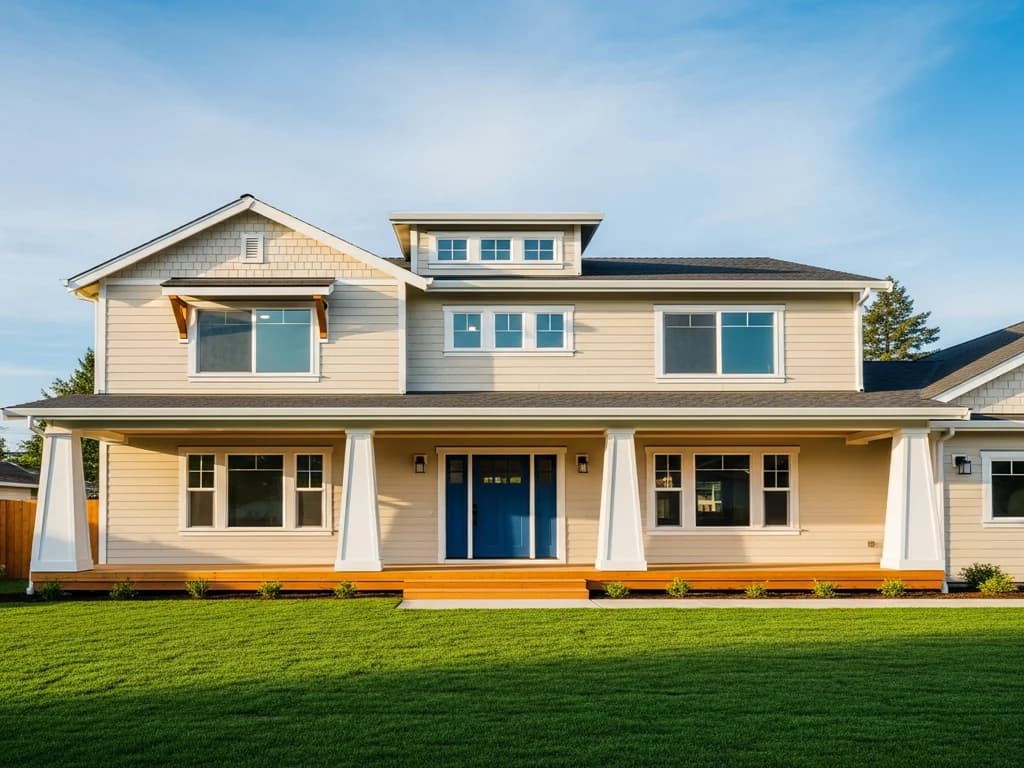
Siding in Davis
Davis is a re-side market shaped by the university more than by any single architectural era. The compact Old North and Old East cores hold early-20th-century bungalows and cottages on tight grid lots, the 1950s-70s campus-expansion tracts brought block after block of low-slung ranch and the occasional Eichler-adjacent post-and-beam, and Mace Ranch, Wildhorse, and West Davis added newer production homes out toward the city edges. Each of those waves wears a different original cladding and meets the valley's defining stressor — flat, open, relentless summer sun — on its own terms.
So a Davis siding scope is read off the neighborhood and the home's age before any material is named: what is failing on the punished south and west walls, what the wall assembly behind it actually is, and which profile keeps a bike-city bungalow or a Wildhorse two-story looking deliberate rather than re-clad.
Reading the four Davis housing waves
On an Old North or Old East cottage the right move is a narrow-exposure lap and period-correct trim that respects the original cottage rhythm; on a campus-era ranch it is a clean, low horizontal program that suits the long single-story face; on a 1960s post-and-beam the goal is restraint that keeps the flat planes honest; and on a Mace Ranch or West Davis tract it is a profile that breaks the builder repetition down the block. We pick the strategy from the house in front of us, not from a citywide default, because Davis stock is too varied to template.
What flat-valley sun does to a Davis wall
Davis siding fails from UV, not weather. With no foothill shade and wide-open tract setbacks, south- and west-facing walls in Mace Ranch and West Davis take a full afternoon load that chalks paint, cups old hardboard, and turns caulk joints brittle years ahead of schedule. We treat color, coating, and joint detailing as load-bearing here: factory-finished board in fade-stable tones, oversized expansion gaps at butt joints, and a UV-rated sealant rather than a builder tube that bakes out in two summers. The mature street canopy over Old North and Old East buys those cores some shade, but their exposed gable ends still cook.
The rental-vs-owner reality of a Davis re-side
Davis carries a large investor and rental segment alongside its owner-occupant base, and the two want different things from a re-side. For an owner on a Wildhorse or West Davis home it is a durable, period-aware envelope meant to last decades. For a landlord on a campus-area duplex or converted single-family rental it is a low-maintenance, repaint-free cladding that survives tenant turnover and student wear without annual touch-up. We scope both honestly: a finish that holds in valley sun serves both goals, but the trim, color, and detail priorities differ, and we say which choices are durability and which are curb appeal.
Tight cores, open tracts, and Davis permitting
How a Davis re-side runs depends heavily on where the home sits. Old North and Old East lots are narrow, gridded, and lined with mature trees, so there is often no side-yard clearance to swing long planks — staging, dumpster placement, and protecting heritage landscaping get planned before a board comes off. Mace Ranch, Wildhorse, and West Davis give room to work but carry subdivision covenants that can dictate approved profiles and color families before we start. Full re-sides that touch the weather barrier pull a City of Davis permit, and the city's strong sustainability and energy posture means we plan the work around inspection timing rather than after it.
Why this matters in Davis
- Specified for Sacramento Valley conditions
- James Hardie fiber cement as the recommended system
- Correctly detailed weather-resistive barrier and flashing
- Installed by a crew with 20 years combined experience
Recommended systems for Davis
- James Hardie fiber cement
- factory ColorPlus finishes
- engineered wood
- modern lap and board-and-batten profiles
Fiber Cement Siding for Davis homes
The full fiber cement siding approach — materials, weather-resistive detailing, and the manufacturer standards we install to — is covered on the main service page, then specified for Davis's conditions on this one.
Our Davis process
- Step 1
Consultation
We listen to your goals and assess your home on site — exposure, substrate, and architecture.
- Step 2
Design & Proposal
A clear written proposal with the right system specified for your climate and a transparent scope.
- Step 3
Expert Installation
Trained crews install to manufacturer best practices with careful weather-management detailing.
- Step 4
Walkthrough & Support
A final walkthrough, full cleanup, and a clear written record of the scope completed — work we stand behind.
FAQ
Siding in Davis — FAQ
Yes — narrow-exposure lap and period-correct trim selection is core to how we work the historic cores. The home keeps its street rhythm while gaining a finish that survives valley UV.
Flat, unshaded tract lots take a full south and west afternoon load. Chalking, cupping, and split caulk joints on those elevations is the normal end-of-life pattern for builder-grade cladding here.
A factory-finished, repaint-free board that survives turnover and student wear. The same UV-stable cladding we recommend to owners serves a rental well; the trim and color choices just get pared back.
Often yes — the newer Davis subdivisions carry covenants that govern profile and color. We confirm what your parcel allows before any material is ordered.
Keep Exploring
More for Davis homeowners
More in Davis
Other exterior services in Davis
Nearby Service Areas
Siding near Davis
Helpful Exterior Guides