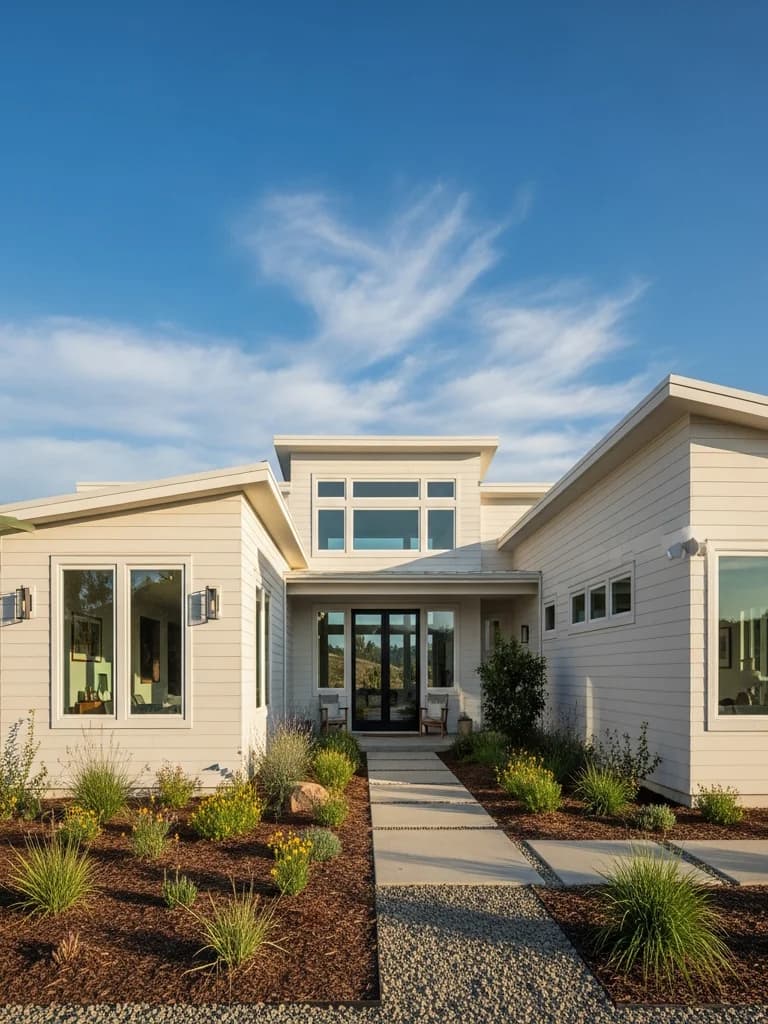
Siding in Woodland
Woodland carries one of the best-preserved stocks of Victorian and early Craftsman homes in the Sacramento Valley, and a re-side here is as much a preservation decision as a construction one. The old-town blocks north and west of Main Street hold Queen Anne, Italianate, and Stick-Eastlake houses whose original wood lap, fish-scale shingle, and turned trim still read true — alongside postwar ranch tracts and newer Spring Lake homes that fail in completely different ways under the same hard valley heat.
So a Woodland project never gets one template. On a downtown period home the work is matching original profiles, reveal lines, and trim; on a Spring Lake two-story it is breaking builder uniformity with a heat-stable finish. We scope each by what the house is and what summer UV has done to it.
Period-correct re-siding on Woodland's Victorian stock
The Yolo County seat keeps a denser run of intact 19th-century houses than most valley towns, and that raises the bar for a re-side. On a Queen Anne or Italianate near downtown the original cladding mixes narrow lap on the body with shingle or scalloped patterns in the gables, framed by deep corner boards, frieze trim, and water tables that define the architecture. Dropping a wide modern plank onto that wall flattens it. We document the existing exposure, reveal lines, and trim depth before tear-off and reproduce them in fiber cement so the durability jumps a century forward while the street still reads as the historic Woodland it is.
Spring Lake and postwar tracts: a different problem
South and east of the old town, Woodland's Spring Lake neighborhoods and the postwar ranch blocks off East Street are nothing like the Victorians. Spring Lake homes are young enough that the honest answer is often heat-stable finish maintenance, not a full re-side, while the 1950s-70s ranches are squarely at re-clad age with chalked hardboard or thin stucco. We tell newer-home owners plainly when they don't need the larger project, and reserve the full strip-and-re-clad for the older tracts where the original cladding has genuinely run out its life.
What valley UV does to a Woodland wall
Woodland sits on open valley floor ringed by farmland, with little of the tree canopy that shades parts of Davis, so south- and west-facing walls take a relentless dose of summer sun. That single stressor sets the spec more than anything else. Original paint chalks, old hardboard cups and checks, and caulk joints turn brittle and split years before the same products would fail in a cooler coastal town. We lean toward factory-finished fiber cement in fade-stable tones, oversize the expansion gaps at butt joints, and use UV-rated sealant rather than a builder-grade tube that bakes out in two summers. On the period homes, the exposed gable ends and bay-window faces take the worst of it, so those elevations get the most conservative color and the most careful flashing.
Access, downtown lots, and Woodland permitting
How a Woodland re-side actually runs depends heavily on where the house sits. The old-town grid west of Main has compact lots, mature street trees, and tight side yards with no clearance to swing long fiber-cement planks, so material handling, dumpster placement, and protecting heritage landscaping get planned before a single board comes off. Some of these blocks fall within Woodland's downtown conservation context, where exterior changes on contributing historic homes can draw extra review, so confirming what a parcel allows is step one. Spring Lake gives us room to work but brings HOA architectural-review steps that can dictate approved profiles and color families. We pull City of Woodland permits where the scope requires them and sequence inspections around the work rather than after it.
Why this matters in Woodland
- Specified for Sacramento Valley conditions
- James Hardie fiber cement as the recommended system
- Correctly detailed weather-resistive barrier and flashing
- Installed by a crew with 20 years combined experience
Recommended systems for Woodland
- James Hardie fiber cement
- period-appropriate lap profiles
- factory finishes
- durable trim packages
Fiber Cement Siding for Woodland homes
The full fiber cement siding approach — materials, weather-resistive detailing, and the manufacturer standards we install to — is covered on the main service page, then specified for Woodland's conditions on this one.
Our Woodland process
- Step 1
Consultation
We listen to your goals and assess your home on site — exposure, substrate, and architecture.
- Step 2
Design & Proposal
A clear written proposal with the right system specified for your climate and a transparent scope.
- Step 3
Expert Installation
Trained crews install to manufacturer best practices with careful weather-management detailing.
- Step 4
Walkthrough & Support
A final walkthrough, full cleanup, and a clear written record of the scope completed — work we stand behind.
FAQ
Siding in Woodland — FAQ
Yes — reproducing the original exposure, shingle patterns, and trim depth is core to how we work Woodland's downtown period homes. The result modernizes durability while keeping the house true to its street.
Original hardboard, T1-11, and economy vinyl was never specified for Woodland's sustained valley UV. Chalking, cupping, swollen joints, and faded paint on south and west walls is the normal end-of-life pattern here.
Usually not yet. Spring Lake stock is young enough that targeted finish and sealant maintenance against valley heat is the honest call; we say so plainly rather than selling an early re-clad.
Yes — Woodland has a much deeper stock of intact Victorians and far less tree canopy, so we lean harder on period-correct profiles and on fade-stable finishes for unshaded sun-side walls.
Keep Exploring
More for Woodland homeowners
More in Woodland
Other exterior services in Woodland
Nearby Service Areas
Siding near Woodland
Helpful Exterior Guides