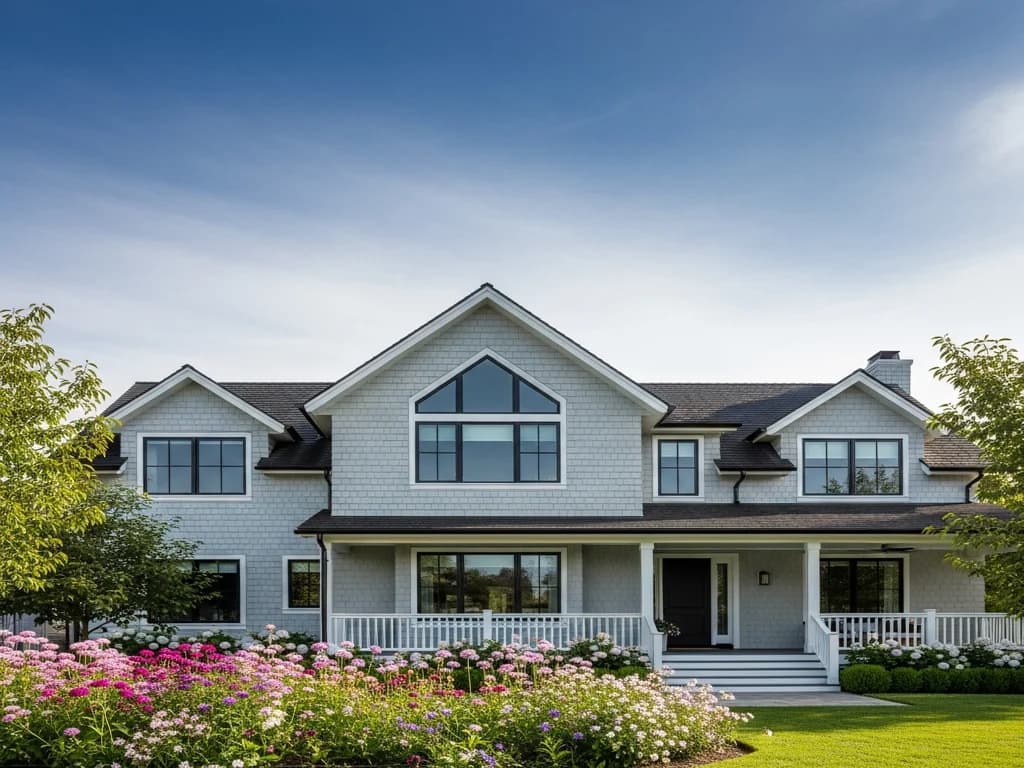
Fire-Resistant Siding in Woodland
Honest framing: Woodland sits on the open valley floor and is not a high wildfire-exposure area — this is farmland-surrounded valley terrain, not foothill or WUI country. Fire-resistant siding here is a low-regret upgrade and a minor grassland-edge consideration, not an urgent need, and we won't apply foothill urgency to a Woodland address.
Where it has any real relevance in Woodland
Interior Woodland neighborhoods — the downtown grid, the postwar ranches, the Spring Lake tracts — carry low exposure. The only nuance is the agricultural and grassland margins at the city's edges, where seasonal grass and stubble fire is a modest consideration during the dry months. Even there, non-combustible cladding and basic ember-resistant detailing are a sensible precaution rather than a response to acute risk, and we say so plainly.
Already the right call, for reasons other than fire
Whether the Woodland home is a downtown Victorian or a Spring Lake two-story, the heat-and-period-fidelity case already lands on fiber cement. Its Class A fire rating is a free consequence of choosing the material that best survives valley UV — slightly more relevant on the grassland-adjacent edges, irrelevant in the heart of the old town, and never a reason we'd inflate a scope. The ember-resistant basics that matter most here are cheap: screened vents, clean gutters, and non-combustible cladding you were likely choosing anyway.
Why valley sun, not flame, sets the spec here
On a Woodland address the strongest argument for non-combustible cladding has little to do with the low fire numbers and everything to do with what sits over the city all summer. The same intense, low-canopy UV that ages the original siding on the downtown Victorians is brutal on the finishes of any replacement, so when fire-resistant fiber cement goes up here we treat it as a heat-and-UV product first. Color hold matters: factory-baked coatings keep their pigment far longer than field-painted wood under triple-digit July afternoons, which is the failure most ranch and tract owners actually notice. Board expansion across a swing from cool delta mornings to hundred-degree highs drives our gap and fastening choices, and we back-vent rainscreen assemblies so trapped heat does not cook the wall. The non-combustible benefit comes along for free; the engineering we obsess over is thermal, because that is what the Yolo County climate punishes.
Defensible-space and ember basics on the city's farm edges
For the Woodland homes that do sit near open ag land and grassland on the city's perimeter, the practical hardening steps are simple and worth doing regardless of cladding. Keep a clean, non-combustible zone immediately around the foundation, screen attic and crawlspace vents against ember entry, keep gutters clear of dry debris through the harvest season, and avoid stacking firewood or storing combustibles against the wall. Non-combustible fiber-cement cladding supports that picture without overstating the threat. We'll talk through these basics honestly for an edge-of-town parcel, but we won't pretend a Woodland home faces the kind of exposure that genuinely drives the spec up in the Sierra foothills.
Why this matters in Woodland
- Specified for Sacramento Valley conditions
- James Hardie fiber cement as the recommended system
- Correctly detailed weather-resistive barrier and flashing
- Installed by a crew with 20 years combined experience
Recommended systems for Woodland
- James Hardie fiber cement
- period-appropriate lap profiles
- factory finishes
- durable trim packages
Fire-Resistant Siding for Woodland homes
The full fire-resistant siding approach — materials, weather-resistive detailing, and the manufacturer standards we install to — is covered on the main service page, then specified for Woodland's conditions on this one.
Our Woodland process
- Step 1
Consultation
We listen to your goals and assess your home on site — exposure, substrate, and architecture.
- Step 2
Design & Proposal
A clear written proposal with the right system specified for your climate and a transparent scope.
- Step 3
Expert Installation
Trained crews install to manufacturer best practices with careful weather-management detailing.
- Step 4
Walkthrough & Support
A final walkthrough, full cleanup, and a clear written record of the scope completed — work we stand behind.
FAQ
Fire-Resistant Siding in Woodland — FAQ
Most interior Woodland homes are low wildfire exposure, so it's a low-regret upgrade rather than a necessity. Grassland- and ag-edge parcels benefit modestly more; we assess each address honestly.
Yes, because the fiber cement we recommend for the city's heat is already non-combustible — Class A fire performance with no added cost or durability penalty.
Far lower — Woodland is low-exposure valley floor surrounded by farmland; the Sierra foothills are genuine high-exposure WUI terrain. The right spec genuinely differs, and we don't pretend otherwise.
The cheap basics: screened vents, clean gutters, a clear non-combustible zone at the foundation, and non-combustible cladding. Those address grass-fire ember risk far more than any single premium product.
Keep Exploring
More for Woodland homeowners
More in Woodland
Other exterior services in Woodland
Nearby Service Areas
Fire-Resistant Siding near Woodland
Helpful Exterior Guides