
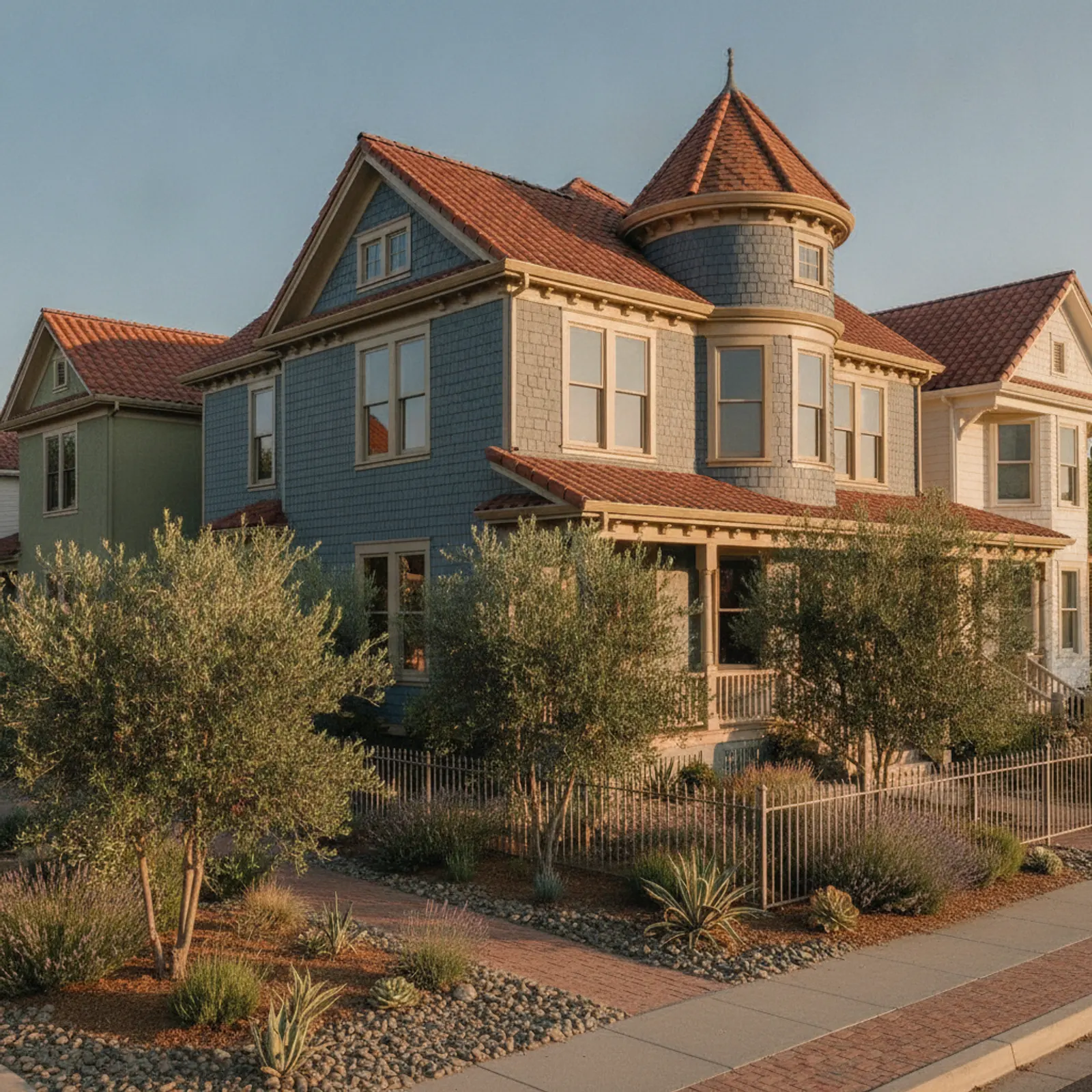
Fire-Resistant Siding in Winters
Fire exposure in Winters is a question about which parcel you are on rather than a blanket condition. Homes on the western and northwestern edges back onto grassland and the rising ground toward the Blue Ridge; homes in the older grid near downtown are in a very different situation.
So the honest version of this conversation starts with scoping, and the scoping is what determines whether hardening is a headline item or a sensible low-regret addition to a project that is really about heat.
Grass fire behaves differently from timber fire
The fuel on the western edge of Winters is cured annual grass and brush, not continuous forest, and that changes the character of the threat in ways worth understanding. Grass fire moves fast, burns hot and passes quickly, and it is driven hard by wind. It produces a shorter, more intense exposure than a timber fire and generates a heavy load of short-lived embers. Practically that puts the emphasis on the ground transition, the base of the wall and anything combustible stored against the structure, because that is where a fast-moving grass front actually engages a building.
The Berryessa gap wind is part of the local picture
Winters sits at the mouth of the gap that channels air down from the Berryessa hills, and wind is what turns a grass fire from a manageable event into a serious one. Wind-driven ember cast reaches well ahead of a fire front, which means the exposure is not limited to the parcels literally touching open ground. It also means the vulnerabilities that matter are the openings that catch airborne embers — vents into an attic or crawl space, open eaves that collect them under the roof edge, and debris in the gutters and at the base of the wall.
What the cladding does and does not do
Non-combustible cladding removes the wall itself as a fuel source, which is genuinely worth having on an exposed parcel. What it does not do is close the paths embers actually use. In post-fire assessments the recurring entry points are vents, eaves, decks and accumulated fuel at the ground, not cladding burn-through. A fire-resistant siding project that does not also address vents and eaves has upgraded the least likely failure point, and we would rather say so during scoping than let a material choice imply protection it cannot provide alone.
Defensible space is county territory, and it is doing the heavy lifting
Fire hazard severity zone designations, defensible space requirements and any local amendments are determinations Yolo County and the state make, not us — and on a Winters edge parcel they matter at least as much as anything on the building. What we can say is that the clearance around a structure, the fuel stored against it and the condition of attached decking are consistently the highest-value items on a rural parcel, and frequently a better use of the first few thousand dollars than an upgrade to the wall finish.
Why this matters in Winters
- Specified for Sacramento Valley conditions
- James Hardie fiber cement as the recommended system
- Correctly detailed weather-resistive barrier and flashing
- Installed by a crew with 20 years combined experience
Recommended systems for Winters
- James Hardie fiber cement
- fire-aware detailing near the foothill edge
- factory finishes
- period-appropriate trim packages
Fire-Resistant Siding for Winters homes
The full fire-resistant siding approach — materials, weather-resistive detailing, and the manufacturer standards we install to — is covered on the main service page, then specified for Winters's conditions on this one.
Our Winters process
- Step 1
Consultation
We listen to your goals and assess your home on site — exposure, substrate, and architecture.
- Step 2
Design & Proposal
A clear written proposal with the right system specified for your climate and a transparent scope.
- Step 3
Expert Installation
Trained crews install to manufacturer best practices with careful weather-management detailing.
- Step 4
Walkthrough & Support
A final walkthrough, full cleanup, and a clear written record of the scope completed — work we stand behind.
FAQ
Fire-Resistant Siding in Winters — FAQ
No, and scoping honestly is the first step. Parcels on the western and northwestern edges back onto grassland and rising ground toward the Blue Ridge, and there it is a genuine priority. Houses in the older grid near downtown are in a different situation, where hardening is a sensible low-regret addition to a project that is really about heat.
It is faster, wind-driven and shorter-lived, and it throws a heavy load of embers. That shifts the emphasis toward the ground transition, the base of the wall and anything combustible stored against the structure, because that is where a fast grass front actually engages a building — rather than toward the sustained radiant heat a timber fire produces.
Not entirely, and the wind through the Berryessa gap is why. Wind-driven ember cast travels well ahead of a fire front, so exposure is not limited to parcels literally touching open ground. The things that matter are the openings that catch airborne embers: attic and crawl space vents, open eaves, and debris in gutters and at the base of the wall.
On a rural or edge parcel, usually not the siding. Clearance around the structure, fuel stored against it and the condition of attached decking are consistently the highest-value items, and often a better use of the first few thousand dollars than a wall finish upgrade. Defensible space requirements are the county's determination, and they carry real weight here.
Keep Exploring
More for Winters homeowners
More in Winters
Other exterior services in Winters
Nearby Service Areas
Fire-Resistant Siding near Winters
Helpful Exterior Guides