
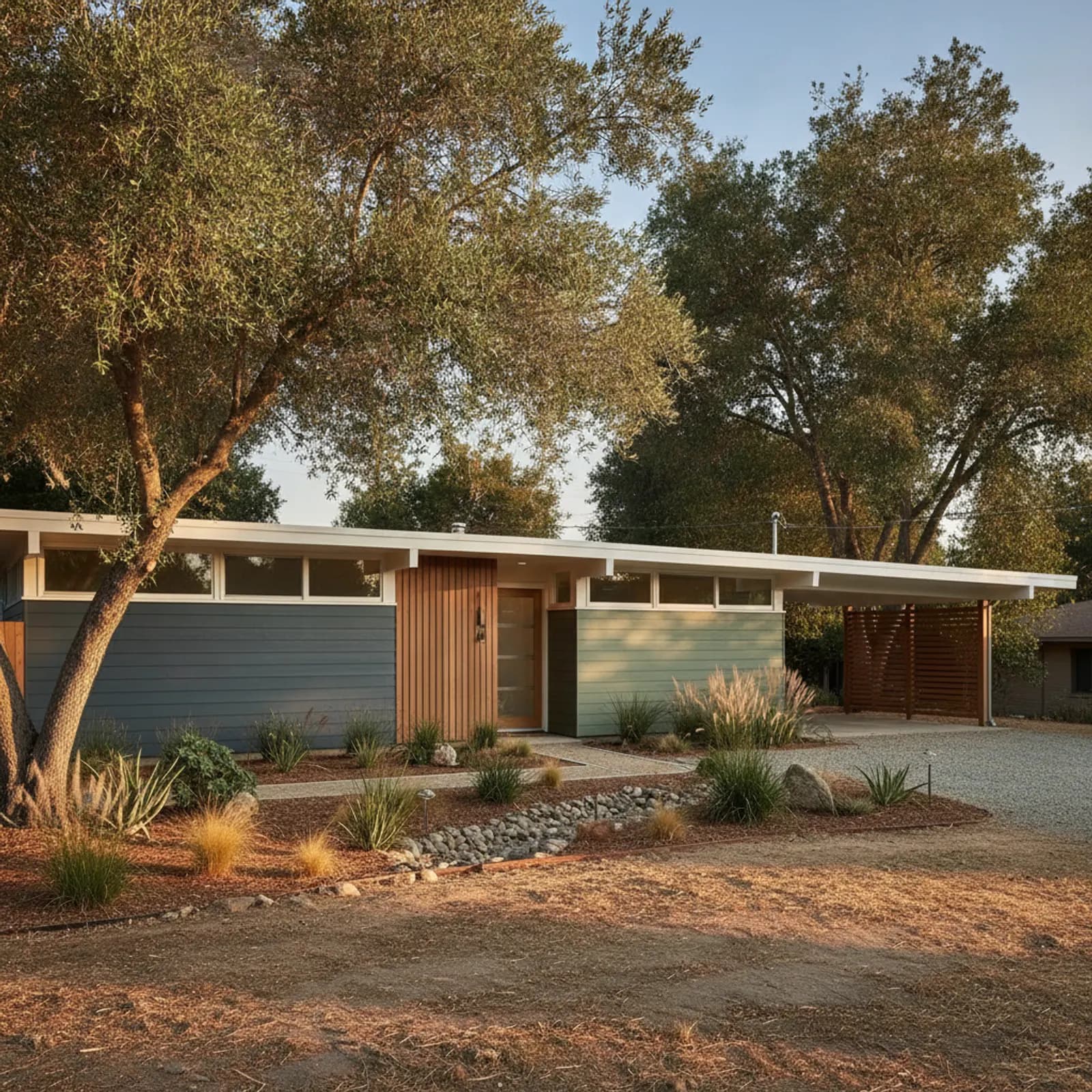
Exterior renovation in Davis
Davis is a flat, tree-lined college town built around UC Davis, and its housing reflects decades of steady growth tied to the university rather than boom-and-bust tracts. Central Davis holds older bungalows and cottages near downtown and the campus, the neighborhoods that ring the city carry a strong stock of mid-century ranch and Eichler-influenced homes, and the eastern and southern edges added subdivisions through the 1970s, '80s, and into the Mace Ranch and South Davis eras. A large share of all of it is now past the service life of its original siding, weathered by some of the most sustained UV in the valley on famously open, bikeable, low-rise streets.
Why it matters here specifically
Davis's defining exterior stressor is heat and ultraviolet load across a long, bright summer, not fire or moisture. The city's flat terrain and modest building heights mean little self-shading, and many newer tracts still carry thin canopy, so original hardboard, T1-11, and economy stucco-and-siding combinations chalk, cup, and fade — worst on south and west elevations. In a tight, owner-heavy market shaped by university demand, a thoughtful re-side is both overdue protection and a real value and curb-appeal upgrade on streets where well-kept exteriors are noticed.
Considering an exterior project in Davis?
Davis housing and architecture
Davis's stock spans early- to mid-century bungalows and cottages in the central grid near downtown and campus; a deep band of 1950s–1970s ranch and Eichler-influenced mid-century homes through Old North Davis, Central, and the College Park area; and 1970s–1990s subdivisions plus newer Mace Ranch and South Davis tracts on the edges. The mid-century homes reward clean, low-profile lap with restrained trim that respects their horizontal lines, while the production subdivisions modernize strongly with a lap-and-batten field and a refreshed palette. The older central cottages call for narrower, period-sensitive profiles. We design to the neighborhood rather than to one template.
Built for Davis's valley heat
The performance priority across Davis is heat and UV durability — the long, high-sun valley summer is the single controlling stressor, and the city's flat, low-shade layout intensifies it on exposed walls. We specify fiber cement with factory-applied fade-resistant finishes because field-painted and economy products lose color and integrity quickly here. Detailing matters as much as the board: correct gapping and fastening for large daily and seasonal temperature swings, and finish selection tuned to elevation orientation, since south and west walls take the brunt of the afternoon sun on Davis's open streets. Moisture and fire are minor, managed concerns rather than spec drivers.
Recommended materials for Davis
James Hardie fiber cement with a factory ColorPlus-style finish is the core recommendation for most Davis homes: non-combustible, dimensionally stable in heat, and far more color-stable than field paint under sustained valley UV. On the mid-century ranch and Eichler-influenced homes we choose clean, low-profile lap and crisp trim that reinforce their horizontal character instead of flattening it. Engineered wood remains a reasonable option on Davis's low-fire valley-floor parcels where deep wood grain is the goal, and we'll walk through that trade-off honestly when a homeowner is weighing character against the longest-lasting heat performance.
What an exterior project costs in Davis
Davis pricing turns on home size and stories, profile and trim complexity, substrate and dry-rot condition once the cladding is removed, window integration, and the weather-management scope. Older central-Davis cottages and bungalows more often reveal substrate surprises at demolition, since their original sheathing has lived through decades of heat cycling, while the Mace Ranch and South Davis tracts tend to be more predictable. Lot access on the city's compact central streets can also affect staging. We provide a written, scoped estimate after an on-site assessment so bids can be compared on substance rather than a single headline number.
Central Davis, Old North, and the campus edge
The neighborhoods nearest downtown and UC Davis hold the city's oldest stock — bungalows, cottages, and early ranch homes on compact lots where period sensitivity matters most. A generic re-side reads as a mistake on these character streets, so we match lap width, trim proportions, and finish to the era. These are also the homes most likely to hide dry rot or layered original siding behind the current cladding, which we plan for rather than discover mid-project, and where tight access shapes how the crew stages the work.
Mid-century ranch belts and the Eichler influence
Davis carries a notable band of 1950s–1970s ranch and Eichler-influenced homes with long, low horizontal elevations that take re-cladding beautifully. These respond to a clean, low-profile lap and a restrained, period-honest palette that modernizes durability without erasing the mid-century lines that buyers in Davis specifically prize. Getting the profile scale and reveal consistency right is the difference between a home that reads deliberate and one that reads like a builder-grade swap.
Mace Ranch, South Davis, and the newer tracts
The 1980s–1990s subdivisions and the newer Mace Ranch and South Davis neighborhoods are reaching the age at which builder-grade hardboard and economy cladding starts failing on the sun-facing walls. These elevations respond strongly to a modern lap-and-batten re-side that updates a dated tract look while finally putting a heat-stable, fade-resistant system on walls that were never specified for the valley's UV load. Predictable framing on these homes usually makes for a cleaner, more estimable scope.
PG&E, city utilities, and Davis Historic Resources review
Working exteriors in Davis coordinates with a few local authorities. Electric and gas both come from PG&E. Water and sewer are supplied by the City of Davis Public Works Department, city-owned. Fire response is the Davis Fire Department. On the permit side, the City of Davis Community Development Department handles building permits, and the city's Historic Resources Management Commission reviews visible exterior work on designated Historic Resources — particularly in the Old North Davis, Old East Davis, and University-Rice Merit historic conservation districts, where material, profile, and color can be regulated on contributing structures. UC Davis-adjacent parcels and some newer master-planned pockets carry additional design review. We flag utility, permit, and heritage items at the estimate stage.
HZ10 climate on Davis's flat Yolo valley floor
Davis is in James Hardie's HZ10 climate zone — the West's hot-summer, low-freeze belt — and HZ10 is the correct spec for a Davis home; installing HZ5 is a documented warranty misapplication. On the fire side, essentially all of Davis sits on the flat valley floor in Low FHSZ territory or unmapped under California's 2025 LRA Fire Hazard Severity Zone map — the WUI Code does not typically apply. Non-combustible fiber cement remains a low-regret upgrade regardless. The controlling exterior spec is heat and UV durability across the whole city; the code frame change on January 1, 2026 (Chapter 7A → WUI Code) does not typically alter a Davis re-side.
Our process in Davis
- Step 1
Consultation
We listen to your goals and assess your home on site — exposure, substrate, and architecture.
- Step 2
Design & Proposal
A clear written proposal with the right system specified for your climate and a transparent scope.
- Step 3
Expert Installation
Trained crews install to manufacturer best practices with careful weather-management detailing.
- Step 4
Walkthrough & Support
A final walkthrough, full cleanup, and a clear written record of the scope completed — work we stand behind.
Davis rewards an exterior approach that respects both the sun and the neighborhood, from a central-Davis bungalow to a Mace Ranch two-story. We scope every Davis project on site and put it in a written, itemized estimate, so the decision rests on substance rather than a headline number.
FAQ
Davis — Common Questions
Fiber cement with a factory fade-resistant finish. Davis's flat, low-shade college-town setting delivers sustained summer UV and heat, and factory-finished fiber cement holds color and integrity far longer than field-painted or economy products.
Yes. We use clean, low-profile lap and restrained trim that respect the horizontal mid-century lines while upgrading durability — these homes are specifically valued in Davis, so getting the profile right matters.
Original builder-grade hardboard, T1-11, and economy vinyl was never specified for Davis's UV load. Chalking, cupping, swollen joints, and faded paint on sun-facing elevations is the normal end-of-life pattern.
Generally no — Davis sits on the open valley floor with low wildfire exposure. Non-combustible fiber cement is still a sound, low-regret choice alongside its heat durability.
When feasible, yes — it ensures correct flashing integration, avoids duplicated trim work, and produces a better-looking, better-performing exterior in one project.
South- and west-facing walls take the heaviest afternoon sun and age fastest, especially on Davis's open, low-canopy streets; we account for orientation when specifying finishes and detailing.
Yes — central Davis, the mid-century ranch belts, the 1970s–90s subdivisions, and the newer Mace Ranch and South Davis tracts.
A correctly installed fiber cement system commonly performs 30+ years in Davis's climate, with factory finishes extending the time before any cosmetic refresh.
Helpful Exterior Guides