
5 min read · Hardie
James Hardie ships its fiber cement in two faces: a flat smooth surface and an embossed wood-grain texture. The two look different up close and from the curb, hold paint a little differently, and read as right or wrong depending on a home's architecture. The choice is aesthetic, not budget, and it deserves a deliberate decision rather than defaulting to whichever sample board you saw first.
What the smooth finish actually looks like
Smooth Hardie presents a flat, planar surface with only faint factory layout marks. From the street it reads crisp and intentional; up close it stays clean and uniform with no visible grain. That planar quality is exactly what modern minimalist, contemporary, and mid-century elevations want, where any embossed pattern would fight the architecture. It also pairs well with the stucco-adjacent look of Spanish revival. The tradeoff is honesty about surfaces: a flat face shows dings, paint flaws, and installer marks more plainly, so smooth rewards careful handling, clean fastening, and a quality paint or ColorPlus factory finish. On a well-built modern home, that crispness is the entire point.
What the wood-grain texture brings
Wood-grain Hardie carries a subtle embossed pattern molded into the board. From a distance it reads as warmth and depth rather than obvious grain; step closer and the texture is clearly visible. That depth is period-correct for craftsman, cottage, traditional ranch, and most older architecture, where a flat panel would look slightly off. The texture also does practical work: it catches light and shadow, which visually camouflages minor surface dings and paint imperfections that would announce themselves on a smooth board. Our James Hardie siding installs lean wood-grain on character homes for exactly this reason — the look is forgiving and traditional at the same time.
Cost is the same — so decide on the look
Smooth and wood-grain boards are typically priced the same at distribution, and there is no installer-level upcharge for choosing one face over the other. That means budget should never drive this decision. Pick the texture your home's style calls for and the look you want to live with, not the one you think is cheaper, because the spread that matters here is architectural, not financial. The only real cost lever in a fiber cement project is product line, trim package, and labor — not the choice between a smooth and a grained face. Treat texture purely as a design question.
Matching texture to architecture
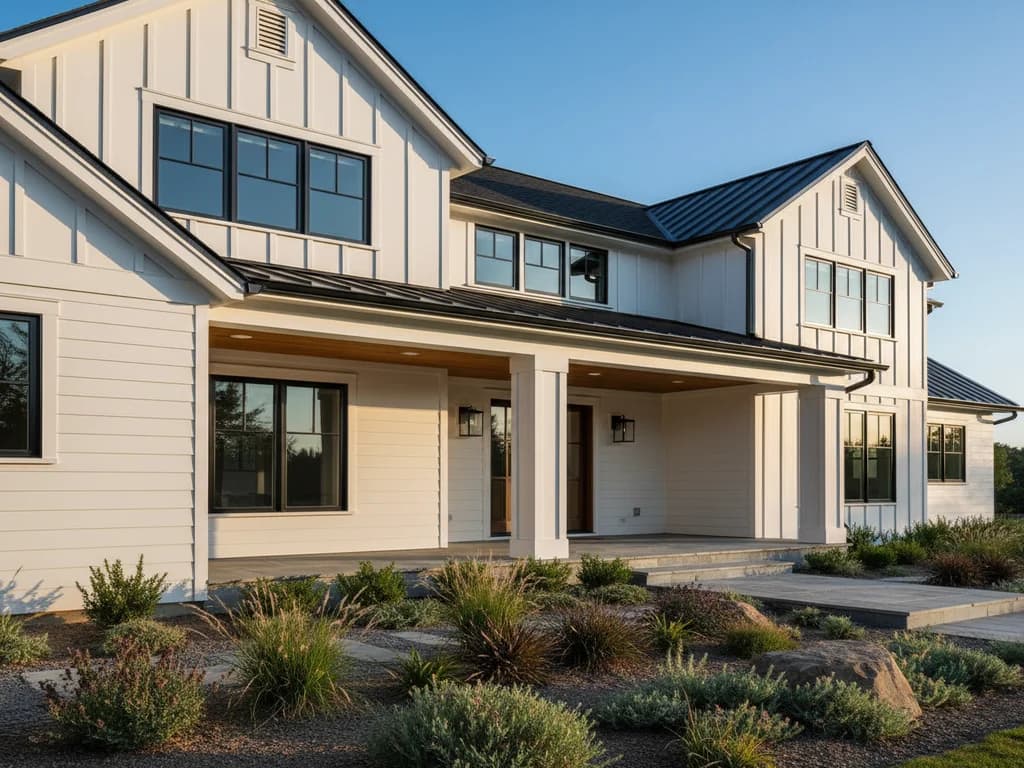
The cleanest rule of thumb runs by style. Modern minimalist and mid-century modern want smooth. Modern farmhouse can go either way — smooth for a contemporary read, subtle wood-grain for a traditional one. Craftsman, cottage, and traditional ranch want wood-grain because it is period-correct. Spanish revival generally wants smooth for its stucco-adjacent character. Tudor revival can take either depending on the trim and detailing. The grain or flatness should agree with the home's bones; when texture and architecture pull in opposite directions, the elevation reads as a mistake rather than a choice. Walk it back to the era and intent of the house before settling on a board.
How the two age and hold paint
Both finishes are durable cement board, but they age a little differently in service. Smooth shows surface defects — dings, marks, and paint failure — more obviously, since there is no pattern to break up the eye. Wood-grain's texture provides natural visual camouflage for those minor issues and grips field paint slightly better, so a brush-and-roll repaint can last marginally longer on grain. On factory-applied ColorPlus technology, the two finish coats perform identically, so the aging difference mostly matters when you field-paint. Neither face wears its texture away over time; the grain is molded through the board, not a surface coating, so it stays put for the life of the cladding.
Maintenance and mixed-texture designs
Day-to-day upkeep is close. Smooth is marginally easier to rinse because there is no texture to catch particulate; wood-grain holds slightly more dust and benefits from a routine annual wash. The gap is minor and both maintain similarly with ordinary care. Some projects deliberately combine the two — wood-grain on the main body with smooth panels at an entry accent or a modern gable — and that reads as intentional design when the logic is clear. Mixing textures works best when there is a visible reason for the break, such as a contemporary feature wall against a traditional body, rather than scattering the two without a plan.
How texture reads in photos and on the street
Texture changes how a home photographs and how it reads at the distances buyers actually see it. Wood-grain catches light and shadow, adding depth and a crafted, traditional feel in listing photos and from the curb — an asset on craftsman, farmhouse, and character homes. Smooth photographs as clean, flat, and contemporary, which flatters a modern elevation. There is also an unspoken neighborhood norm: established older streets generally expect grain and read smooth as out of place, while newer modern developments read smooth as current and grain as dated. Matching the prevailing texture is the safe resale default; breaking it deliberately can be a strong move on a genuine modern remodel inside an older area. We scope and sample on site so you can judge both on the actual wall.
Smooth vs. wood-grain Hardie
| Attribute | Smooth | Wood-grain |
|---|---|---|
| Appearance from distance | Clean uniform | Subtle pattern |
| Appearance close up | Flat surface | Visible wood-grain |
| Cost | Standard | Same as smooth |
| Best architecture | Modern minimalist, contemporary | Craftsman, cottage, traditional |
| Field paint adhesion | Good | Slightly better |
| Surface defect visibility | More visible | Camouflaged by texture |
Key takeaways
- Smooth and wood-grain are priced the same — decide on look, not budget
- Smooth reads contemporary and crisp; wood-grain reads warm and traditional
- Architecture should drive the choice — period homes lean grain, modern homes lean smooth
- Wood-grain camouflages minor surface dings and holds field paint slightly better
- Texture is molded through the board and never wears smooth
- On ColorPlus, both finishes perform identically
FAQ
Quick Answers
Typically no — both faces are priced the same at distribution, and there is no installer-level upcharge. Choose based on the look you want, not budget.
No. The grain is embossed through the board during manufacturing, not applied to the surface, so it stays put for the life of the cladding.
Whichever matches your home's architecture and the prevailing look on your street. Matching the neighborhood norm is the safe default; a deliberate contrast can work on a genuinely modern remodel.
Yes, and it can look intentional — for example wood-grain body with smooth accent panels at the entry. It works best when there is a clear design reason for the break.
Only slightly. Smooth rinses a touch easier; wood-grain holds a little more particulate and benefits from a routine annual wash. Both maintain similarly with ordinary care.
Wood-grain. Its pattern visually camouflages minor surface issues, while a smooth face shows dings and paint failure more plainly.
Sources
Authoritative references
External links to government, code, and manufacturer sources. Sierra Siding is not affiliated with these organizations; references are provided for verification.