
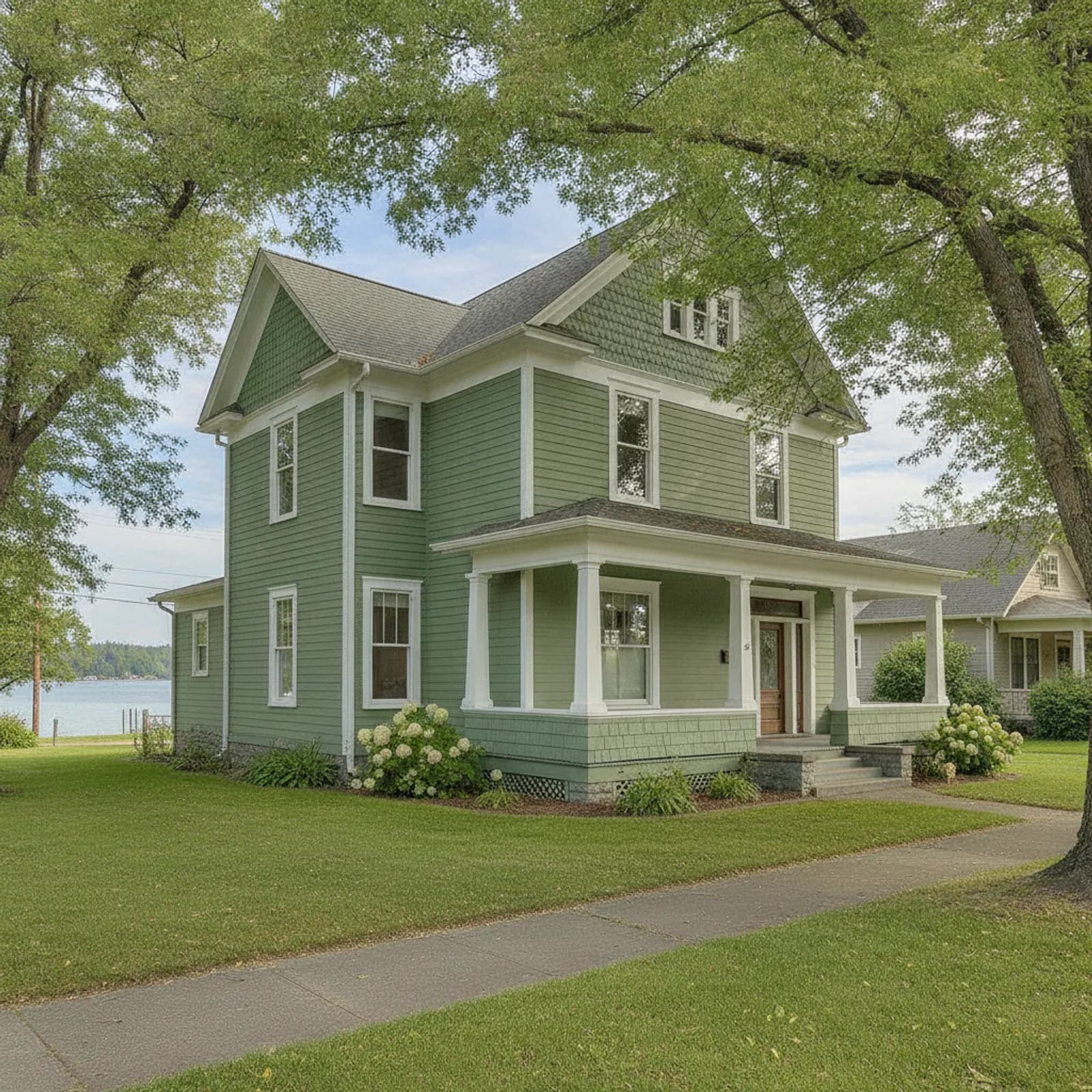
Exterior renovation in Lakeport
Lakeport is the seat of Lake County, set on the west shore of Clear Lake with a walkable historic downtown, established lakeshore neighborhoods, and a rural, hillside edge where the town gives way to the surrounding ranges. Its housing spans a genuine old core of Victorian-era and early-1900s homes, older lakeshore and cottage stock, post-war and mid-century neighborhoods, and rural and hillside homes on the margins. That range means Lakeport's exterior story splits: the historic and lakeshore homes are about sensitive re-siding and lake-basin moisture, while the wildland-edge parcels add a real fire consideration. We read each address for which side of that line it falls on.
A split-spec county seat
Lakeport is not a single template. The downtown and lakeshore neighborhoods sit at the town's protected core, where character and moisture govern the spec, while the rural and hillside homes on the edge sit closer to the fuel-loaded slopes that give Lake County its fire reputation — the same ranges the Mendocino Complex burned in 2018. The base cladding can stay consistent across town, but the priorities diverge: period-correct profiles and drainage detailing in the historic and lakeshore core, hardened fire detailing on the wildland edge. Getting that distinction right is the heart of an honest Lakeport spec.
Considering an exterior project in Lakeport?
Lakeport housing and architecture
Lakeport carries some of Lake County's most distinctive stock: Victorian-era and early-1900s homes in and around the historic downtown, older lakeshore cottages and homes along the west shore, broad post-war and mid-century neighborhoods, and rural and hillside houses on the town's edge. The historic homes demand narrow, period-correct profiles and accurate trim proportions — the wrong board width reads as a mistake on the old downtown streets. The lakeshore homes reward moisture-aware detailing, the mid-century belts take a clean lap re-side well, and the wildland-edge homes warrant a hardened, fire-aware specification. We design to the era and the exposure of each home, not to one template across town.
Lakeport's lake-and-foothill climate
Lakeport runs hot, dry, and high-UV through long summers that fade finishes on sun-facing walls and cure the grass and brush on the surrounding hills. The Clear Lake basin, right at the town's doorstep, holds humidity, morning fog, and cool winter damp longer than the open valley, so drainage-plane and flashing detailing stay relevant on lakeshore and low-lying parcels. And the wildland edge carries a real fire season driven by the same terrain and wind behavior seen across the county. The spec therefore layers three concerns — UV durability everywhere, moisture near the lake, and fire hardening on the margins — matched to where each home actually sits.
Fire-aware detailing on Lakeport's wildland edge
The protected downtown and lakeshore core of Lakeport sit at lower wildland exposure, where the conversation is character and moisture. The honest exception is the rural and hillside edge, where homes back toward the fuel-loaded slopes that carry Lake County's real fire risk — the ranges the Mendocino Complex burned in 2018. For those parcels we specify non-combustible cladding and harden the vulnerable details — eaves, vents, and ground-to-wall transitions where embers gather. Town and lakeshore homes still benefit from non-combustible fiber cement at no material change, so the safer cladding comes standard while the added hardening is reserved for parcels that genuinely need it. We won't overstate the risk downtown or understate it on the hillside.
Recommended materials for Lakeport
Non-combustible fiber cement with a factory finish is the core recommendation across Lakeport. It handles the summer UV and the lake-basin damp that govern most of the town, and because it is Class A non-combustible it also covers the wildland-edge fire consideration without switching products — letting the whole town share one cladding family. On the historic downtown homes we select narrow, period-appropriate lap profiles and trim so a re-side reinforces a Victorian or Craftsman home's character rather than erasing it. On lakeshore parcels we add rigorous drainage-plane detailing for the moisture, and on the wildland edge we add hardened eave, vent, and transition detailing for the fire.
What an exterior project costs in Lakeport
Lakeport pricing turns on home size and stories, profile and trim complexity — often markedly higher on the ornate historic homes where detailed trim and reveal matching add real scope — substrate and dry-rot condition once cladding is removed, window integration, and which detailing package a parcel needs. Two variables are particular to Lakeport: the downtown's old homes most often reveal layered original siding and dry rot at demolition after a century of lake-basin sun and damp, and wildland-edge parcels add fire-hardening scope that lakeshore lots add drainage scope instead. We assess on site and provide a written, itemized estimate, because a downtown Victorian and a hillside home on the edge are different jobs.
The historic downtown and Victorian core
Lakeport's downtown and its surrounding Victorian-era and early-1900s homes are the heart of the county seat's identity and the most demanding re-side work in the area. These homes carry detailing expectations a generic re-side will visibly miss, so we match lap width, trim proportions, and finish to the era. They are also the most likely to hide dry rot or multiple layers of original siding after a century on the lakeshore, which we plan for rather than discover mid-project. Non-combustible fiber cement in period-correct profiles lets us protect both the home and one of Lake County's oldest streetscapes.
Lakeshore homes and basin moisture
The homes along Clear Lake's west shore gain the water's amenity and its moisture. On lakeshore and low-lying parcels we pair the cladding with more deliberate drainage-plane work — continuous weather-resistive barrier, flashed penetrations, kickout flashings, and correct bottom-course clearances — so the wall manages the basin's humidity and winter damp. We check carefully for the dry rot that decades of lakeside moisture can leave behind on these older shore homes.
The wildland edge and hillside homes
On Lakeport's rural and hillside margins, homes sit closer to the fuel-loaded slopes that give Lake County its fire reputation. These parcels carry the town's heaviest hardening scope — non-combustible cladding, hardened eave and vent detailing, and close attention to the ground-to-wall transition. We keep records of the materials and assemblies used so those details are available for the defensible-space, code, and insurability conversations that Lake County homeowners on the wildland edge increasingly face.
City of Lakeport, city utilities, and Lakeport Fire
Working exteriors in Lakeport coordinates with a few local authorities. Building permits come through the City of Lakeport Community Development Department (Lakeport is one of only two incorporated cities in Lake County, and its county seat). Electric and gas are PG&E, and the Clear Lake basin is documented high-PSPS territory. Water and wastewater are supplied by the City of Lakeport municipal utilities. Fire response is the Lakeport Fire Protection District alongside CAL FIRE Sonoma-Lake-Napa Unit (LNU) on wildland calls into the surrounding foothill and hillside country. The historic Lakeport downtown along Main Street is a locally recognized preservation zone.
HZ10 and the Mendocino-Complex FHSZ reality
Lakeport is in James Hardie's HZ10 climate zone; installing HZ5 is a documented warranty misapplication. On the fire side, the flat downtown Lakeport core sits in Moderate FHSZ territory under California's 2025 LRA Fire Hazard Severity Zone map, while hillside and rural margins carry High to Very High designations. The 2018 Mendocino Complex (459,123 acres — California's third-largest recorded fire) and 2015 Valley Fire (76,067 acres, 1,955 structures destroyed) burned Lake County terrain. On designated hillside parcels the 2025 California Wildland-Urban Interface Code governs the exterior wall. Chapter 7A moved into the standalone WUI Code on January 1, 2026.
Our process in Lakeport
- Step 1
Consultation
We listen to your goals and assess your home on site — exposure, substrate, and architecture.
- Step 2
Design & Proposal
A clear written proposal with the right system specified for your climate and a transparent scope.
- Step 3
Expert Installation
Trained crews install to manufacturer best practices with careful weather-management detailing.
- Step 4
Walkthrough & Support
A final walkthrough, full cleanup, and a clear written record of the scope completed — work we stand behind.
Lakeport rewards an exterior approach that respects its historic core and lakeshore setting while taking its wildland edge seriously, from a downtown Victorian to a hillside home on the margins. We scope every Lakeport project on site so the period, moisture, and fire detailing match the actual parcel, and your written, itemized estimate governs the work.
FAQ
Lakeport — Common Questions
Non-combustible fiber cement with a factory finish. It handles Lakeport's summer UV and lake-basin damp, comes in period-correct profiles for the historic downtown, and covers the wildland-edge fire consideration without switching products.
Yes. We choose narrow, period-correct profiles and accurate trim proportions so the result upgrades durability without erasing the home's character — essential on Lakeport's old downtown streets.
It depends on where the home sits. The downtown and lakeshore core sit at lower exposure, but the rural and hillside edge backs toward the fuel-loaded slopes that carry Lake County's real fire risk — the ranges the Mendocino Complex burned in 2018. We tailor hardening to the parcel.
No — it is non-combustible with a Class A rating, which removes the wall as an ignition path. It is one layer of hardening that works alongside defensible space, roofing, and vents, and we won't claim more than that.
Yes — the Clear Lake basin holds more humidity and fog than the open valley, so west-shore and low-lying homes get extra weather-resistive barrier, flashing, and bottom-course detailing to manage the moisture.
Original wood, hardboard, and economy cladding was never specified for the basin's UV load, and lakeside moisture accelerates failure on lower walls. Chalking, cupping, opening joints, and faded paint on sun-facing elevations is the typical pattern.
A correctly installed fiber cement system commonly performs 30+ years through the basin's hot summers and damp winters, with factory finishes and proper detailing extending the time before any cosmetic refresh.
Explore