Exterior renovation in Mill Valley
Mill Valley is one of Marin County's most distinctive high-value communities, with homes tucked into steep wooded canyons beneath Mount Tamalpais, from historic cottages near Old Mill and the downtown plaza to architecturally significant modern hillside builds along Cascade and the Homestead Valley side. The setting that makes the town extraordinary is also what makes its exterior demands serious: dense tree canopy and steep terrain create real wildfire exposure, while the redwood-and-fog microclimate keeps north-facing walls damp much of the year. A Mill Valley re-side has to answer both at once, to a high architectural standard, on lots that are rarely easy to work.
Two stressors, one assembly
What separates Mill Valley from most of our service area is that fire and moisture are not competing concerns to trade off against each other — both run high, and the wall assembly has to defeat them simultaneously. Combustible shingle and board cladding common on the older canyon homes is both an ignition liability under ember loading and slow to dry in the fog belt. The right answer is a single integrated system that resists ember intrusion and releases moisture, detailed so neither requirement undercuts the other or the home's architecture.
Considering an exterior project in Mill Valley?
Mill Valley housing and architecture
Mill Valley's stock is heavily custom and semi-custom: brown-shingle and craftsman homes in and around the Old Mill and downtown blocks, fog-belt cottages on narrow canyon lanes, and a strong mid-century-to-contemporary hillside tradition on the steeper parcels. These are detail-intensive, design-led elevations where reveal consistency, clean material transitions, and a refined trim package matter as much as the cladding field itself. On the historic homes the profile and trim must read period-correct; on the modern builds the architecture wants crisp shadow lines and minimal interruptions — and in both cases the fire-and-moisture strategy has to be built into the design rather than bolted on afterward.
Mill Valley's wooded, damp microclimate
Mill Valley sits in a cool, fog-influenced redwood microclimate where shaded and north-facing surfaces stay damp for much of the year and drying capacity is a genuine performance concern, not a footnote. Persistent moisture is the controlling day-to-day stressor: it punishes any assembly that traps water behind the cladding, and it accelerates rot in older shingle and board systems. Layered over that, the steep wooded terrain and heavy fuel load open real late-summer and fall fire windows. The exterior therefore has to shed and release water while resisting ember entry, two demands designed together from the drainage plane out.
Hardening a wooded Mill Valley hillside home
For Mill Valley homes we specify Class A non-combustible fiber cement and harden the ignition-prone points — eaves, vents, and the ground-to-wall transition — recognizing that dense canopy and steep terrain make ember loading severe in a wind event. Re-cladding combustible wood or shingle in non-combustible material is one of the highest-value hardening steps available on these canyon parcels, and we coordinate it with soffit, fascia, and vent detailing so the whole assembly behaves as one hardened system. We integrate the work into the home's architectural language rather than compromising it, because on a Mill Valley elevation a clumsy hardening retrofit is its own kind of failure.
Recommended materials for Mill Valley
Premium non-combustible fiber cement over a rigorously detailed, drying-capable drainage plane is the core recommendation for Mill Valley: it addresses the wooded fire exposure and the persistent fog-belt moisture together, with architectural profiles and trim suited to the town's design expectations. We pair it with robust flashing and a back-ventilated rainscreen approach on the dampest elevations so the wall can dry inward and outward. We generally advise against combustible cladding on these wooded hillside parcels regardless of aesthetic tradition, given the exposure — and because fiber cement carries no durability penalty in this climate.
What an exterior project costs in Mill Valley
Mill Valley projects are among the more complex we undertake: steep, access-constrained canyon lots where staging, scaffolding, and material handling are real line items, architecturally detailed custom elevations, fire-hardening scope, rigorous moisture detailing, and frequent substrate and rot discovery on older shingle and wood homes once cladding comes off. Narrow lanes and tight setbacks can dictate how and when material reaches the site. We establish pricing in a detailed written proposal after an on-site assessment; the value here concentrates in craftsmanship, access logistics, and integrated fire-and-moisture detailing rather than in a single headline figure.
Old Mill, downtown, and the canyon lanes
The homes nearest the downtown plaza and the Old Mill area skew older and more historic — brown-shingle and craftsman cottages on small, sloping lots reached by narrow lanes. These are the parcels where rot discovery at demolition is most common and where staging is tightest, so we plan access and protect mature landscaping carefully. The design-review sensitivity is also highest here: profile, trim, and finish choices have to respect the established character of these blocks rather than impose a generic modern look.
Steep hillside and contemporary builds
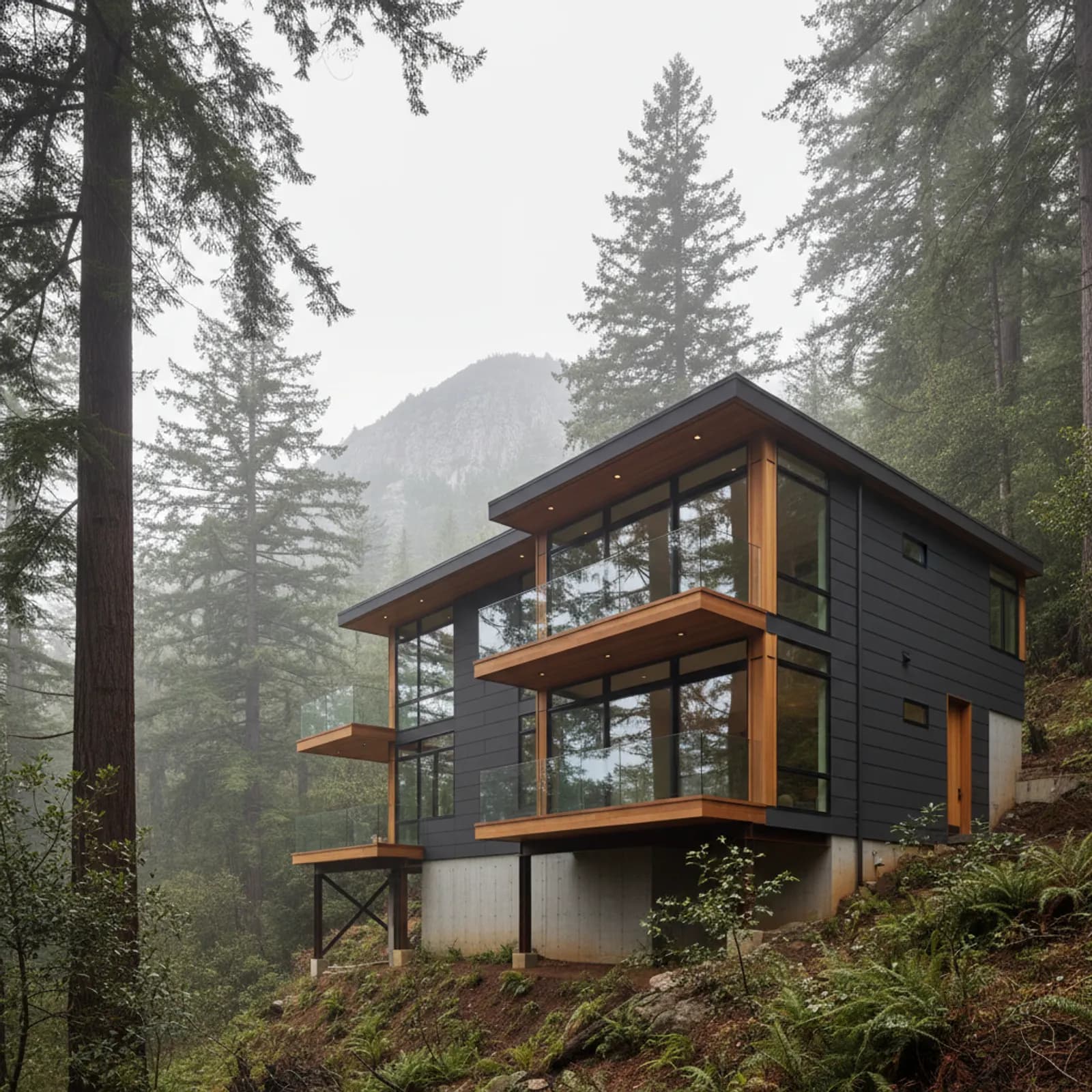
On the steeper Cascade-, Homestead-, and Tam-side parcels the work shifts toward contemporary and mid-century hillside homes where access is the dominant logistical reality. Scaffolding a multi-level elevation pinned to a slope is a planned, estimated part of scope, not an afterthought. These owners often want crisp, minimal reveals and dark architectural finishes, which fiber cement delivers while quietly upgrading the home from combustible cladding to a hardened, non-combustible exterior.
Marin design review and the resale context
Mill Valley and unincorporated Marin parcels can carry design-review and tree-protection expectations that shape material and color decisions, so we scope the exterior with that overlay in mind and keep changes defensible. In a market this strong, a hardened, moisture-durable, architecturally faithful re-side also reads as a genuine value upgrade — buyers here understand both the fire and the fog, and an exterior that credibly answers both is an asset at resale, not just a maintenance item.
MMWD water, PG&E PSPS, and Mill Valley's fire agencies
Working exteriors in Mill Valley coordinates with a few local authorities that shape the schedule as much as the design. Electric and gas both come from PG&E, and Mill Valley is squarely in high-PSPS territory, where PG&E's Public Safety Power Shutoffs during red-flag events can affect job scheduling from late summer through fall — a real consideration on a project of any size. Water is served by the Marin Municipal Water District (MMWD), a customer-owned public agency, so any work near a water meter or backflow assembly coordinates through MMWD rather than a private utility. Fire response is the Mill Valley Fire Department, which has served the town since 1897 and, alongside Marin County Fire, runs the defensible-space inspection homeowners on these wooded parcels should know intimately. On the permit side, the City of Mill Valley's Planning and Building Department handles building permits, and Mill Valley's design-review culture — particularly on the older Old Mill and downtown-adjacent blocks — shapes what a re-side is expected to look like on a contributing structure. We flag utility, permit, and fire-department items at the estimate stage rather than at the wall.
HZ10 climate, WUI-code territory, and the 2025 FHSZ remap on Mill Valley hillsides
Mill Valley is one of the California cities where the WUI code is not a hillside footnote — it applies to the substantial majority of the housing stock. Under California's 2025 LRA Fire Hazard Severity Zone map, essentially all of Mill Valley's wooded canyon and slope neighborhoods (Cascade, Homestead Valley, the Tam-side blocks, and the ridges east of downtown) sit in Moderate to Very High FHSZ, and much of the surrounding unincorporated Marin runs into State Responsibility Area (SRA) territory outright. That means the 2025 California Wildland-Urban Interface Code governs the exterior wall on nearly every re-side that comes across our desk here, not just the ones on obvious ridges. The code frame itself changed on January 1, 2026, when Chapter 7A was deleted from the Building Code and its provisions moved into the standalone WUI Code. On the material side, Mill Valley is in James Hardie's HZ10 climate zone despite the fog belt — HZ10 covers the West's mild to warm climates including foggy northern coastal areas — and HZ10 is the correct spec for a Mill Valley home; installing HZ5 is a documented warranty misapplication. We check the parcel against the current FHSZ designation at scoping and match both the code path and the HZ line to the property.
Our process in Mill Valley
- Step 1
Consultation
We listen to your goals and assess your home on site — exposure, substrate, and architecture.
- Step 2
Design & Proposal
A clear written proposal with the right system specified for your climate and a transparent scope.
- Step 3
Expert Installation
Trained crews install to manufacturer best practices with careful weather-management detailing.
- Step 4
Walkthrough & Support
A final walkthrough, full cleanup, and a clear written record of the scope completed — work we stand behind.
Mill Valley homeowners should not have to choose between an architecturally beautiful exterior and a hardened, moisture-durable one — and on these canyon lots they don't have to. We scope every Mill Valley project on site, plan the access honestly, and put the fire-and-moisture strategy in writing before any work begins.
FAQ
Mill Valley — Common Questions
Yes — Mill Valley's steep, densely wooded terrain creates real wildfire exposure. Class A non-combustible cladding with hardened detailing is strongly advised on these hillside parcels.
Very much so. The fog-and-redwood microclimate keeps surfaces damp much of the year, so drying-capable drainage-plane detailing is a genuine performance requirement, not an afterthought.
Yes — that balance is central to our Mill Valley work. We use non-combustible fiber cement in profiles and trim chosen to respect the home's architecture.
Premium non-combustible fiber cement with clean, architectural profiles over a rigorously detailed drainage plane — it meets the design, fire, and moisture demands together.
We generally advise against it on Mill Valley's wooded hillside parcels given the fire exposure; fiber cement carries no durability penalty and adds moisture resilience.
Yes — access and staging on steep hillside lots are a real part of Mill Valley scope and are planned and estimated explicitly.
Home hardening can support insurability in wooded Marin terrain. We document the materials and assemblies used, though insurers set their own criteria.
A correctly installed, well-drained fiber cement system commonly performs 30+ years here while materially reducing ignition risk and moisture failure over that lifespan.
Explore
Exterior Services
Helpful Exterior Guides