
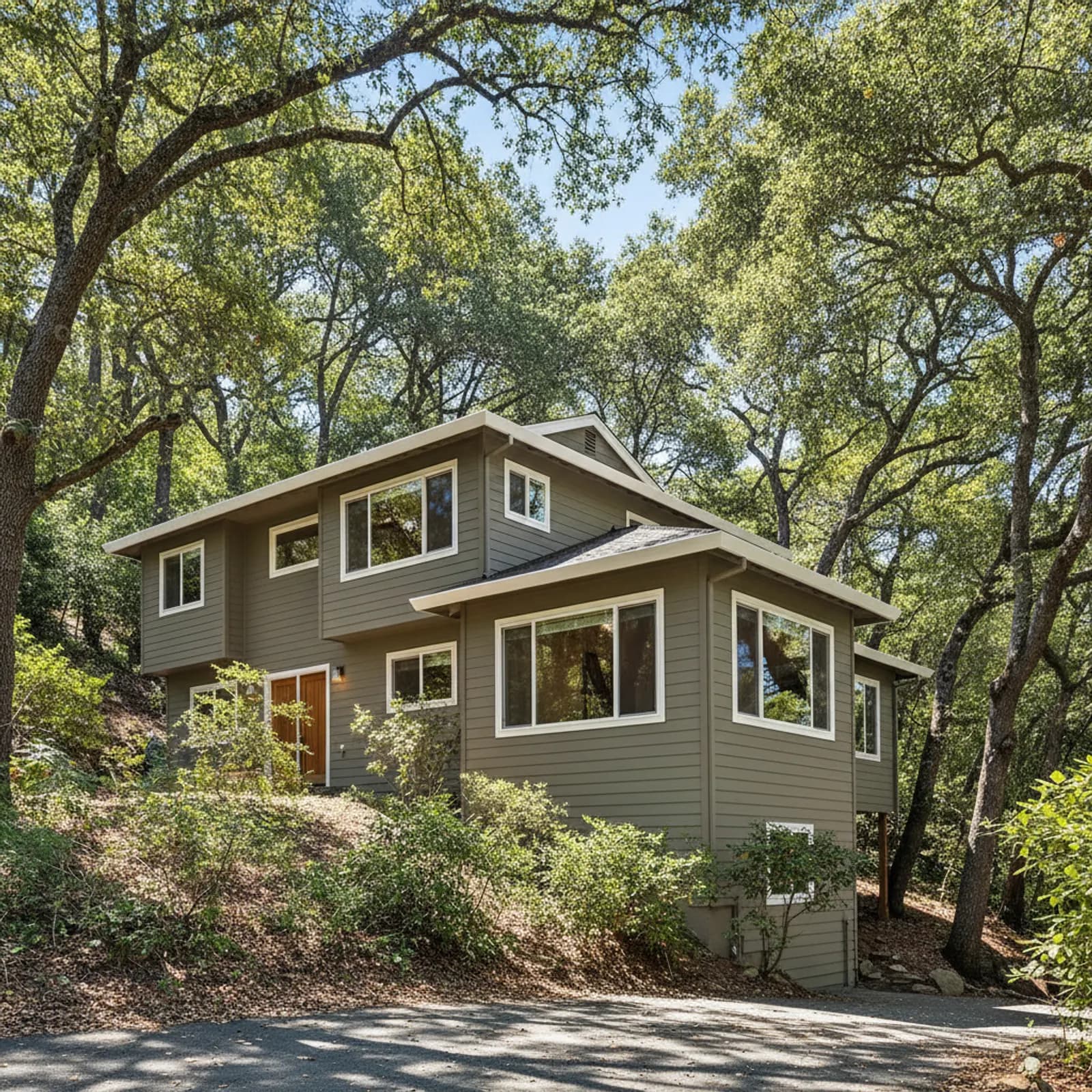
Exterior renovation in San Anselmo
San Anselmo sits in the Ross Valley of central Marin, a town of historic homes and hillside parcels tucked into wooded ridges. Two stressors run together here: high wildfire exposure on the steep, vegetated hillsides that surround the valley, and persistent moisture from Marin's fog, damp, and creek-cut terrain. A San Anselmo exterior has to manage both at once — hardened against embers on the slopes, and rigorously water-managed against a climate that keeps walls damp far more of the year than the inland valleys.
Why it matters here specifically
Most of San Anselmo's character homes — the early-twentieth-century bungalows downtown and the hillside houses stepping up the wooded slopes — still wear original wood and shingle cladding that suits the town's period look but is exactly wrong for its fire exposure. On the steep, vegetated Ross Valley hillsides, re-cladding combustible wood is the single highest-value hardening step a homeowner can take. The damp does its own quiet damage: fog, winter rain, and shaded lots keep walls wet longer, so any weak point in the water management rots from behind. Sierra Siding's answer is non-combustible fiber cement over a deliberate drainage plane, with fire-hardened eave, vent, and ground-to-wall detailing scaled to the parcel's real slope and vegetation — a wall that resists embers on the slope and keeps drying everywhere, while holding the architectural profile the town expects.
Considering an exterior project in San Anselmo?
San Anselmo housing and architecture
San Anselmo's stock is older and more characterful than most of the county: a historic downtown core of early-twentieth-century homes and bungalows, plus Ross Valley hillside houses stepping up the wooded slopes on varied, custom footprints. Much of it wears original wood and shingle cladding suited to the town's period look but poorly matched to its fire exposure. Re-cladding choices here have to respect that established architectural character while quietly upgrading the envelope to non-combustible, water-managed assemblies.
San Anselmo's marine-moisture and hillside-fire mix
San Anselmo's controlling stressors are moisture and fire together. Marin's marine influence keeps the valley damp — fog, winter rain, and shaded wooded lots leave walls wet longer and push hard on any weak point in the water-management system. At the same time the surrounding hillsides carry high wildfire exposure where homes meet steep vegetated terrain. The spec has to resist embers on the slopes and shed and dry persistent moisture everywhere, which rules out combustible cladding and demands a real drainage plane.
Hillside fire hardening in San Anselmo
San Anselmo's Ross Valley hillsides carry high wildfire exposure, with homes set into steep, vegetated slopes where ember loading is a genuine threat. We recommend non-combustible fiber cement with fire-hardened detailing at eaves, vents, decks, and ground-to-wall transitions, scaled to a parcel's actual slope and vegetation. For hillside homes in particular, re-cladding combustible wood and shingle is the highest-value hardening step available. We assess each property's real exposure on site rather than applying a blanket assumption.
Recommended materials for San Anselmo
Non-combustible fiber cement, installed over deliberate drainage-plane detailing, is our core recommendation for San Anselmo. It answers the hillside fire exposure as a Class A non-combustible cladding, and paired with a proper rainscreen and flashing it manages the persistent marine moisture that punishes lesser walls. Combustible wood and shingle, however period-correct they look, are the wrong base on these slopes. Fiber cement lets us hold the town's character in profile and finish while fixing both the fire and the water problem.
What an exterior project costs in San Anselmo
San Anselmo cost is driven heavily by hillside access and the age of the housing stock. Steep Ross Valley lots mean staging, scaffolding, and material handling are real line items rather than afterthoughts. Older homes routinely reveal substrate, dry rot, and water damage once walls are opened, given the moisture load. Fire-hardened detailing and drainage-plane work add scope on hillside parcels. We assess slope, access, substrate, and any town design considerations on site and provide a written, itemized estimate.
Hillside access and staging
Much of San Anselmo's housing climbs the Ross Valley slopes, where setting up to work on the walls is itself a planning problem: steep approaches, narrow streets, and limited flat staging mean scaffolding and material handling are designed for the specific lot. We walk the access and slope conditions during the site visit so the schedule, scaffolding plan, and protection of surrounding vegetation reflect the real hillside rather than a flat assumption.
Moisture discovery on older homes
Because San Anselmo's stock is largely older and the climate keeps walls damp, opening up an exterior here frequently uncovers hidden dry rot and water-damaged substrate behind original wood and shingle cladding. We plan for that discovery rather than treating it as a surprise, building the drainage plane and flashing to keep the new wall dry where the old one quietly failed. Honest substrate assessment up front keeps the written estimate from drifting once work starts.
Character and the town's look
San Anselmo prizes the established character of its historic homes and hillside neighborhoods, so a re-side here is as much about respecting profile, trim, and color as about performance. Fiber cement lets us reproduce period-appropriate lap and trim detailing while delivering the non-combustible, moisture-managed envelope the location actually needs — upgrading the wall without flattening the architectural feel that makes the town what it is.
Town of San Anselmo, MMWD, and Ross Valley Fire (JPA)
Working exteriors in San Anselmo coordinates with a few local authorities. San Anselmo is legally a Town rather than a City — the Town of San Anselmo is the correct name for the local government. Electric and gas are PG&E, and San Anselmo is in high-PSPS territory. Water is supplied by the Marin Municipal Water District (MMWD), a customer-owned public agency. Fire response is the Ross Valley Fire Department — a JPA serving San Anselmo alongside Fairfax, Ross, and Sleepy Hollow — alongside Marin County Fire and CAL FIRE on wildland calls. On the permit side, the Town of San Anselmo Planning and Building Department handles building permits, and portions of the older downtown blocks along San Anselmo Avenue carry design-review expectations on visible exterior work.
HZ10 and the Ross Valley FHSZ reality
San Anselmo is in James Hardie's HZ10 climate zone despite the fog belt; installing HZ5 is a documented warranty misapplication. On the fire side, the flat downtown-adjacent blocks sit in Low FHSZ territory or unmapped under California's 2025 LRA Fire Hazard Severity Zone map, while the wooded Ross Valley hillside neighborhoods climbing toward Sleepy Hollow and the Marin Open Space carry Moderate to Very High designations. On designated hillside parcels the 2025 California Wildland-Urban Interface Code governs the exterior wall. Chapter 7A moved into the standalone WUI Code on January 1, 2026.
Our process in San Anselmo
- Step 1
Consultation
We listen to your goals and assess your home on site — exposure, substrate, and architecture.
- Step 2
Design & Proposal
A clear written proposal with the right system specified for your climate and a transparent scope.
- Step 3
Expert Installation
Trained crews install to manufacturer best practices with careful weather-management detailing.
- Step 4
Walkthrough & Support
A final walkthrough, full cleanup, and a clear written record of the scope completed — work we stand behind.
San Anselmo asks an exterior to do two hard things at once: resist embers on the Ross Valley hillsides and shed persistent Marin moisture, all while respecting the town's historic character. We scope every San Anselmo project on site, specify non-combustible, water-managed assemblies, and put the real scope in a written estimate that governs the work.
FAQ
San Anselmo — Common Questions
Yes — the wooded Ross Valley hillside neighborhoods carry high wildfire exposure. Class A non-combustible cladding with hardened detailing is the baseline there.
Very much — the fog-and-creek Ross Valley climate keeps assemblies damp, so drying-capable drainage-plane detailing is essential alongside the fire strategy.
Yes — period-sensitive profiles and trim in non-combustible fiber cement preserve character while adding hardening and durability.
Non-combustible fiber cement over a rigorously detailed drainage plane — it meets the fire and moisture demands together.
Yes — access and staging on steep, constrained lots are a real scope factor here and are planned and estimated explicitly.
Home hardening can support insurability in wooded Marin terrain. We document the materials and assemblies used; insurers set their own criteria.
On wooded hillside parcels we advise against it; fiber cement carries no durability penalty and adds fire and moisture resilience.
A correctly detailed, well-drained fiber cement system commonly performs 30+ years here while materially reducing ignition and moisture-failure risk.
Explore
Exterior Services
Helpful Exterior Guides