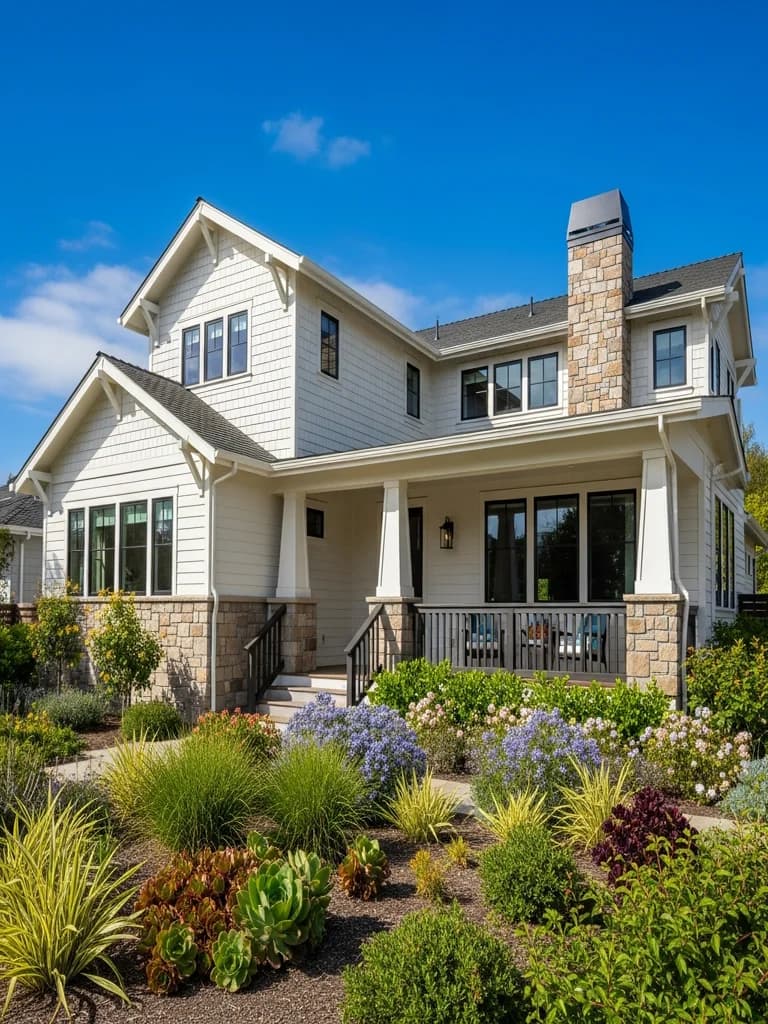
Fire-Resistant Siding in Castroville
Castroville sits on low, flat ground near the mouth of the Salinas River, surrounded by irrigated farmland and cooled by bay fog - which means it is not a high wildfire-exposure area. We'll say that plainly: this is not a steep, brush-covered WUI town, and we won't sell Castroville homeowners on fire risk that doesn't match where they live.
That said, non-combustible siding still earns its place here for honest, practical reasons - it resists the salt-and-moisture climate, doesn't carry embers from a neighbor's structure fire, and gives the home a hard, low-maintenance shell. Fire resistance is a useful side benefit of the same cladding we'd recommend for this coastal-ag site anyway.
An honest read on Castroville's wildfire exposure
Wildfire-resistance codes like Chapter 7A are written for hillside and wildland-interface homes facing flame fronts and heavy ember showers. Castroville, down on the valley floor among artichoke and row-crop fields with the marine layer overhead, simply isn't that environment. The dominant hazards here are salt, ground moisture, and the marine air - not brush fire. We'd rather a homeowner spend on base-of-wall detailing that addresses the real Castroville threat than over-invest in flame protection the site doesn't demand.
Where non-combustible siding still helps in town
Even in a low-wildfire town, structure-to-structure fire is possible - homes in older Castroville neighborhoods can sit fairly close together, and a fire next door throws embers and radiant heat. Non-combustible cladding like fiber cement won't ignite from a windblown ember the way wood or vinyl can. So the value here isn't wildland defense; it's resilience against the ordinary urban fire that could start at a neighbor's structure or an outbuilding.
Ember-aware basics that fit a coastal-ag home
If you want to harden a Castroville home sensibly, the cheap wins are the same ones any good exterior pays attention to: keep combustible mulch and stored materials off the base of the wall, screen vents, and don't let cladding contact bare soil. These steps also serve the bigger local goal of keeping moisture and pests away from the wall. We fold them into the re-side rather than treating them as a separate fire upgrade.
Why fiber cement does double duty here
The cladding we'd recommend for Castroville's salt and moisture - fiber cement - happens to be non-combustible too. That's convenient: you get a wall that drains and dries between fog cycles and also won't feed a fire. We don't need to pitch fire-rated assemblies or 7A compliance to justify it; the marine climate already makes the case, and the fire resistance comes along for free.
What we won't oversell
We won't quote a Castroville home as if it were a foothill house above a canyon, and we won't add ignition-resistant detailing the site doesn't warrant. Our team brings 20 years combined experience reading what a given location actually needs. For most homes here, the right answer is a durable non-combustible re-side detailed for moisture, with simple ember-aware housekeeping - not a wildland-grade hardening package.
Why this matters in Castroville
- Specified for Monterey Peninsula conditions
- fiber cement as the recommended system
- Correctly detailed weather-resistive barrier and flashing
- Installed by a crew with 20 years combined experience
Recommended systems for Castroville
- fiber cement
- James Hardie
- engineered wood
Fire-Resistant Siding for Castroville homes
The full fire-resistant siding approach — materials, weather-resistive detailing, and the manufacturer standards we install to — is covered on the main service page, then specified for Castroville's conditions on this one.
Our Castroville process
- Step 1
Consultation
We listen to your goals and assess your home on site — exposure, substrate, and architecture.
- Step 2
Design & Proposal
A clear written proposal with the right system specified for your climate and a transparent scope.
- Step 3
Expert Installation
Trained crews install to manufacturer best practices with careful weather-management detailing.
- Step 4
Walkthrough & Support
A final walkthrough, full cleanup, and a clear written record of the scope completed — work we stand behind.
FAQ
Fire-Resistant Siding in Castroville — FAQ
No. Castroville sits on low, flat ground near the Salinas River mouth, ringed by irrigated farmland and cooled by bay fog. It is not a steep wildland-interface town, and we don't market fire risk it doesn't have.
Mainly because fiber cement is the right cladding for Castroville's salt and moisture anyway, and it happens to resist embers from a neighbor's structure fire. The fire resistance is a bonus on top of the durability you actually need.
Almost certainly not - 7A is aimed at wildland-interface zones, which the Castroville valley floor isn't. We'd rather direct your budget to the moisture and base-of-wall detailing this site genuinely requires.
Keep mulch and stored items off the base of the wall, screen your vents, and keep cladding from touching bare soil. These also help with moisture and pests, so they fit naturally into a Castroville re-side.
Keep Exploring
More for Castroville homeowners
More in Castroville
Other exterior services in Castroville
Nearby Service Areas
Fire-Resistant Siding near Castroville
Back to
Monterey County & Castroville
Helpful Exterior Guides