Exterior Renovation for the Artichoke Center
Castroville is the self-described Artichoke Center of the World, a working agricultural town set on the low ground near the mouth of the Salinas River just inland from Monterey Bay. Its homes sit at the convergence of three stresses: damp field fog that rolls off the surrounding artichoke and strawberry ground, salt-laden marine air from the nearby bay, and the river's high water table. Sierra Siding works Castroville's older residential core along Merritt and the side streets off Highway 156 with that combination in mind, focusing on cottages and bungalows whose original cladding has spent a century absorbing moisture from both the fields and the coast.
Why Castroville Walls Fail at the Bottom First
Castroville homes rarely fail in the middle of the wall — they rot from the ground up. Sitting on the low flats near the Salinas River mouth, the town carries a high water table plus heavy field fog that settles and lingers, so ground-level moisture attacks the base of the wall while salt off the bay corrodes ordinary fasteners. That's why the early-1900s cottages and bungalows here show soft trim and failed bottom courses long before the rest of the cladding gives out. So the real work on a Castroville re-side happens at the base: proper base flashing, clearance above grade, weep detailing, and a clean siding-to-foundation transition, all in non-combustible fiber cement that won't swell or rot where the original wood did. Get those unglamorous details right and the failure cycle finally ends.
Considering an exterior project in Castroville?
Farm-Town Cottages and Postwar Homes
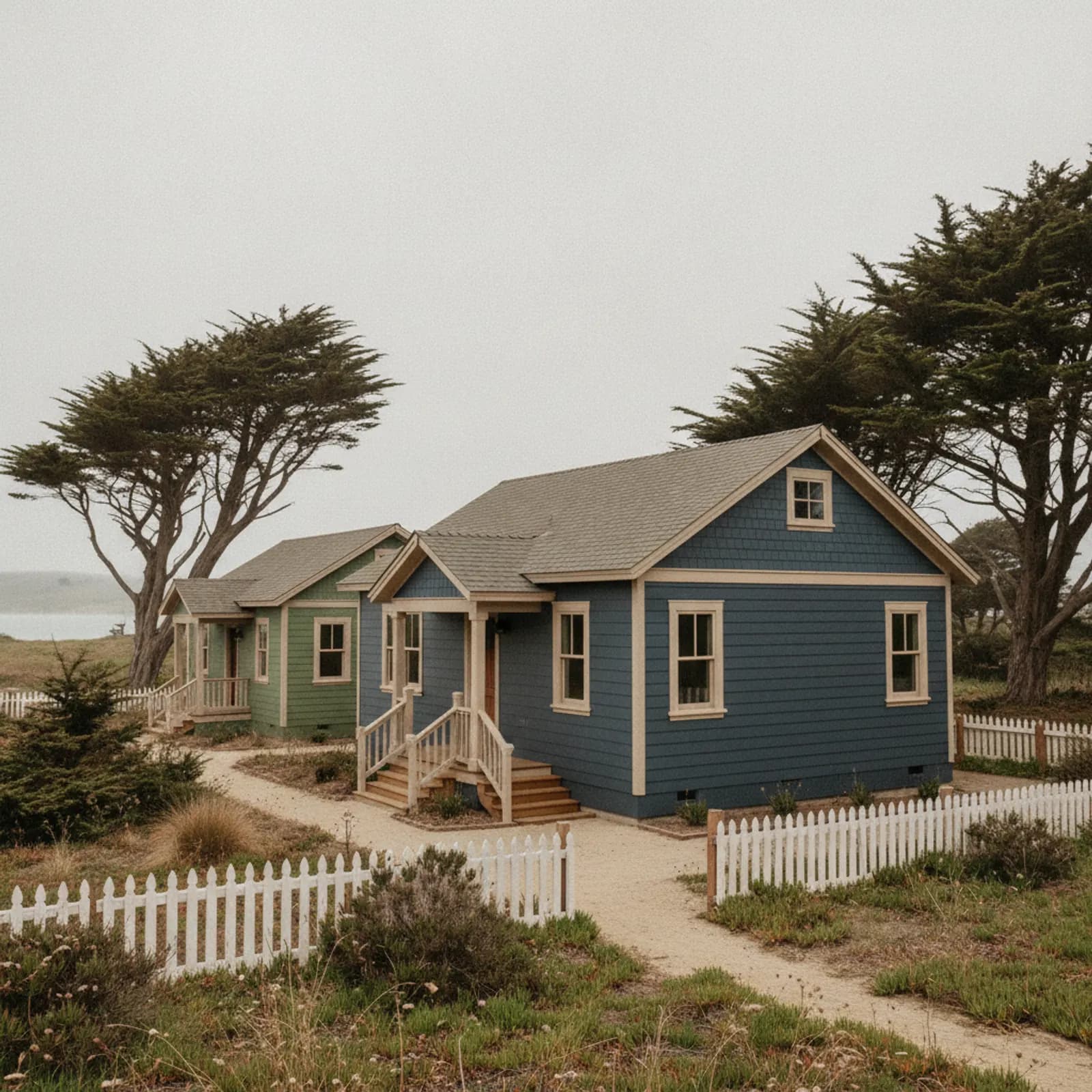
Castroville's housing reflects its history as a farmworker and field-town community. The older core holds early-1900s cottages and modest single-family bungalows, many built simply and clad in wood lap or hardboard, alongside postwar tract homes and agricultural-edge residences on the town's margins. A lot of this stock has aged hard in the damp, with soft trim, failed bottom courses, and patched siding. Our re-side approach here is honest and practical: we strip mixed, deteriorated legacy cladding, repair what the moisture has reached underneath, and re-clad in a single durable system that keeps the unpretentious cottage character while finally giving these homes a wall that sheds water.
Field Fog, Salt Air, and a High Water Table
Castroville's controlling stressor is sustained ground-level moisture. Sitting on the flats near the Salinas River mouth, the town gets heavy marine fog that settles over the surrounding fields and lingers, plus salt carried in from Monterey Bay and a high water table that keeps the soil and lower walls damp. That mix rots untreated wood near grade, corrodes ordinary fasteners, and feeds mildew on shaded elevations. Our spec answers it with a continuous drainage plane, deliberate clearance and flashing at the base of walls where ground moisture is worst, corrosion-resistant stainless or hot-dip fastening for the salt, and back-ventilation so the cladding can dry between the area's long damp spells.
Why Fiber Cement Suits Castroville
For Castroville we lead with fiber cement and James Hardie systems because they are unmoved by the town's persistent ground and field moisture, resist the salt corrosion coming off the bay, and hold paint far better than the weathered wood and hardboard on most older homes here. They will not swell or rot at the vulnerable bottom courses where Castroville homes fail first. Where an owner wants a softer wood look on a cottage, engineered wood lap gives that appearance with far better moisture behavior than solid lumber. We finish in factory-grade coatings and rust-resistant fastening so a hardworking Castroville home gets a low-maintenance exterior that lasts.
What Drives a Re-Side's Cost in Castroville
Castroville homes are generally modest single-story cottages and tract houses on accessible lots, so access and structure rarely drive the budget the way they do on the coast. The biggest cost factor here is the hidden damage moisture has already done: how much wood near grade has rotted, whether sheathing and base framing need repair, and how badly the original walls lacked drainage and flashing. The amount of trim and window reflashing, the number of failed bottom courses to rebuild, and the finish level you choose round it out. In a town this damp, the moisture repair behind the siding usually matters more to cost than the square footage itself.
Building for a Working Agricultural Town
Castroville is a practical, working community surrounded by artichoke and row-crop fields, and we approach exteriors here accordingly. Many homes are owner-occupied for the long haul, so the value is in durability and low upkeep rather than show. We keep job sites clean on the town's narrow residential streets, protect against the dust and field traffic that come with an ag setting, and prioritize systems that will hold up to constant fog and salt without demanding repainting every few years.
Stopping Moisture at the Base of the Wall
Because Castroville's defining problem is moisture near the ground, much of the real work happens at the bottom of the wall. We pay particular attention to base flashing, proper clearance above grade, weep detailing, and the transition where siding meets foundation, since that is where the town's high water table and field damp do their damage first. Getting these unglamorous details right is what separates a re-side that lasts in Castroville from one that fails again at the same bottom courses.
Monterey County, Castroville CSD, and North County Fire
Working exteriors in Castroville coordinates with a few local authorities. Castroville is unincorporated Monterey County — there is no city government, so building permits come through Monterey County Housing and Community Development rather than a municipal department. Electric and gas are PG&E. Water and wastewater are supplied by the Castroville Community Services District (an independent local district serving Castroville and Moss Landing). Fire response is the North County Fire Protection District alongside CAL FIRE San Benito-Monterey Unit (BEU) on wildland calls, with the Monterey County Sheriff coordinating events. Castroville's location at the mouth of the Salinas River places some parcels in FEMA flood-hazard zones — flood-elevation requirements apply on those parcels.
HZ10 and the Salinas-River-mouth FHSZ reality
Castroville is in James Hardie's HZ10 climate zone despite the coastal fog; installing HZ5 is a documented warranty misapplication. On the fire side, essentially every parcel in and around Castroville sits in Low or unmapped FHSZ territory under California's 2025 LRA Fire Hazard Severity Zone map — this is irrigated valley-floor artichoke ground surrounded by wetlands, and wildland fire is not the local threat. The 2020 River Fire (SCU Lightning Complex, 396,624 acres) burned inland Monterey County terrain but did not reach coastal Castroville. Chapter 7A moved into the standalone WUI Code on January 1, 2026, but does not typically drive Castroville's spec — the FEMA flood-plain and Cal-Am/CSD water framework do.
Our process in Castroville
- Step 1
Consultation
We listen to your goals and assess your home on site — exposure, substrate, and architecture.
- Step 2
Design & Proposal
A clear written proposal with the right system specified for your climate and a transparent scope.
- Step 3
Expert Installation
Trained crews install to manufacturer best practices with careful weather-management detailing.
- Step 4
Walkthrough & Support
A final walkthrough, full cleanup, and a clear written record of the scope completed — work we stand behind.
If your Castroville home is fighting rotted bottom courses, peeling paint, or soft trim from years of field fog and salt air, a properly detailed re-side can finally end the cycle. Sierra Siding brings disciplined moisture management built for the Salinas River mouth to every project in town. Get in touch for a clear, no-pressure assessment of what your home needs.
FAQ
Castroville — Common Questions
Castroville sits on low ground near the Salinas River mouth with a high water table and heavy field fog, so ground-level moisture attacks the base of walls first. Proper base flashing, clearance above grade, and fiber cement that won't rot are how we stop it.
Yes. Although Castroville is slightly inland, salt-laden marine air carries in from Monterey Bay and combines with the field fog, which is why we use corrosion-resistant fasteners and salt-rated finishes on homes here.
Fiber cement and James Hardie systems are the best fit because they resist the town's persistent ground and salt moisture and hold paint far longer than the original wood or hardboard. Engineered wood works well where you want a softer cottage look.
Decades-old hardboard in Castroville's damp setting tends to swell and break down at the bottom courses. A full re-side in fiber cement with corrected drainage and base flashing usually ends the recurring failures permanently.
No, wildfire risk is low in Castroville given its flat agricultural and coastal-flat setting. The driving concerns for siding here are moisture and salt, which is what our assemblies are built to manage.
Yes. Once the old cladding is off, we assess and repair any moisture-damaged sheathing, trim, or framing, particularly near grade, before installing the new system. That repair is essential to a re-side that lasts in this climate.
It often is. A durable, low-maintenance re-side protects the structure from Castroville's relentless damp and stops the cost of repeated repairs and repainting, which makes it a sound long-term investment for owner-occupied homes.
Explore
Exterior Services
Helpful Exterior Guides