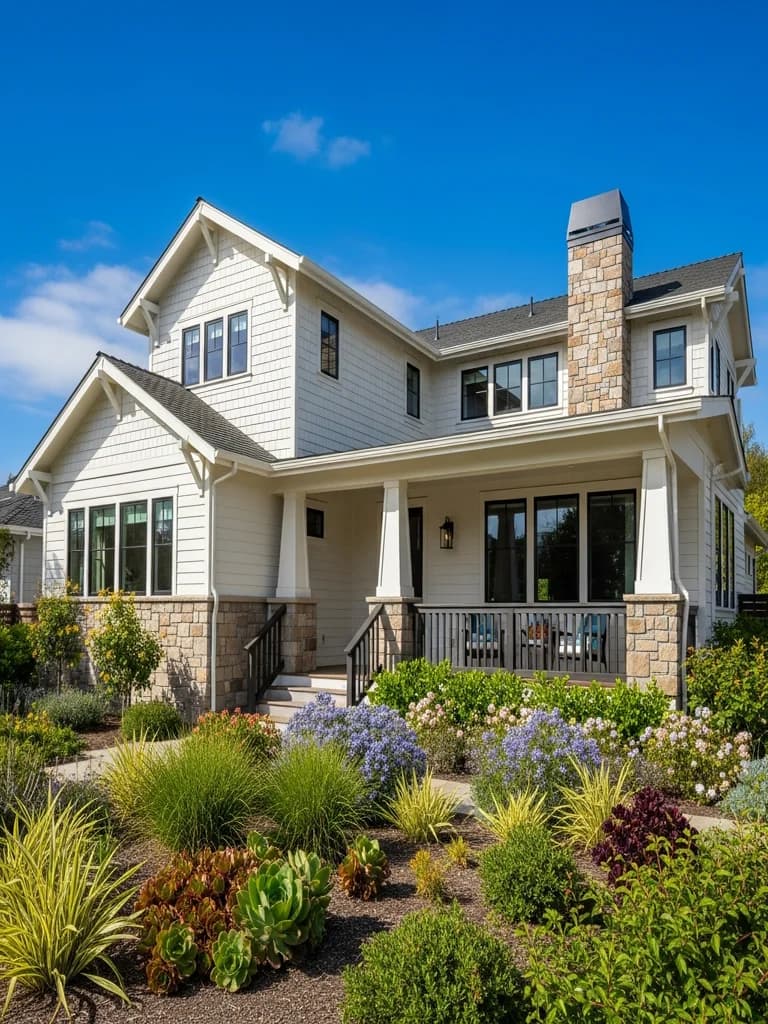
Siding in Del Rey Oaks
A Del Rey Oaks re-side is a sheltered-hollow problem, not the wind-blasted open-Pacific work of Marina or Pacific Grove. This compact city tucks into an oak-shaded basin between Monterey and Seaside, just off Highway 218, where the surrounding ridgelines and tree canopy break the worst of the onshore wind but trap the marine damp the bay still pushes inland.
So a Del Rey Oaks project is scoped around slow-drying, shade-held moisture rather than salt blast: modest mid-century homes on tree-canopied lots where the controlling stressor is a wall that stays damp for too many hours, not one that gets sandblasted.
A small mid-century stock in an oak hollow
Del Rey Oaks is overwhelmingly compact single-family homes from the postwar decades, set under a dense oak canopy on a sheltered basin floor. Much of that original wood lap and panel cladding has reached the end of its life less from storm exposure than from years of shade-held damp at the north and east elevations. The core re-side here strips that tired skin, corrects the moisture-softened substrate, and re-clads in a durable, drying-capable material sized to a modest peninsula city rather than an estate budget.
Shade and the oak canopy drive the failure pattern
What sets Del Rey Oaks apart from its coastal neighbors is canopy. The oaks that give the city its name keep walls in deep shade and drop leaf litter against bottom courses, so elevations that never see afternoon sun stay damp far longer than an exposed Marina wall. Those shaded faces are where we find the soft sheathing, the moss-stained lap, and the wicked-up rot. We plan the re-side around getting those walls to dry between marine-damp cycles rather than fighting a salt blast that the hollow largely shelters the home from.
Why a sheltered site still needs corrosion-aware metal
It would be easy to assume that because Del Rey Oaks sits in a wind-sheltered basin a few minutes off the bay, it escapes the salt that punishes the open peninsula. It does not, just slowly. The marine layer that pools in the hollow still carries chloride, and because the air here lingers and dries grudgingly under the oaks, that salt sits on hardware for long, damp stretches instead of being blown off. So even on a sheltered Del Rey Oaks elevation we still spec hot-dip galvanized or stainless fastening and corrosion-rated flashing rather than economy hardware, because the slow, persistent damp is its own kind of corrosion driver. The difference from Pacific Grove or Marina is degree, not kind: we do not need the full open-Pacific armor, but bare electro-galvanized nails will still streak rust down a freshly clad wall after a couple of foggy winters in this basin. We also keep bottom courses well clear of the leaf-litter and grade line that the canopy builds up, since standing organic damp at the base course is the most common starting point for rot on these older hollow-floor homes.
Re-clading a modest peninsula city without over-spec'ing
Del Rey Oaks reads as a quiet, residential pocket between two larger cities, and its housing reflects that: practical mid-century homes, not heritage cottages and not premium-estate stock. That shapes the re-side conversation honestly. Owners here are usually weighing durable value, so the smart move is a mid-range, drying-capable cladding that shrugs off the basin's persistent damp for decades without the premium price a Carmel address might justify. Fiber cement and quality engineered products fit that brief: they hold paint in shade-held marine humidity, resist the moisture that chews through old wood lap, and keep maintenance low for households that would rather not repaint every few years under dripping oaks. Because lots here sit close together on narrow streets off Canyon Del Rey and Carlton, staging, access, and protecting mature trees during the work become part of the plan. The goal is a wall that outlasts the slow-dry cycle while matching what a small-city Del Rey Oaks budget actually supports.
Why this matters in Del Rey Oaks
- Specified for Monterey Peninsula conditions
- fiber cement as the recommended system
- Correctly detailed weather-resistive barrier and flashing
- Installed by a crew with 20 years combined experience
Recommended systems for Del Rey Oaks
- fiber cement
- James Hardie
- engineered wood
Fiber Cement Siding for Del Rey Oaks homes
The full fiber cement siding approach — materials, weather-resistive detailing, and the manufacturer standards we install to — is covered on the main service page, then specified for Del Rey Oaks's conditions on this one.
Our Del Rey Oaks process
- Step 1
Consultation
We listen to your goals and assess your home on site — exposure, substrate, and architecture.
- Step 2
Design & Proposal
A clear written proposal with the right system specified for your climate and a transparent scope.
- Step 3
Expert Installation
Trained crews install to manufacturer best practices with careful weather-management detailing.
- Step 4
Walkthrough & Support
A final walkthrough, full cleanup, and a clear written record of the scope completed — work we stand behind.
FAQ
Siding in Del Rey Oaks — FAQ
Del Rey Oaks sits in a wind-sheltered oak hollow, so the stressor is slow-drying shade-held damp rather than the direct salt blast Seaside and Marina take off the open bay. The detailing is moisture-and-drying focused, not heavy salt armor.
The oak canopy keeps north and east walls in deep shade so they stay damp for far more hours, and leaf litter holds moisture against bottom courses. That slow, shade-held damp is what softens substrate and rots old wood lap here.
Yes — the marine layer that pools in the hollow still carries salt, and because the air dries slowly under the canopy, that chloride sits on hardware longer. We spec hot-dip galvanized or stainless fastening, just not the full open-Pacific armor of Marina.
Low — it is a developed, low-lying peninsula city, and marine damp rather than wildfire is the controlling factor. Non-combustible fiber cement is still a sound, low-regret default.
They are a planning factor, not a barrier — staging and access on the narrow streets here account for protecting the oaks, and we keep new bottom courses clear of the leaf litter and grade the canopy builds up.
Keep Exploring
More for Del Rey Oaks homeowners
More in Del Rey Oaks
Other exterior services in Del Rey Oaks
Nearby Service Areas
Siding near Del Rey Oaks
Back to
Monterey County & Del Rey Oaks
Helpful Exterior Guides