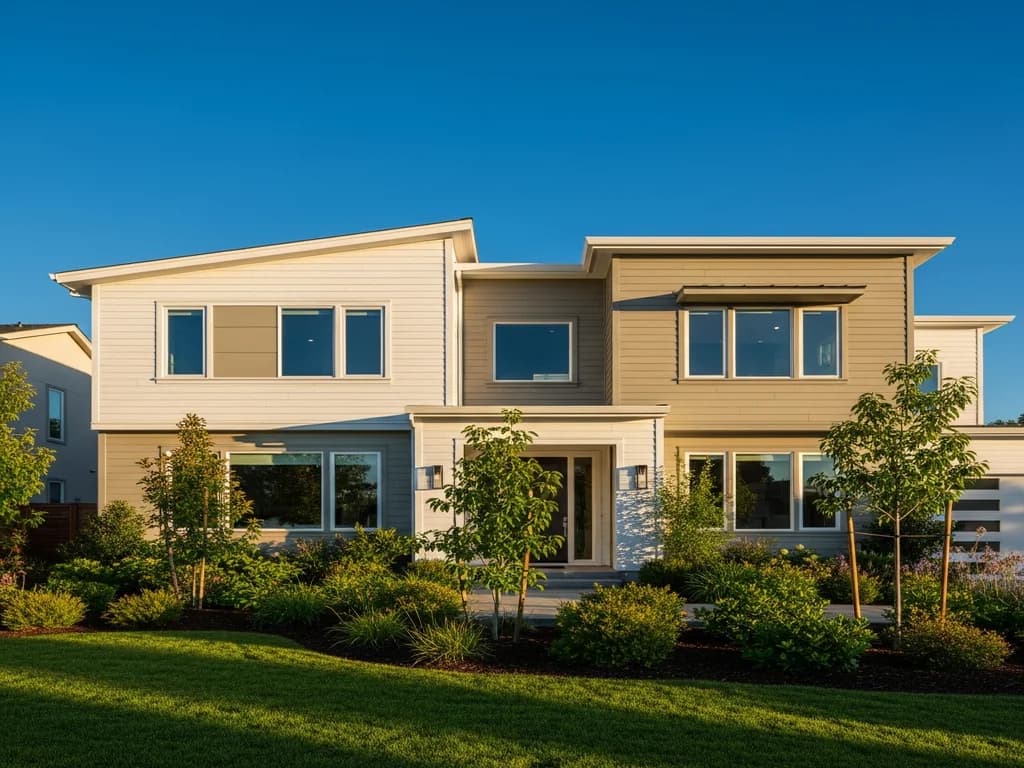
Siding in Geyserville
A Geyserville re-side happens in a place defined by two facts at once. This is small-town Alexander Valley wine country — a single-block downtown of older storefronts and homes, ringed by vineyard-edge ranches and estate parcels that climb toward the oak-and-grass ridges and The Geysers geothermal field east of town. It is also the ground the 2019 Kincade Fire started on, in the hills near the Geysers. A re-side here is never purely cosmetic; the cladding decision is bound up with the documented wildfire reality of these slopes.
So the work folds three things together — valley-vernacular design, the realities of long ranch-property access, and genuine fire hardening — rather than treating any one in isolation.
Valley-floor town homes versus ridge-edge ranches
Geyserville is two housing stories in one small footprint. Along the Geyserville Avenue downtown grid and the flat valley-floor lots sit older bungalows, ranch homes, and modest customs with simpler, sheltered elevations. Move east and uphill toward the Geysers ridge and the parcels become vineyard-edge ranches and estates with multi-face exposure, long sightlines, and grass-and-oak backdrops. We read which of these a home is before specifying anything, because the controlling stressor — sheltered in-town versus exposed wildland edge — changes the entire re-side, from cladding choice to how the eaves and vents are detailed.
Where the Kincade Fire started rewrites the spec
The Kincade Fire ignited in the hills near the Geysers above Geyserville and ran south and west through northern Sonoma. That is not regional background here; it is this town's own ground. For ranch and estate homes on the slopes facing those ridges, a responsible siding spec is inseparable from the ember threat, so we steer toward Class A non-combustible fiber-cement and mineral assemblies rather than the wood-look products an owner might choose on looks alone. The valley's moderate-moisture, low-salt climate lets us prioritize that hardening without fighting coastal corrosion or hard freeze, so the fire-correct wall is also the durable one.
Ranch-parcel access, scoped before the first board
Re-siding a Geyserville ranch is as much a logistics problem as a design one. Many of the vineyard-edge homes off Highway 128, Geysers Road, and the lanes climbing east sit at the end of long gravel drives shared with vine rows, olive groves, and irrigation lines, where delivery and lift trucks cannot simply park at a curb. We walk the approach early to confirm material drops, scaffold placement, and lift access on the sloped, ridge-facing faces a standard truck route never reaches. We also sequence the noisy tear-off phases around harvest and crush traffic, which can choke the narrow valley roads and close off staging for weeks at a stretch.
Heat and the dry-summer load on a Geyserville wall
This far up the Alexander Valley the summers run hot and bone-dry, and the south and west elevations cook through long afternoons. That heat load is the quiet companion to the fire question on a Geyserville re-side. We specify heat-stable fiber cement, allow for thermal movement in the trim and lap detailing, and run a vented rainscreen so the wall sheds accumulated heat rather than baking the sheathing behind it. The same dry climate that drives the wildfire risk also means a properly detailed non-combustible exterior here will hold its finish far longer than a wood clad would, since there is little moisture punishment working against it.
Keeping the small-town character intact
Geyserville's downtown is tiny and well-loved, and the older homes a block or two off Geyserville Avenue carry simple early-20th-century proportions the street expects to see preserved. When we re-side one of these, fiber cement is milled to echo the original reveal and casing rather than flatten it, so the result reads as a faithful refresh, not a modern overlay. The in-town lots are tight and often shared at the property line, so staging, scaffold, and material laydown take planning a wide rural parcel never demands. The payoff is a non-combustible exterior that quietly removes the wood that makes an older home vulnerable when fire reaches the valley edge.
Why this matters in Geyserville
- Specified for Wine Country / North Bay conditions
- Class A non-combustible fiber cement as the recommended system
- Correctly detailed weather-resistive barrier and flashing
- Installed by a crew with 20 years combined experience
Recommended systems for Geyserville
- Class A non-combustible fiber cement
- fire-hardened eave and vent detailing
- rigorous drainage-plane detailing
- durable factory finishes
Fiber Cement Siding for Geyserville homes
The full fiber cement siding approach — materials, weather-resistive detailing, and the manufacturer standards we install to — is covered on the main service page, then specified for Geyserville's conditions on this one.
Our Geyserville process
- Step 1
Consultation
We listen to your goals and assess your home on site — exposure, substrate, and architecture.
- Step 2
Design & Proposal
A clear written proposal with the right system specified for your climate and a transparent scope.
- Step 3
Expert Installation
Trained crews install to manufacturer best practices with careful weather-management detailing.
- Step 4
Walkthrough & Support
A final walkthrough, full cleanup, and a clear written record of the scope completed — work we stand behind.
FAQ
Siding in Geyserville — FAQ
On the ranch and estate parcels facing the Geysers ridge, yes — the 2019 Kincade Fire started in these very hills. Non-combustible cladding with hardened eaves and vents is the baseline there; sheltered valley-floor and downtown lots sit at lower but still real ember risk.
Geyserville is a tiny single-block Alexander Valley town sitting right where Kincade ignited, with vineyard-edge ranches climbing toward the Geysers — distinct from Healdsburg's luxury Plaza-and-estate market and from Cloverdale's larger downtown grid further north.
Yes — we walk the gravel approach, grade, and irrigation layout first to plan material drops, scaffold, and lift access, and we sequence tear-off around harvest and crush traffic on the narrow valley roads.
Yes — heat-stable fiber cement with movement detailing and a vented rainscreen handles the dry triple-digit afternoons well, and the low moisture and salt load means the finish lasts longer here than a wood clad would.
Through a detailed written proposal after an on-site assessment; the hardening scope and ranch-access logistics vary widely between a downtown lot and a ridge-facing estate.
Keep Exploring
More for Geyserville homeowners
More in Geyserville
Other exterior services in Geyserville
Nearby Service Areas
Siding near Geyserville
Helpful Exterior Guides