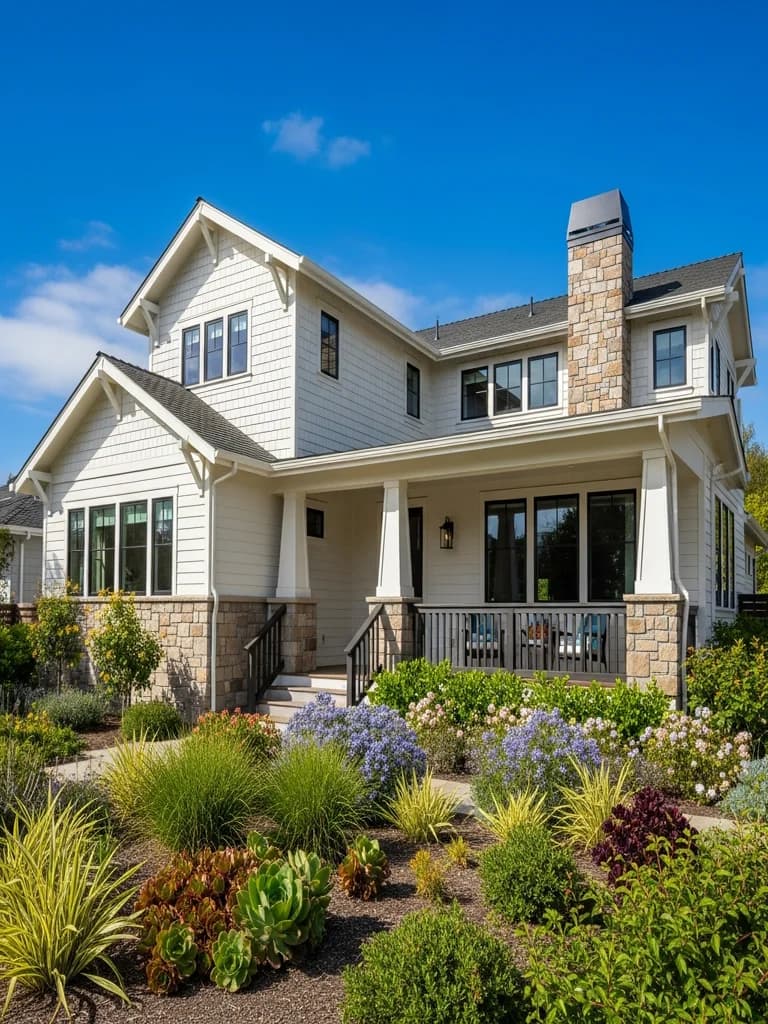
Siding in Plumas Lake
Plumas Lake is a newer master-planned valley community south of Olivehurst, built largely in the 2000s, so a re-side here looks nothing like the older Yuba towns nearby. The stock is builder-uniform — block after block of similar-era production homes on the open valley floor — and the controlling stressor is flat-valley heat plus the fact that the original builder-grade cladding and detailing are now reaching the age where they show their limits all at once across a tract.
So a Plumas Lake siding scope is read off the tract pattern: which builder elevations are failing, what the original weather barrier and flashing actually were, and how to keep a re-side consistent across a repeating streetscape while breaking the uniformity just enough that the home reads as cared-for rather than re-clad in place.
Working builder-uniform tract stock
Plumas Lake's 2000s production homes repeat the same elevations down the block, which is both an advantage and a trap. The substrate is predictable, but the original builder cladding, flashing, and weather barrier are uniform too — so when one home's caulk joints fail or its hardboard chalks, the same is usually true next door. On a repeating streetscape the board layout, butt-joint flashing, and reveals have to be consistent or the eye catches every variation, so we plan the field off real stud spacing and existing window returns rather than improvising elevation by elevation.
Flat-valley heat on a Plumas Lake wall
Plumas Lake sits on open valley floor with the wide, treeless setbacks typical of a newer tract, so south- and west-facing walls take a full summer afternoon load with no shade to soften it. That heat and UV chalk the builder paint, embrittle the original caulk, and cup the economy cladding on the punished elevations first. We treat the finish and joints as load-bearing: a fade-stable factory finish, oversized expansion gaps, and a sun-rated sealant rather than the builder tube that's already baked out. On a uniform tract, the sunny elevations are where age shows first and fastest.
Re-detailing what the builder rushed
Production-era homes in Plumas Lake were built fast, and a re-side is the moment to correct the details the original crew skimmed: weather-barrier laps, kickout flashing at roof-wall intersections, and the penetrations that were caulked rather than flashed. Rather than reuse whatever was behind the old cladding, we re-detail the wall as it should have been built — a continuous weather-resistive barrier, proper flashing, and joints that shed water. On a young community this is less about decay than about fixing the shortcuts before they become the next decade's rot.
Consistency, covenants, and how the work runs
Plumas Lake's master-planned neighborhoods commonly carry subdivision covenants that govern approved profiles and color families, so we confirm what a parcel allows before any material is ordered. The lots give room to stage and run long elevations, which keeps the job straightforward, but matching a re-side to a repeating streetscape means holding reveals and trim consistent so the home sits comfortably among its neighbors. Full re-sides that touch the weather barrier are permitted through Yuba County, and we plan the work around inspection timing rather than after it.
Why this matters in Plumas Lake
- Specified for Sacramento Valley conditions
- James Hardie fiber cement as the recommended system
- Correctly detailed weather-resistive barrier and flashing
- Installed by a crew with 20 years combined experience
Recommended systems for Plumas Lake
- James Hardie fiber cement
- factory finishes
- modern lap and board-and-batten profiles
- refined trim and color packages
Fiber Cement Siding for Plumas Lake homes
The full fiber cement siding approach — materials, weather-resistive detailing, and the manufacturer standards we install to — is covered on the main service page, then specified for Plumas Lake's conditions on this one.
Our Plumas Lake process
- Step 1
Consultation
We listen to your goals and assess your home on site — exposure, substrate, and architecture.
- Step 2
Design & Proposal
A clear written proposal with the right system specified for your climate and a transparent scope.
- Step 3
Expert Installation
Trained crews install to manufacturer best practices with careful weather-management detailing.
- Step 4
Walkthrough & Support
A final walkthrough, full cleanup, and a clear written record of the scope completed — work we stand behind.
FAQ
Siding in Plumas Lake — FAQ
The community is builder-uniform 2000s stock, so the same original cladding, flashing, and weather barrier sit on home after home. When one reaches the end of its service life, the identical detail next door usually has too.
Often yes. The master-planned neighborhoods carry covenants that govern profile and color. We confirm what your parcel allows before ordering any material so the re-side stays compliant.
Frequently. Production homes were built fast, so we commonly find skimped weather-barrier laps, missing kickout flashing, and caulked-not-flashed penetrations. A re-side is the right moment to re-detail the wall properly.
Open valley floor and wide treeless setbacks mean south and west walls take a full unshaded afternoon load. The original builder finish chalks and cups there first. A fade-stable factory finish corrects it.
Keep Exploring
More for Plumas Lake homeowners
Helpful Exterior Guides