
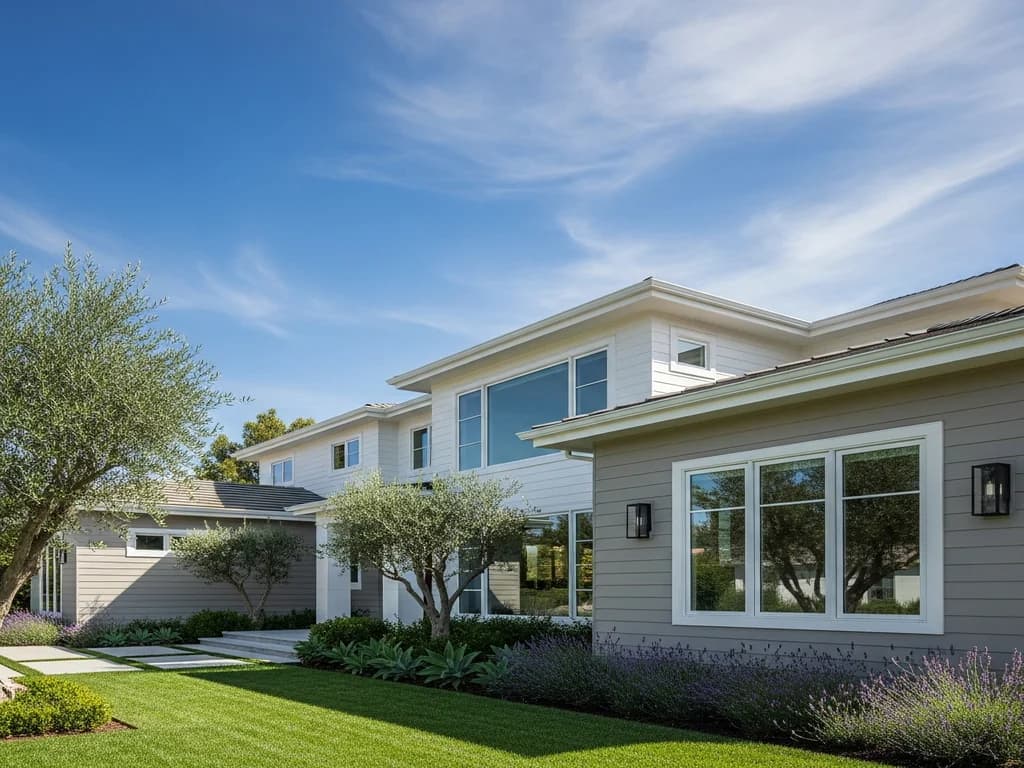
6 min read · Design
Cottage style has been having a sustained moment, and the look reads genuinely warm and welcoming on homes where the architecture supports it. But cottage isn't a product you buy — it's a composition of human scale, soft color, painted trim, and a few welcoming details. Here's how it actually comes together and, just as important, where it fits in California and where forcing it falls flat.
What actually makes a home read as cottage
Cottage isn't a single architectural movement. It's a softer, smaller-scaled expression drawn from several traditions — English cottage, beach cottage, garden cottage, French country. What they share is a vocabulary: human scale, painted trim that's prominent without being heavy, soft and quiet color palettes, and a handful of welcoming details like window boxes, shutters, or a small porch. The defining quality is intimacy. A cottage exterior invites you in rather than impressing you from the curb, which is why the style depends far more on scale and warmth than on any single material choice. We start a cottage re-side by reading the home's scale honestly, because that determines whether the direction will land.
Narrow lap on a small or modest home
Cottage works on homes that are small or moderately scaled. A 4 to 5 inch Hardie HardiePlank reveal in a soft color — creamy white, soft sage, warm gray, dusty blue — reads cottage immediately. The exact same narrow lap on a 4,500 square foot custom home doesn't; it reads as oversized cottage costume, because the proportions fight the intimacy the style depends on. Our fiber cement siding crews keep the reveal tight and consistent, since the close lap spacing is part of what gives a cottage its fine-grained, hand-built texture. If a home is genuinely large, we'll be honest that cottage probably isn't the right direction and suggest something that suits the scale.
Painted trim — prominent but never heavy
Cottage trim is painted rather than stained, proportionate to the home, and kept crisp. White trim on a colored body is the reliable move; matched trim in a slightly lighter or darker tone of the body works on softer, quieter compositions. The key restraint is weight — cottage trim is lighter than craftsman trim, which carries deliberate heft. Overbuild a cottage's trim and it starts to read craftsman or farmhouse instead. We handle this either with Hardie's factory finish or, where a homeowner wants a specific soft custom color, with field exterior painting over primed trim, noting honestly that field paint needs recoating sooner than a baked-on finish.
Soft, garden-friendly color palettes that hold up
Cottage color is quiet: creamy whites, soft sages, warm grays, dusty blues, soft butter yellows. Bold or high-contrast palettes pull the home out of the style — cottage is about gentle warmth that looks at home against planting and a garden. Under strong California sun, these muted tones are also forgiving, since soft mid-value colors show fade and chalk far less than deep saturated ones. Hardie's ColorPlus baked-on finish holds these gentle tones well over years of valley and coastal exposure, which matters because a cottage that's lost its soft, fresh color reads tired rather than charming.
Architectural details that reinforce the cottage read
A few welcoming details do most of the work: shutters (functional or proportionate decorative), window boxes, a small front porch with room to sit, gable detailing, and an entry door with character. They don't all have to be present, but a cottage benefits from several — cottage paint on a totally plain elevation reads as just paint, not as a style. The honest guidance we give homeowners is to commit to two or three reinforcing elements rather than relying on color alone. Window boxes and shutters in fiber cement or wood, sized small to match the home's scale, are usually the highest-return additions on a modest house.
Where cottage fits in California — and where it doesn't
Cottage lands best on smaller historic homes in places like East Sacramento, Alameda, and Carmel, in marine-influenced coastal communities such as Capitola and Aptos, and on downsized custom and ADU work where intimate scale is built in. It doesn't fit large tract production homes or oversized custom builds, because the style depends entirely on human scale that those homes don't have. We'd rather tell a homeowner with a big two-story that cottage will read as costume than take the project and deliver something that fights itself. Before you commit any contractor to a stylistic re-side, confirm their license and record through the California licensing board.
Cottage exterior element checklist
| Element | Period-correct spec |
|---|---|
| Lap profile | 4-5" HardiePlank narrow exposure |
| Color palette | Soft creams, sages, dusty blues, warm grays |
| Trim | Painted, crisp, proportionate (not heavy) |
| Shutters | Functional or proportionate decorative |
| Window boxes | Wood or fiber cement, small scale |
| Entry | Small porch or recessed entry with character door |
Key takeaways
- Cottage depends on human scale — it works on small and modest homes, not large ones
- Narrow 4-5 inch lap + soft colors + crisp painted trim is the core composition
- Trim is lighter than craftsman; overbuilding it shifts the home out of the style
- Soft muted palettes both read cottage and hold up better than deep colors under CA sun
- Two or three details — shutters, window boxes, small porch — reinforce the read; paint alone falls flat
- Best fits in smaller historic and coastal homes and ADUs; doesn't fit tract or oversized custom
FAQ
Quick Answers
Yes — that's one of the strongest places for it. The modest scale and the existing architecture both support the cottage direction naturally.
Honestly, usually not. The scale fights the style and the result reads as costume. We'll talk through alternative directions that suit the home's size if the architecture isn't right.
No, but isolated cottage paint can fall flat. At least two or three reinforcing elements — shutters, window boxes, a small porch, gable detail — make the style read on the home.
Soft creams, sages, warm grays, and dusty blues with crisp white or coordinated trim. These read cottage and, as mid-value muted tones, also hold their color better under strong California sun.
Only marginally. The extra details — window boxes, shutters, trim — add a few maintenance points. On a factory ColorPlus finish the body itself is low-maintenance for years.
Yes. Narrow Hardie lap, fiber cement window boxes and trim, and a soft factory or field-painted color deliver the cottage composition in a fire-resistant, low-maintenance material.
Sources
Authoritative references
External links to government, code, and manufacturer sources. Sierra Siding is not affiliated with these organizations; references are provided for verification.