
9 min read · HOA & Multifamily
Short answer: a large community re-side is rarely done all at once — it's sequenced across buildings, elevations, seasons, and budget cycles so the spend matches the funding stream and the disruption stays manageable. The board's job is to set the sequence (usually worst-first by condition, not by appearance), fit the work into the weather and fire-season windows the calendar allows, keep the community looking uniform while it's partway done, and contract for the whole program so pricing and quality hold across phases. Phasing trades a longer overall timeline for predictability and protected reserves — and predictability is exactly what a volunteer board wants. This guide covers how to build that multi-year sequence. Want a building-by-building condition read to anchor your sequence? Schedule an HOA exterior assessment.
Why phasing is the default for large communities
On a multi-building property, doing everything in a single season is occasionally right but usually not. One-shot work maximizes mobilization efficiency, but it also draws down reserves in one budget year, concentrates resident disruption, and bets the whole program on one season's weather and one crew's capacity. Phasing — typically one to a few buildings per season — spreads the spend across budget years so routine contributions can replenish reserves, smooths disruption, and lets the board learn from early buildings before committing the rest. This is the multi-building, multi-budget-cycle problem; it's distinct from how a single building's project unfolds, which our HOA exterior renovation process covers step by step. Here we're sequencing the buildings, not walking through one.
Sequence worst-first by condition, not by appearance
The most important sequencing principle is to lead with the buildings in the worst actual condition, which is not always the ones that look worst from the parking lot. A documented condition assessment — checking the high-risk details that fail first and probing where moisture concentrates — should drive the order, so the phase-one budget goes where deterioration is most advanced and the risk of compounding damage is highest. Sequencing by curb appeal instead of condition is how boards end up re-siding a cosmetically tired building while a quietly rotting one waits another two seasons. Our signs an HOA community needs new siding guide and an outside assessment give you the evidence to rank buildings by need rather than looks.
Balance disruption against mobilization cost
Every phasing plan lives on a trade-off: smaller phases are gentler on residents but cost more per square foot because the contractor re-mobilizes more often; larger phases are more cost-efficient but concentrate noise, access restrictions, and parking impacts. There's no universal right answer — the balance depends on your reserve cadence, resident tolerance, and how clustered the buildings are. The board's task is to choose deliberately and explain the trade-off to the membership rather than letting it happen by default. Grouping adjacent buildings into a phase often captures much of the efficiency of larger phases while still keeping any single season's disruption contained.
Work within California's weather and fire-season windows
Exterior work has seasonal constraints that phasing has to respect. Northern California's wet winters limit the window for opening up walls and applying finishes, and the summer and fall fire season can affect scheduling, access, and air quality in foothill and wildland-interface communities. A realistic phasing calendar plans the building-opening and finish work for the favorable months and treats the fire-prone and rainy stretches as planning constraints, not afterthoughts. For communities in fire-exposed areas, this is also the moment to align material choices with home-hardening guidance — CAL FIRE publishes resources on hardening exteriors — since a re-side is the natural opportunity to improve fire posture. Our re-side guide covers the material side of that decision.
Keep the community looking uniform across phases
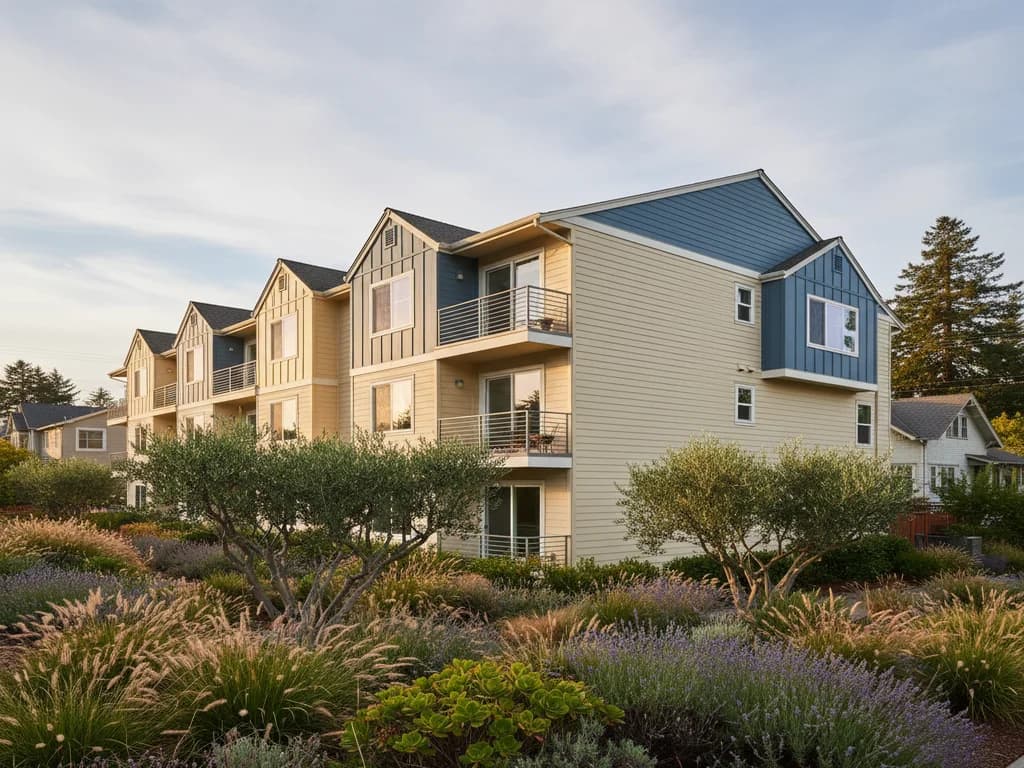
A multi-year re-side creates a real risk that buildings finished in year one won't match buildings finished in year three — different dye lots, a discontinued color, or a product line that changed. A uniform appearance is part of what owners are paying for and part of property value, so the board should lock the product, profile, and color across the entire program up front, and ideally reserve or confirm availability of the finish for the full sequence. Factory-applied finishes like James Hardie's ColorPlus help here because they're specified by a named color rather than mixed on site. Writing the exact product and color into every phase's contract is what prevents a patchwork community at the end.
Contract for the whole program, not phase by phase
How the work is contracted determines whether quality and pricing hold across years. Bidding each phase as a separate one-off invites price drift, inconsistent crews, and the matching problems above. The stronger approach is a master agreement or multi-phase contract that fixes the scope, product, and pricing logic for the full program while scheduling the work in phases — so the community gets continuity of crew, consistent assembly quality, and predictable cost. Build in how pricing adjusts between phases (tied to a transparent index rather than open negotiation), and hold the same inspection and retention discipline on every phase. Our HOA exterior renovation guide and contractor evaluation checklist cover structuring an agreement that spans seasons.
Map phases to budget years and reserves
The phasing calendar and the funding calendar have to be the same calendar. Each phase should map to a budget year the reserves can actually support, so the program runs as a series of planned drawdowns rather than a sequence of mini-crises. This is where phasing earns its keep: by matching one to a few buildings per year to the contribution stream, the board keeps the budget flat and predictable and avoids the all-at-once bill that forces a special assessment. Our protecting reserve funds and avoiding special assessments guides cover the funding mechanics that this sequence has to honor.
Stay flexible: let early phases inform later ones
A phasing plan should be a living document, not a contract carved in stone. The single biggest advantage of going building-by-building is the information each phase reveals: if the first buildings show worse substrate than the condition assessment predicted, the board can adjust the contingency, the sequence, or the pace before committing the rest. Build a brief between-phase review into the plan — what did we find, what did it cost against budget, does the sequence still make sense — so the program improves as it goes. That feedback loop is exactly why phasing reduces risk rather than just spreading it out.
All-at-once versus phased: what each approach trades
| Factor | All-at-once | Phased over budget years |
|---|---|---|
| Cost per square foot | Lower — one mobilization | Higher — repeated mobilization |
| Reserve impact | Large single-year drawdown | Smoothed across years; contributions replenish |
| Resident disruption | Concentrated and intense | Contained to a few buildings at a time |
| Weather / fire-season risk | Whole program rides one season | Each phase planned into favorable windows |
| Ability to adjust mid-program | Limited — committed up front | High — early phases inform later ones |
Key takeaways
- Phasing spreads spend across budget years and contains disruption — the default for large communities.
- Sequence worst-first by documented condition, not by which building looks worst from the curb.
- Smaller phases ease resident impact but cost more per foot; choose the trade-off deliberately.
- Plan building-opening and finish work around NorCal's wet winters and the fire-season calendar.
- Lock product, profile, and color across the whole program so phases match years apart.
- Contract the full program under one agreement so crew, quality, and pricing hold across seasons.
- Map every phase to a budget year reserves can support, turning the program into planned drawdowns.
- Review findings between phases and adjust — phasing reduces risk because each phase informs the next.
FAQ
Quick Answers
There's no universal number — it depends on your reserve cadence, resident tolerance, and how clustered the buildings are. Smaller phases ease disruption but cost more per square foot from re-mobilization; grouping adjacent buildings often captures much of the efficiency while keeping any one season's impact contained.
Lead with the worst actual condition, which isn't always the worst-looking. A documented condition assessment should rank buildings by deterioration and moisture risk so phase one goes where compounding damage is most likely — not where the paint is simply tired.
Lock the product line, profile, and color across the entire program up front and write them into every phase's contract. Factory-applied finishes specified by a named color help, since they aren't mixed on site. Confirming finish availability for the full sequence guards against discontinued colors.
In foothill and wildland-interface communities it can affect scheduling, site access, and air quality, so a realistic calendar treats it as a planning constraint. A re-side is also the natural moment to improve fire posture; CAL FIRE publishes home-hardening guidance worth aligning material choices with.
Per square foot, often yes, because the contractor mobilizes once. But all-at-once work empties reserves in one budget year, concentrates disruption, and bets the program on one season. Phasing trades some efficiency for predictability and protected reserves — usually the better deal for a board.
Favor a master or multi-phase agreement that fixes scope, product, and pricing logic for the whole program while scheduling work in phases. Build in a transparent index for between-phase price adjustments and hold the same inspection and retention discipline every phase. It protects continuity of crew and quality.
That's the value of phasing. Build a between-phase review into the plan so you can adjust the contingency, sequence, or pace before committing the remaining buildings. Each phase's findings make the rest of the program more accurate, which is why phasing reduces risk rather than just deferring it.
Sources
Authoritative references
- CAL FIRE — California Department of Forestry and Fire Protection
- James Hardie — official product, warranty & installation resources
- Community Associations Institute (CAI) — board education & governance resources
External links to government, code, and manufacturer sources. Sierra Siding is not affiliated with these organizations; references are provided for verification.