
12 min read · Buyer's Guide
Sacramento Valley homes face an exposure environment that humbles most cladding. 110°F summer afternoons. 165°F+ surface temperatures on dark south-facing walls. Six straight months of dry-season UV that turns field paint into chalk. Daily thermal swings of 50°F. Decades of agricultural dust that quietly settles into every joint. The Sacramento homes that look great at year 30 — and the ones that started failing at year 8 — aren't separated by luck. They're separated by 10 specific decisions made during scoping. Here's exactly what Sacramento homeowners are deciding right now, in 2026, to land on the right side of that gap. Sierra Siding installs every option below across Sacramento, Roseville, Folsom, and the broader valley — the decisions matter more than the contractor brand.
1. Choose Hardie HZ10 (not HZ5) for valley exposure
James Hardie engineers two distinct climate-spec product lines: HZ10 for hot-dry climates, HZ5 for cold-wet. Sacramento Valley is explicit HZ10 territory — and getting the right product spec matters more than most homeowners realize. HZ10 boards are formulated for thermal cycling, low humidity, and sustained UV; HZ5 is formulated for freeze-thaw durability. Installing HZ5 in Sacramento is the wrong product for the climate even though the boards look identical at the showroom. Smart Sacramento homeowners verify their installer is spec'ing HZ10 in writing before signing. Reference: see the HZ10 vs HZ5 deep comparison and the official James Hardie product documentation for full engineering notes.
2. Demand factory-baked finish (ColorPlus) over field paint
On Sacramento exposure, factory ColorPlus finish outlives field paint by 4-5x. Field paint chalks visibly on south and west elevations within 3-5 years. ColorPlus — through-color, chemistry-bonded, baked-on — holds 12-15+ years before refresh consideration. Over a 30-year ownership horizon, ColorPlus typically saves $15,000-$30,000 in repaint cycles vs. equivalent field paint. The upfront premium is roughly 8-12% of project cost. The math is not subtle. Smart 2026 Sacramento homeowners are treating field paint as a budget compromise to avoid, not an equal alternative.
3. Spec orientation-aware color before falling in love with a sample
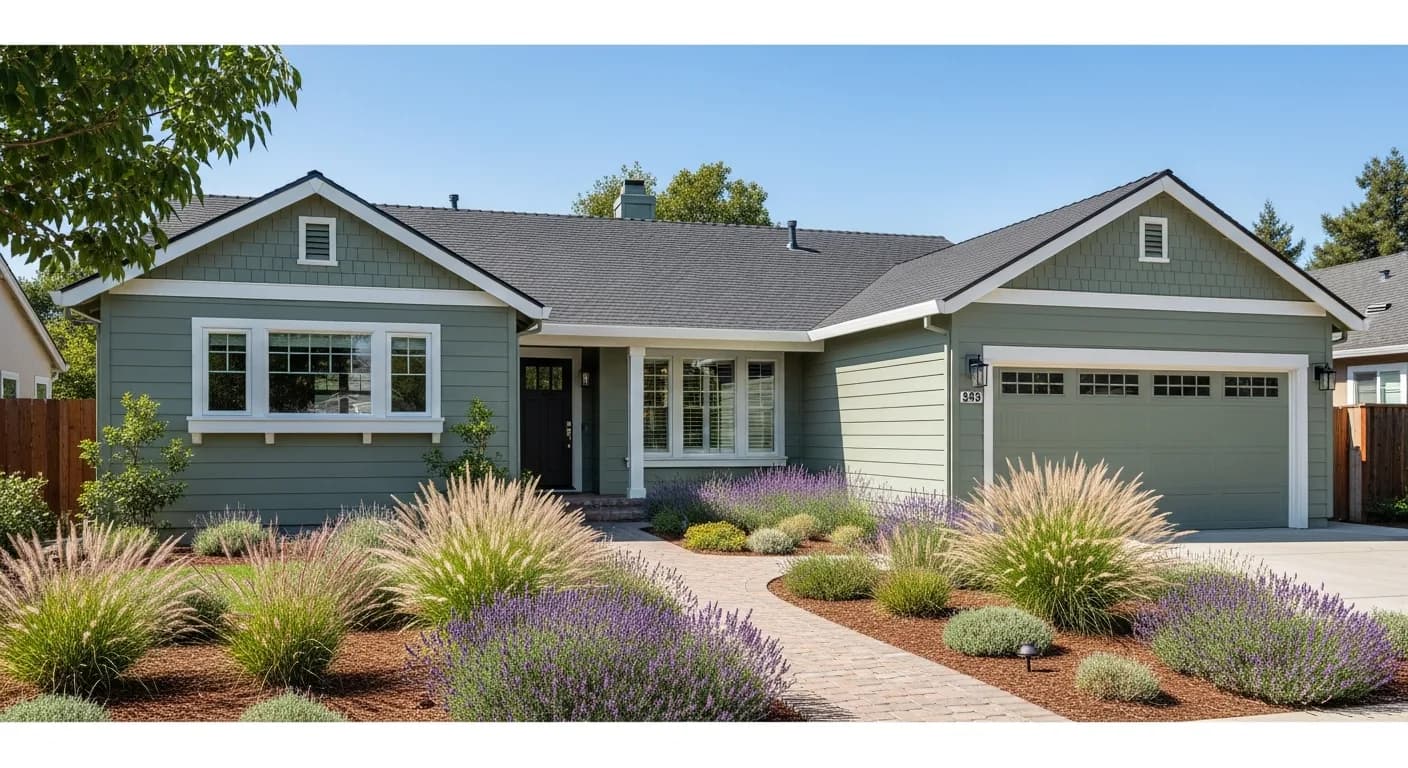
South and west elevations take 60-70% of total annual UV. Choosing a deep Iron Gray or Night Gray for a south-facing primary elevation will produce visible fade years before north would show the same color. Smart Sacramento homeowners choose lighter mid-tones (Arctic White, Boothbay Blue, Mountain Sage, Cobble Stone) for sun-exposed primary, and reserve darker tones (Aged Pewter, Iron Gray, Deep Ocean) for north-facing primary or single-story shaded primary. Color is the highest-impact design decision in any re-side and the easiest to get wrong. Read the full breakdown in our Best Hardie Colors for California guide.
4. Treat the weather-resistive barrier as the project's spine
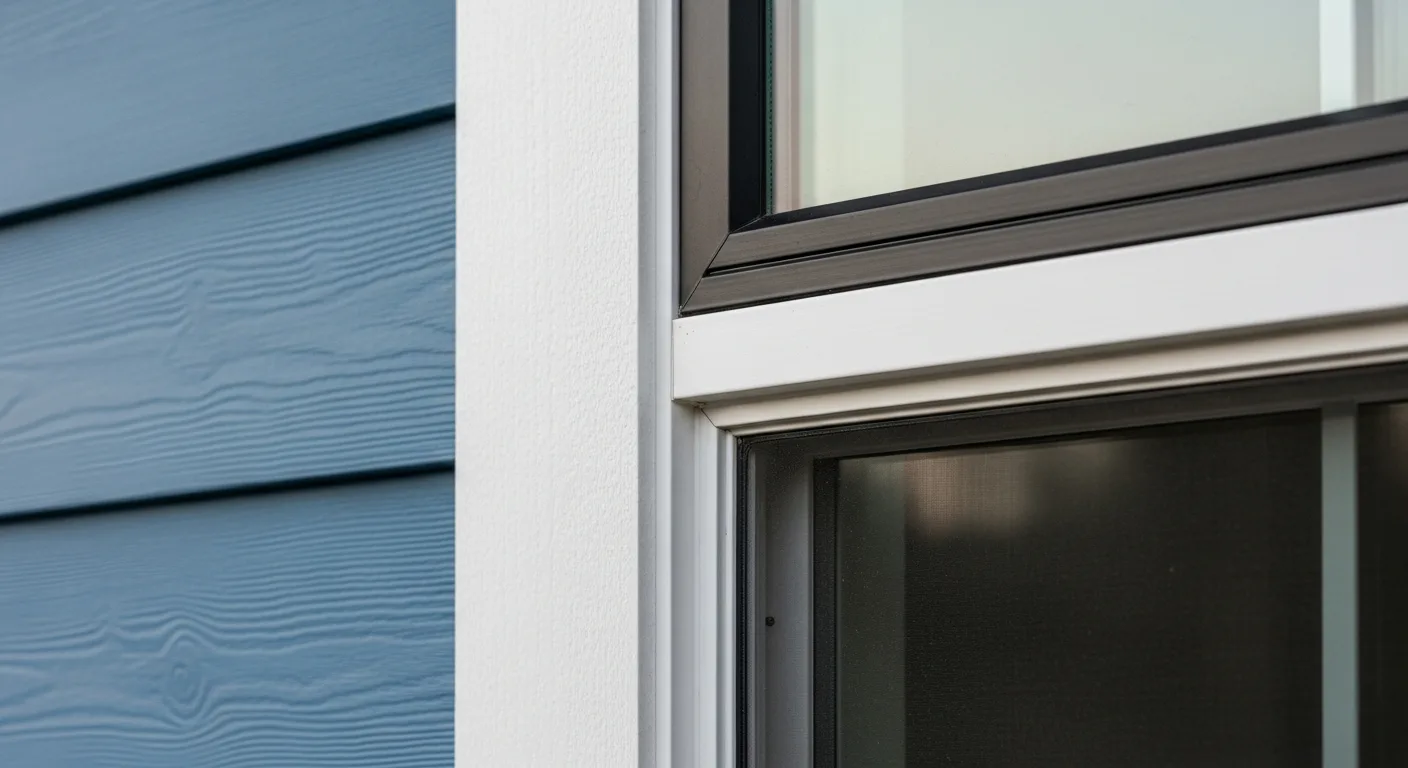
The single most consequential element of a Sacramento re-side is invisible from the curb: the weather-resistive barrier installed under the cladding. A premium cladding installed over a budget WRB delivers 15 years of life; a budget cladding installed over a properly detailed premium WRB delivers 40. Sacramento isn't an extreme moisture climate, but atmospheric river events, irrigation overspray, and stucco-crack moisture migration all stress the assembly. Smart 2026 homeowners insist on named-brand WRB (Tyvek HomeWrap, Benjamin Obdyke HydroGap, or equivalent rainscreen drainage assembly) with itemized installation detail in the scope.
5. Combine air-sealing with the re-side for cooling-bill savings
Sacramento summer cooling bills are one of the largest household utility lines. A re-side is the rare moment when air-sealing the entire wall envelope is accessible — sealed wall penetrations, properly installed barrier, continuous insulation upgrade behind new cladding. Smart Sacramento homeowners use the re-side scope as an energy-retrofit opportunity, typically saving 10-15% on summer cooling that compounds over the cladding lifespan. The added scope is modest (5-8% of project total); the lifetime savings are substantial. See the integration logic in our Window and Siding Cost Together breakdown.
6. Decide on board-and-batten with intention (or skip it)
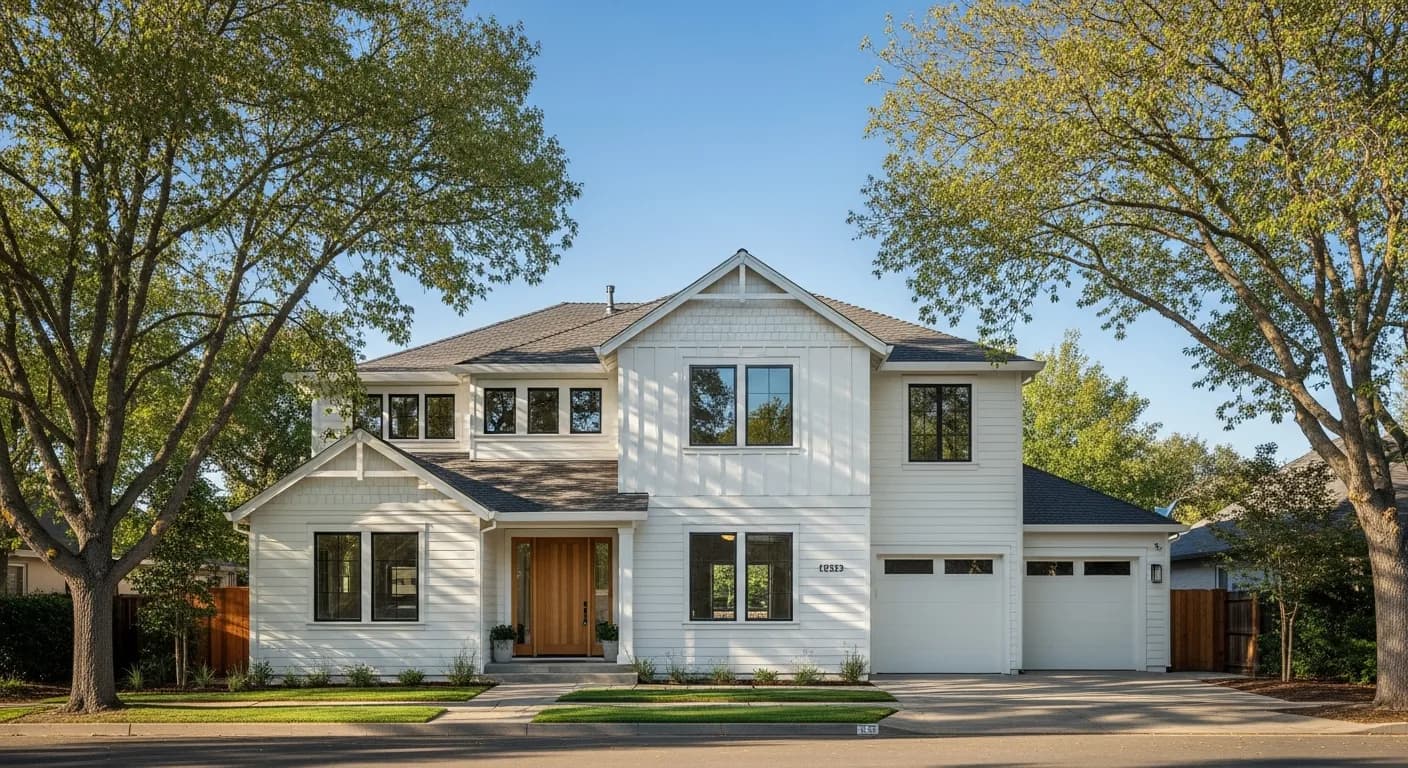
Modern farmhouse with board-and-batten is the most-installed Sacramento exterior direction in 2026 — to the point that some tract subdivisions are saturated with the same Arctic White + black windows + gable batten composition. Smart Sacramento homeowners are now deciding intentionally: either fully commit to the modern farmhouse vocabulary with strong proportions and palette discipline, or distinguish their home with an alternative direction (Iron Gray modern, Boothbay Blue transitional, Mountain Sage craftsman). Choosing modern farmhouse by default produces a home that looks like every other tract two-story; choosing it intentionally produces an exterior that reads premium.
7. Plan substrate-repair allowance honestly in the budget
Sacramento homes built between 1975 and 1995 — a substantial share of the valley housing stock — commonly have aged hardboard, T1-11, or economy vinyl substrate that reveals damage at tear-off. Smart homeowners budget a substrate-repair allowance ($1,500-$5,000 on typical homes; more on visibly stressed stock) and ask their contractor explicitly: what's allowed, what happens if actual damage exceeds it, and what's the per-square-foot rate for additional substrate repair. Undisclosed substrate work is the #1 source of mid-project change-order disputes. Honest disclosure upfront prevents the surprise.
8. Pair the cladding upgrade with gutter and fascia work
The cladding tear-off is the rare moment when fascia inspection, kickout flashing installation, and gutter integration can all happen as one integrated scope. Smart Sacramento homeowners use this window to address fascia repair, install missing kickout flashing at every sidewall-to-roof transition, and replace aging gutters with coordinated-color aluminum. The combined-scope savings typically run 8-15% over serial projects. We refer the gutter work to GutterFX, the NorCal gutter specialist we coordinate with on combined Sacramento projects, so the flashing handoff happens cleanly between cladding and gutter crews.
9. Insist on itemized scope, not bottom-line price
The cheapest Sacramento siding bid is rarely the cheapest project. Itemized scope reveals where contractors are cutting: generic 'premium fiber cement' instead of named Hardie HZ10 ColorPlus, vague 'high-quality WRB' instead of named Tyvek with taped seams, missing kickout flashing line items, undocumented substrate-repair allowance, generic 'fasteners' instead of corrosion-rated spec. Smart 2026 Sacramento homeowners compare itemized scope side-by-side from 2-3 contractors with strong references — and find that pricing within 10-15% of each other is normal, while substantial outliers usually hide scope reductions. Our Getting Accurate Siding Estimate breakdown walks through what good Sacramento estimates look like.
10. Document the install for warranty and resale
Sacramento homes change hands roughly every 7-10 years. The homes that resell at premium prices have documented exterior work: dated photos of every elevation pre-tear-off, mid-install substrate condition, post-completion finish; written material specification with manufacturer products, line, and color codes; warranty registration confirmation; permit documentation. Smart Sacramento homeowners require this file as a deliverable. It supports warranty claims, insurance conversations, and resale value — and it's effectively free if you ask for it at scoping. We document this on every project as standard scope; ask any Sacramento contractor whether they do the same.
11. Match the fastener and clearance details to fire-zone rules
Many Sacramento-area neighborhoods, especially those creeping into the foothills toward El Dorado and Placer counties, now sit inside mapped wildfire severity zones, which changes more than just the cladding material you pick. The hidden detail homeowners overlook is the assembly: corrosion-resistant fasteners, the minimum six-inch ground-to-siding clearance that keeps mulch and ember beds away from the wall base, and noncombustible trim at vents and eaves. Fiber cement gives you a noncombustible body, but a code-compliant install still demands the right flashing and gap details to earn that protection. Before you sign anything, confirm whether your parcel falls in a designated zone by checking the official maps from CAL FIRE, because the answer dictates soffit venting, the exposed eave treatment, and sometimes the window package around the cladding. The smart move in 2026 is to bring the fire-zone question into the scoping conversation early rather than discovering a rejected inspection halfway through. Pair the wall assembly with a hardened base detail, keep combustible landscaping back from the foundation line, and make sure your contractor specifies the clearance dimension in writing. If your existing wall already shows damage at the base where moisture and debris collect, fold that into a planned siding repair scope instead of patching over it, so the new fire-resistant detailing actually starts from sound substrate rather than rot.
12. Sequence the project around Sacramento's narrow weather windows
Timing is a decision, not an afterthought, and in the Sacramento Valley it quietly shapes finish quality. The dry season runs long here, which is genuinely good for an exterior project, but the shoulder months carry traps. Fiber cement and its sealants cure best in moderate temperatures, and slapping caulk or field touch-up onto a south wall at 165 degrees of surface heat invites premature failure. Conversely, the brief but real winter rain windows can stall a tear-off if the weather-resistive barrier is left exposed too long. Homeowners who plan well book the demolition and dry-in phases so the wall is never open to a forecasted storm, then schedule any finishing details for early morning rather than blazing afternoons. Late spring and early fall tend to give the most forgiving conditions for both crew productivity and material behavior. There is also a scheduling reality worth naming: the best installers fill their calendars months out, so committing during the slower winter planning period often secures a better crew and a more deliberate pace than a rushed summer job. If you are still comparing materials and lead times, the planning detail in our fiber cement siding overview helps you lock the spec before you compete for a calendar slot. Build the season into your expectations and you avoid the two classic Sacramento mistakes: a heat-stressed finish or a rain-soaked open wall.
13. Verify the license and pull the real comparable cost data
Price shopping a re-side without verified data is how Sacramento homeowners get burned, and 2026 gives you better tools than ever to avoid it. Before any deposit changes hands, confirm that the contractor holds an active, properly classified license through the Contractors State License Board; a lapsed or mismatched classification is an immediate red flag regardless of how polished the sales pitch feels. On the budgeting side, anchor your expectations to independent regional benchmarks rather than a single bid in isolation. The annual Remodeling Cost vs. Value report breaks out fiber cement re-side returns by region and consistently shows exterior cladding among the stronger resale paybacks, which matters when you justify the spend. Cross-reference that national framing against local realities, because Sacramento labor rates, substrate-repair frequency, and two-story access all push numbers around. The point is not to chase the lowest figure but to understand which line items are fixed and which reflect genuine quality differences. A bid that is dramatically under the others usually hides something: thinner labor, omitted flashing, or a plan to discover charges mid-project. Use our siding cost in California breakdown alongside the verified license check to separate a real value from a too-good number, then request your own scoped figure through a proper estimate rather than guessing from neighbor gossip.
14. Protect the long-term finish with a realistic maintenance rhythm
The decision does not end on install day; the homeowners whose exteriors still look sharp at year fifteen treat maintenance as a planned rhythm rather than an emergency response. Sacramento's defining stressor here is dust. Agricultural and road dust settles into texture and shadow lines, dulls the factory finish, and traps moisture against caulk joints over time. A simple low-pressure rinse once or twice a year, timed after the dry season's worst dust accumulation, keeps the surface bright and lets you spot problems early. The second item is sealant: factory-finished fiber cement bodies are remarkably durable, but the caulk at butt joints, windows, and penetrations is the wear component, and inspecting it annually catches a five-dollar fix before it becomes a wall-cavity problem. Walk the perimeter each spring, look specifically at the lower courses where splashback and debris concentrate, and note any chalking on the most sun-blasted elevation. Keep landscaping and irrigation overspray off the wall, since constant wetting accelerates joint failure faster than the climate itself. None of this is labor-intensive, but it has to be scheduled, because the failures that get expensive are the ones nobody noticed until water had already tracked behind the cladding. Manufacturer care guidance, such as the published maintenance recommendations from James Hardie, reinforces the same low-effort cadence, so treat it as part of the original decision rather than a chore you discover later. If a spring walkaround turns up a joint that has opened or a board damaged by impact, address it promptly through a focused siding repair before the next rainy season instead of waiting for a full re-coat.
Key takeaways
- HZ10 (not HZ5) is the climate-correct Hardie spec for Sacramento Valley
- Factory ColorPlus saves $15-30K over field paint across a 30-year ownership
- South/west primary elevations need lighter mid-tones; reserve dark for north
- Combined air-seal + re-side delivers 10-15% summer cooling savings
- Modern farmhouse is saturated — choose it intentionally or pick a distinguishing direction
- Documented install supports warranty, insurance, and resale value
FAQ
Quick Answers
40-50+ years for a quality Hardie HZ10 ColorPlus installation with proper weather-resistive barrier and detailing. The cladding outlives most homeowners' time in the property. The shorter end of the range applies to projects where corners were cut on barrier, flashing, or factory finish.
The typical Sacramento scope band for a quality Hardie ColorPlus re-side runs $35,000-$55,000 depending on substrate condition, trim complexity, and finish program. Combined with windows: $48,000-$78,000. Premium with rainscreen and full integration: $65,000-$110,000. See our Sacramento siding replacement cost breakdown for itemized planning.
Honest answer: only on tight-budget tract refresh where the homeowner accepts the trade-offs. Lower-grade vinyl on south/west elevations can warp under sustained 165°F+ surface temperatures during Sacramento heat waves. Premium thick-gauge vinyl in light colors holds up better. For most Sacramento homes, fiber cement is the more reliable long-term choice.
Sacramento County and the City of Sacramento follow standard CBC plus Title 24 energy code requirements for envelope work. Non-WUI parcels don't trigger the WUI code fire-resistive requirements (those apply primarily in foothill and wine country). Title 24 air-sealing and insulation considerations apply during any substantial re-side scope.
When you see end-of-life signs: visible substrate stress, multiple sealant failures, peeling finish on south/west primary, or repeated leak callbacks. Don't accelerate the project on still-serviceable systems. Don't defer when systems are actively failing — water damage compounds over winter rainy seasons. Pre-summer and pre-winter are the two strongest planning windows.
Substrate condition (older homes need more repair), trim complexity (architectural homes vs. simple ranch), finish program (ColorPlus vs. field paint), and integration scope (whether windows, gutters, and air-sealing are bundled). The $35K end is a straightforward single-story with sound substrate; the $55K end is a two-story with substantial trim and integrated scope.
Sources
Authoritative references
- James Hardie — official product & installation resources
- James Hardie ColorPlus Technology
- California Energy Commission — Title 24 Building Energy Efficiency Standards
- Contractors State License Board (CSLB) — verify a California contractor
External links to government, code, and manufacturer sources. Sierra Siding is not affiliated with these organizations; references are provided for verification.